
Illinois parents are continuing to get their kids vaccinated at high rates despite ongoing controversy nationally about vaccines, according to data released by the state health department Monday.
More than 95% of children statewide had received 10 school-required vaccines as of October, including those against chickenpox, whooping cough, hepatitis B, measles and polio, among others. The only required vaccine that fewer than 95% of Illinois kids received was the meningococcal vaccine, with 94.4% of Illinois children vaccinated.
Though pockets of lower vaccination rates remain in parts of Illinois — including in Chicago for several vaccines — the statewide numbers were an improvement from the previous school year. Across Illinois, rates for all but one of the vaccines rose slightly.
The state’s goal is for 95% of kids to be vaccinated — a level that’s considered high enough to prevent the spread of infectious diseases and to protect those who cannot be vaccinated.
“Our latest school immunization numbers validate our efforts to make vaccines more accessible,” Gov. JB Pritzker said in a statement. “I’m grateful to the Illinois Department of Public Health, the State Board of Education, school administrators, healthcare professionals, and families for their efforts to keep our state’s youngest residents healthy, informed, and immunized.”
People can look up vaccination rates by school and school district on the state health department’s newly updated dashboard.
Areas of Illinois with lower rates for multiple types of vaccinations include several counties in the northwest corner of the state, as well as in far southern Illinois.
Chicago also had rates below 95% for certain vaccines. In Chicago, about 92.7% of kids received the vaccine that protects against diphtheria, tetanus and whooping cough. About 88.8% had received the meningococcal vaccine; 93.6% had received the polio vaccine; and 92.6% had received a vaccine for older children that also protects against diphtheria, tetanus and whooping cough.
More than 200 Chicago Public Schools had vaccination rates below 90% for some types of vaccines, according to the new data.
Chicago Public Schools said in a statement Monday that the district “has continued to make meaningful strides in immunization rates” and “continues to work with the families and school administrations to increase vaccination rates.”
The district said its strategies include frequent communication with parents, school principals and regularly reviewing data. The district provides free vaccines to eligible children through the city health department’s immunization program, which includes school-based health clinics and mobile clinics, as well as by working with local hospitals and other providers.
Dr. Jennifer Seo, pediatric medicine medical adviser at the state health department, said that “overall our state is well protected.”
“We’re really doing well as a state overall, but the work doesn’t stop here because we do know that there are some individual schools or individual areas where they may need to do some more work to bring up their vaccination rates,” Seo said.
Seo credited the relatively high overall vaccination rates to clear guidance and recommendations in Illinois. She also said state agencies, local health departments, providers, schools and community organizations have been working together to improve vaccination rates. Last year, the state health department began a mobile vaccination program, bringing vaccines to certain areas and schools to increase access, she said.
The new data, which are released annually, follow a year of confusion and doubt in some quarters over the safety and effectiveness of vaccines. They also come after more than 2,200 cases of measles were reported last year in the U.S. — the highest number in more than 30 years.
Last year, U.S. Health Secretary Robert F. Kennedy Jr. — a longtime vaccine skeptic — fired and replaced all the members of a federal vaccine advisory committee. Federal officials then reduced the number of vaccines recommended for children, no longer broadly recommending flu, rotavirus, hepatitis A, hepatitis B, some forms of meningitis and RSV.
In March, a federal judge temporarily blocked the decision to recommend fewer vaccines for children, in response to a lawsuit filed by the Itasca-based American Academy of Pediatrics and other medical groups.
Amid all the back-and-forth, Illinois charted its own course on vaccines, breaking with the federal government. In February, Illinois adopted a vaccine schedule developed by the American Academy of Pediatrics that differed from the federal recommendations. Pritzker signed a bill into law last year formally establishing a process for the state to issue its own vaccine guidelines, following concerns about the federal government’s new direction on the issue.
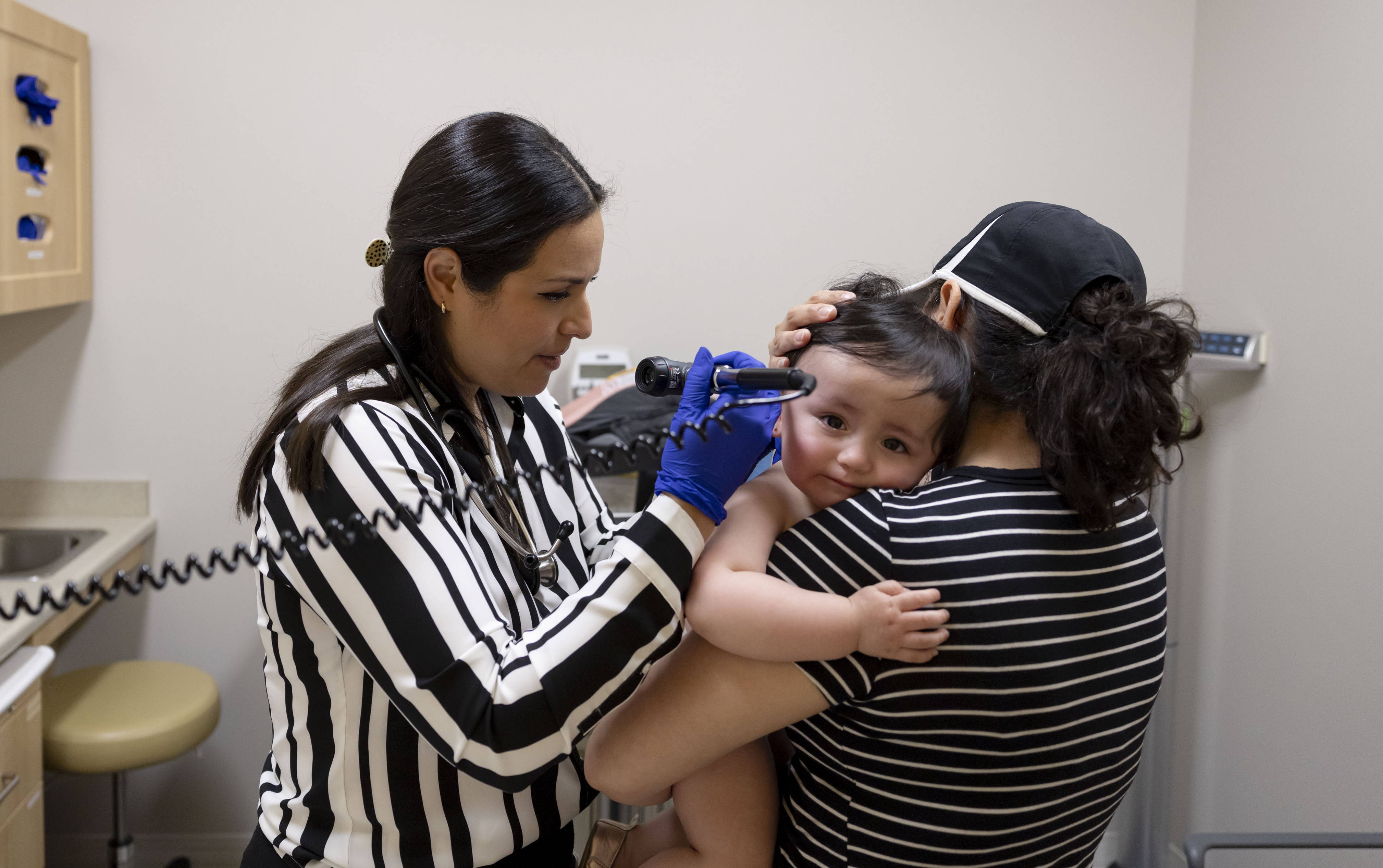
Dr. Jasmine Saavedra, at Esperanza Health Centers, said the controversy and headlines prompted more questions from parents at her practice over the last year about vaccines. She said she welcomes the questions, and when parents say they don’t want vaccines for their children, she asks them why, so she can better understand their concerns.
Saavedra said the vast majority of her families still vaccinate their children.
“It brings up a lot of conversation, but I think that by the end of those visits, the families are left satisfied by the answers and ultimately do what is best for their children,” Saavedra said. “I think it just speaks volumes to the trust our patients have in their providers and the healthcare system.”
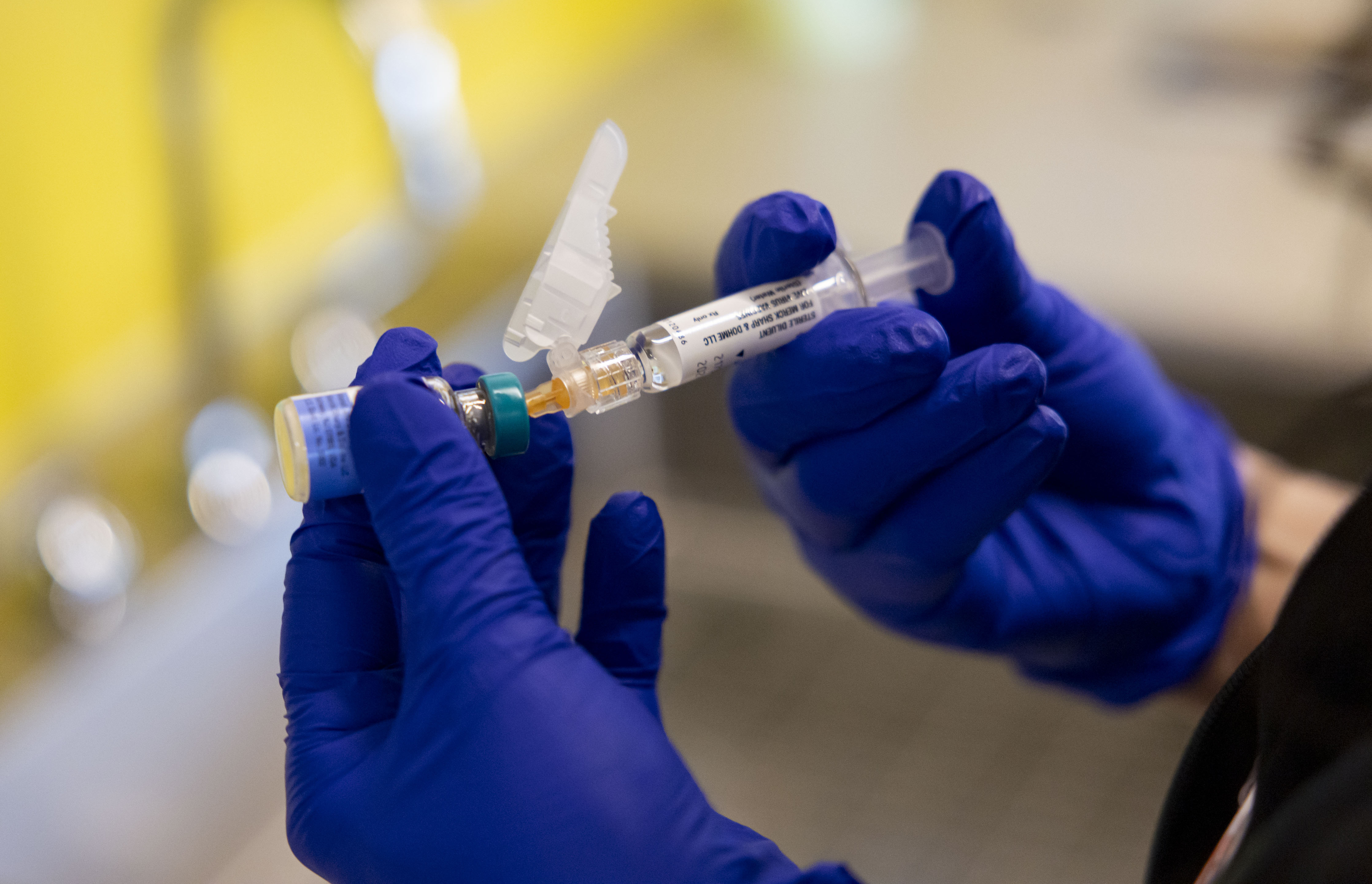
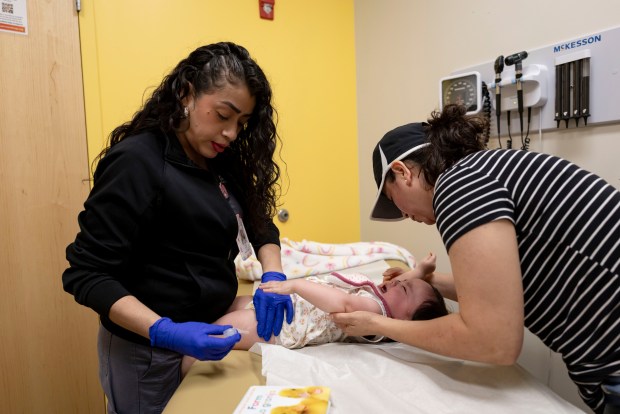
On Monday, one of Saavedra’s patients, 12-month-old Naomi Carrera, cried mightily as she received four quick jabs to her thighs: the pneumococcal vaccine, as well as shots to protect against mumps, rubella, hepatitis A and chickenpox. As she lay on the exam table at Esperanza’s Brighton Park North clinic, her mother Maria Carrera said softly, “Lo siento, mi nina.”
Maria Carrera, of Ashburn, said her two older children received all their vaccines, and her youngest would too, “so she doesn’t get sick and can be healthy.”