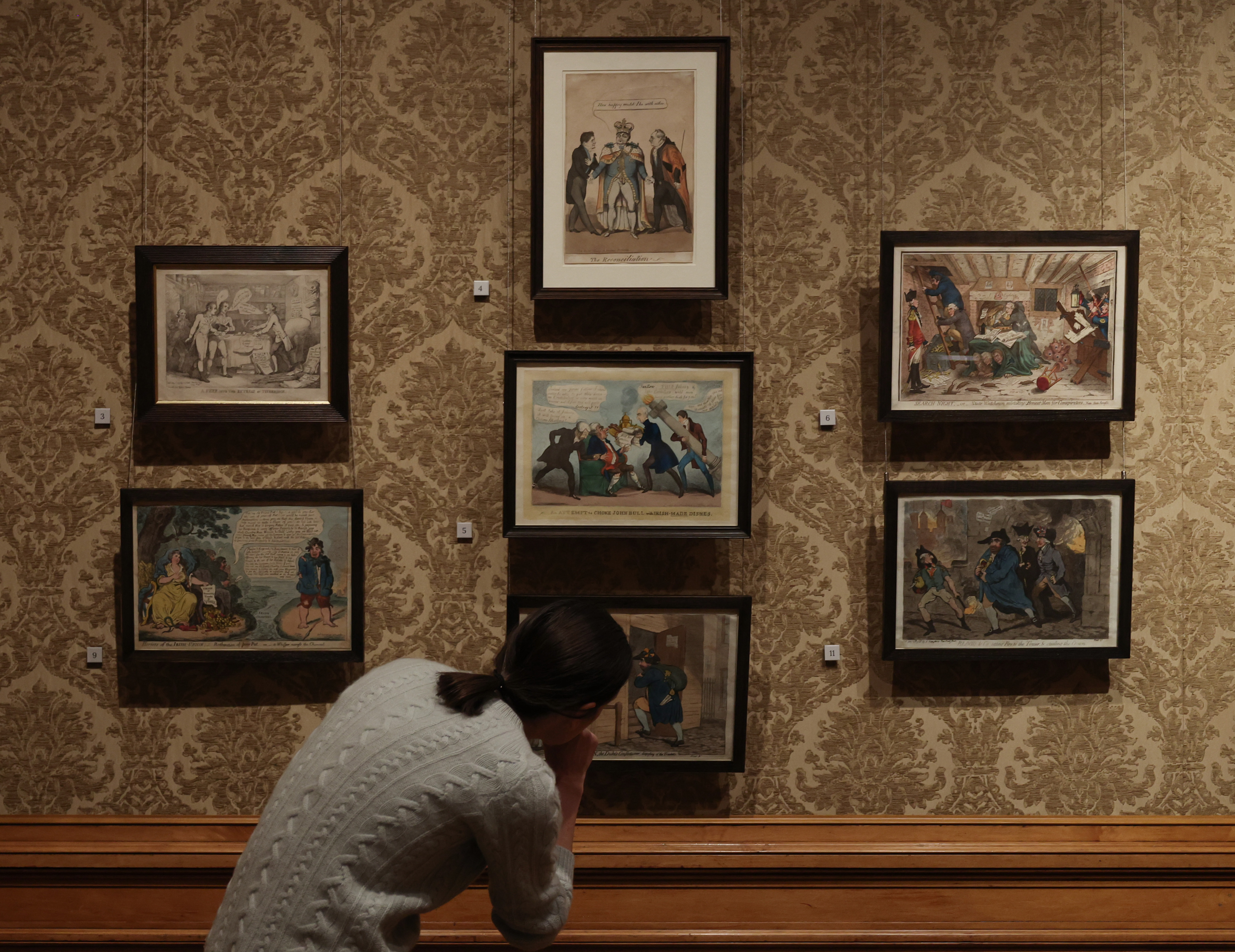
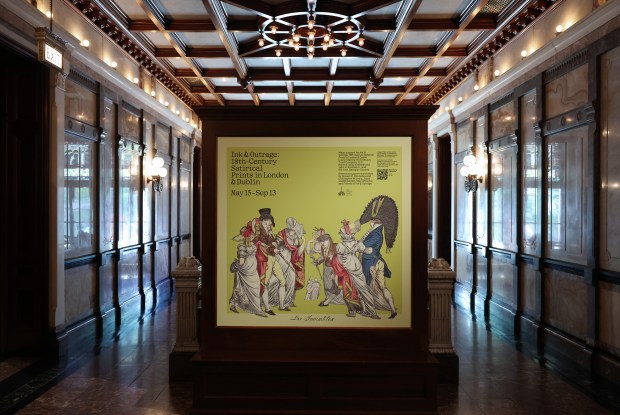
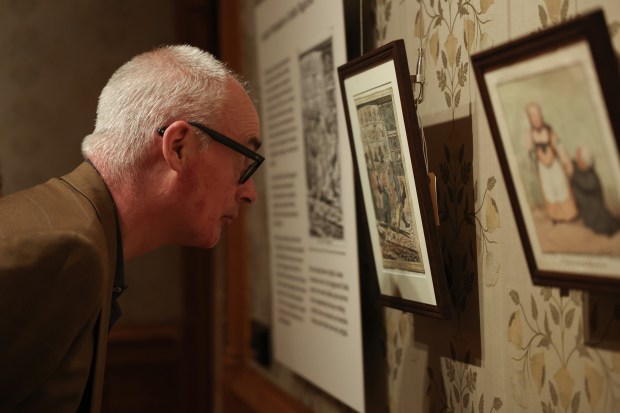
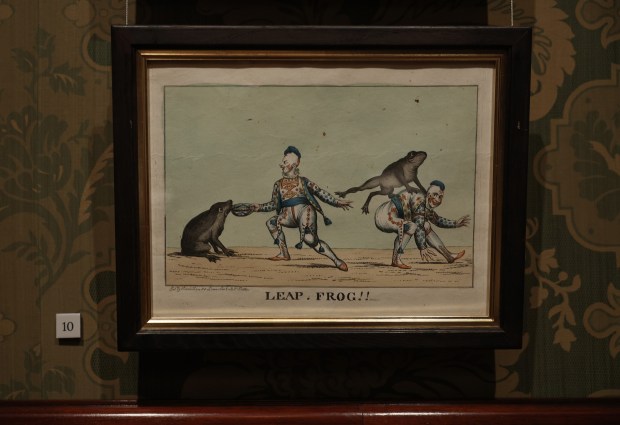

Centuries before late-night TV hosts poked fun at presidents or The Onion mocked the latest political events and social trends, graphic artists in Georgian London pioneered a genre of visual satire that paired irreverent caricatures with ironic text to send up subjects ranging from monarchs to maids. A collection of some 100 prints from this period, including works by celebrated caricaturists James Gillray (1756-1815) and Thomas Rowlandson (1757-1827), is on display through September at the Driehaus Museum in a temporary exhibition: “Ink & Outrage: 18th-Century Satirical Prints in London & Dublin.”
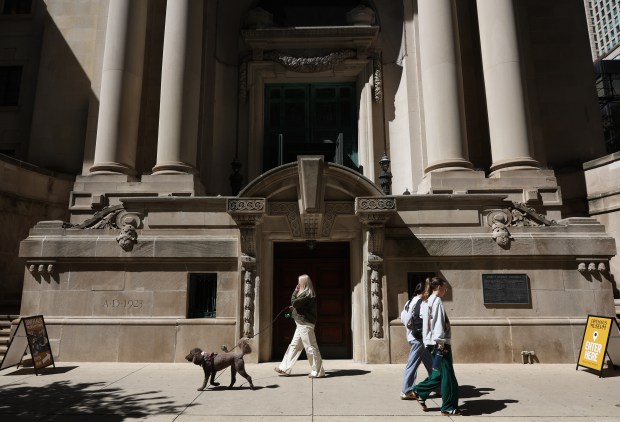
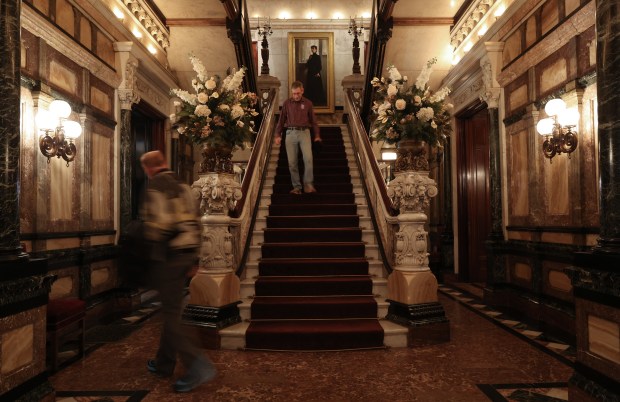
Founded by Richard H. Driehaus, a Chicago businessman, preservationist and art collector who died in 2021, the Driehaus Museum occupies two adjacent buildings in the River North neighborhood. The 1883 Nickerson Mansion is an elegantly restored Gilded-Age residence, while the recently added 1926 Murphy Auditorium is an ornate event venue originally built as a lecture hall for the American College of Surgeons.
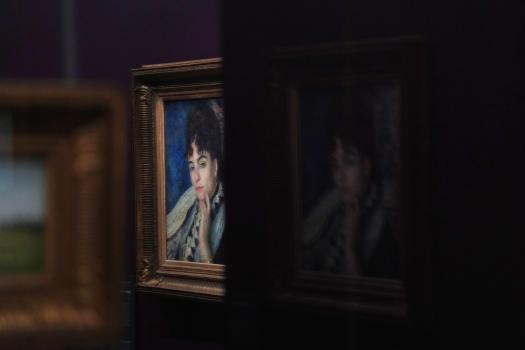
Today, the museum’s permanent and temporary exhibitions focus on the art, architecture and design of the late 19th and early 20th centuries. Although “Ink & Outrage” covers an earlier period, the featured prints prefigure the artistic and intellectual influences that shaped Chicago during the Gilded Age, said executive director Lisa M. Key. The museum’s galleries, which are located throughout the mansion’s richly ornamented rooms, provide an organic visual environment for this art.
Curated by Silvia Beltrametti and William Laffan, “Ink & Outrage” premiered last year at the Irish Architectural Archive in Dublin. A primary theme, one that’s meant to connect the past to the present, is the important role of satire in society. “Irony is liberty, in many ways,” Beltrametti said in a Tribune interview. “I would like (visitors) to think of satire as a way to speak truth to power in a very immediate and direct way.”
Beltrametti noted several historical developments that allowed satirical art to thrive in 18th century England. Censorship of the press was relaxed, while changes in copyright law provided greater protection for visual artists, leading to bolder modes of expression. Meanwhile, literacy rates were rising, so there was a growing readership ready to engage with this budding art form.
“James Gillray, who’s the celebrity of the British satirists at the time, I think we could compare him to an influencer,” she said. “People were true followers of what he was saying, how he was thinking, how he was lampooning the government or known people at the time.”
The exhibition also explores an under-studied element of this period in art history: the ubiquitous plagiarism of English prints by publishers based in Dublin. This is an area of specialty for Beltrametti, who is a lecturer at the School of the Art Institute of Chicago and previously practiced as an intellectual property lawyer.
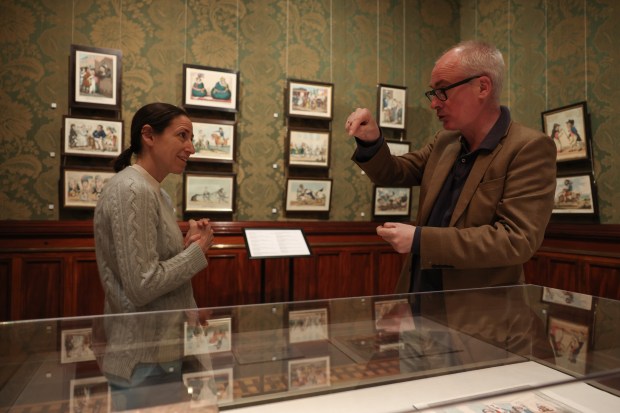
Following the 1735 passage of the Hogarth Act, English copyright law protected engravers of original prints, but this legislation did not apply in Ireland, so unauthorized copies proliferated there, usually created by anonymous artists who took noticeable liberties with the source material. “Ink & Outrage” places some of these Irish copies side-by-side with their English originals, aiming to prompt conversations about originality and intellectual property that resonate in today’s digital age.
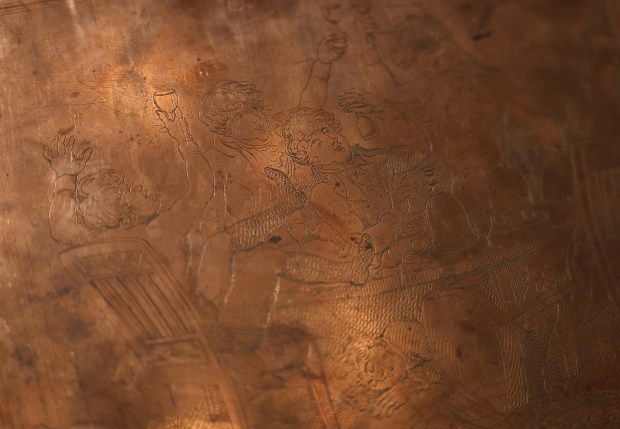
Creating these prints was a time-intensive process requiring multiple artisans with specialized skills. Artists such as Gillray hand-drew their pieces onto copper plates, which were then etched, inked and printed on a custom press that transferred a detailed black-and-white image onto paper. Then, another artist would add color to each print. In the side-by-side displays at the Driehaus, stylistic differences are apparent between the English originals and Irish copies, with the latter often employing more vibrant color schemes.

Publishers such as Hannah Humphrey, with whom Gillray exclusively worked, sold these prints in shops, displaying their wares in windows for passersby to peruse. Consumers often collected individual prints in bound albums that they would pass around at social gatherings. These curated collections signified aspects of the owner’s personality and interests, similarly to how a person’s social media presence might function today.
Throughout the summer, the Driehaus will host several events related to the exhibition, including a panel discussion with The Onion’s head writer Mike Gillis and staff writer Rob Knoll and The New Yorker caricaturist Tom Bachtell (Aug. 6). Other programs will explore topics such as engraving techniques, Georgian fashion and Irish music.
The museum is also partnering with the Newberry Library to promote the latter’s related exhibition opening in June: “Conceived in Liberty: Cartoons, Caricatures and Illustrations in the Wartime United States, 1812-1918.” Part of the Newberry’s commemoration of the 250th anniversary of the Declaration of Independence, the exhibition examines how visual artists living through periods of war responded to national and international events.
Together, these two exhibitions offer a rare opportunity to view satirical art from both sides of the Atlantic, commenting on events from the Irish Rebellion of 1798 to the First World War — a treat for lovers of history and humor alike.
Emily McClanathan is a freelance critic.
If you go
“Ink & Outrage: 18th Century Satirical Prints in London & Dublin” runs through Sept. 13 at the Driehaus Museum, 50 E. Erie St.; included with museum admission, $13-$23 (free for active military and children 12 & under), driehausmuseum.org
“Conceived in Liberty: Cartoons, Caricatures, and Illustrations in the Wartime United States, 1812-1918” runs June 11 to Sept. 19 in the Newberry Library’s Trienens Galleries, 60 W. Walton St.; free, newberry.org