

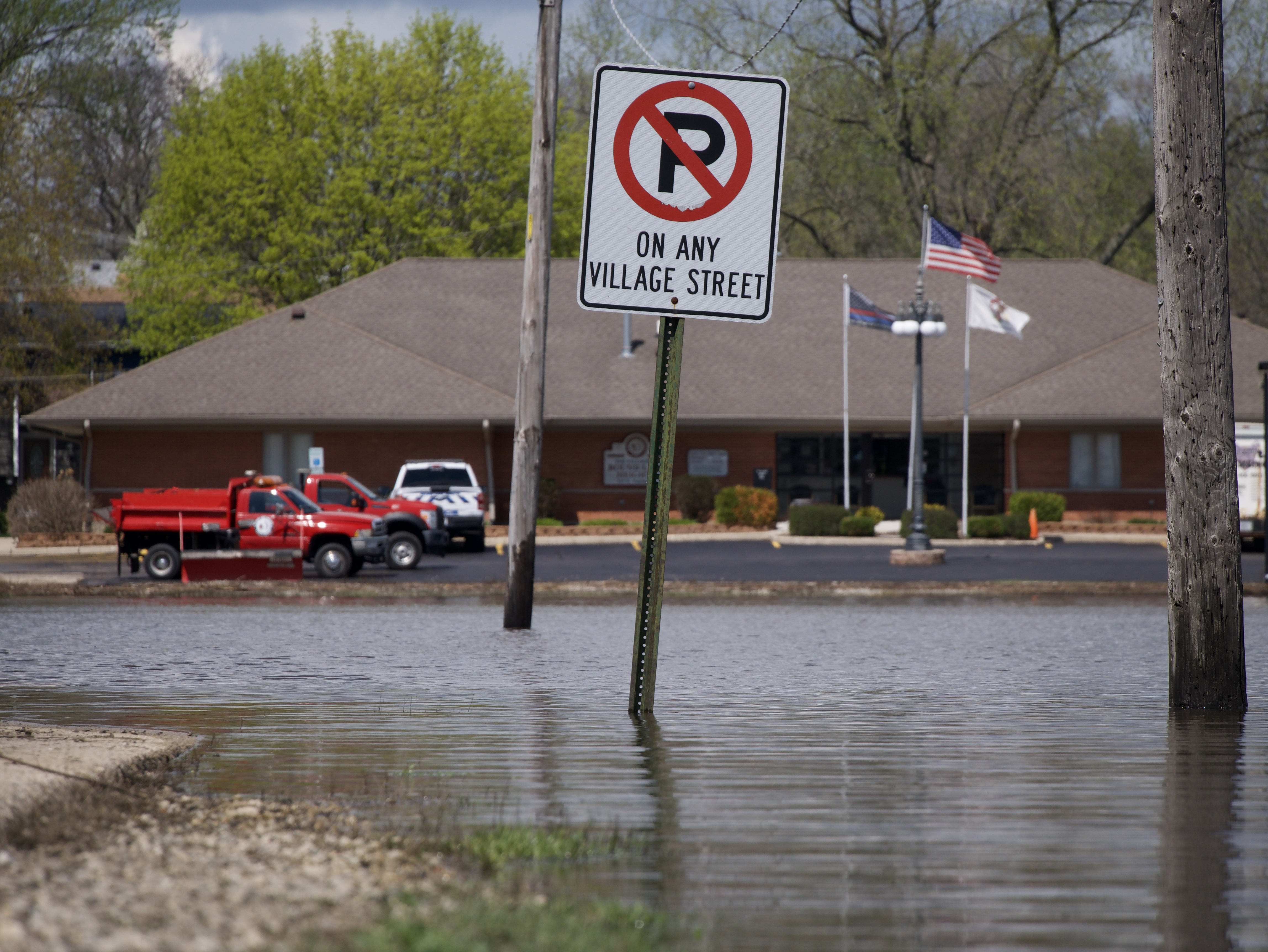

Since the rain and flooding Lake County experienced last month, the county’s Emergency Management Agency has been conducting internal lookbacks to review its efforts as uncertainty grows around what federal support in a more critical emergency will look like in the future.
In mid-April, the region saw a series of storm systems that caused flooding throughout the region. The Des Plaines River, which runs from Wisconsin through Lake County, rose to 18 feet at one point.
Daniel Eder, manager of the Lake County EMA, compared the storms to a much more devastating rain event in July 2017, which caused major damage to hundreds of homes and led then-Gov. Bruce Rauner to declare 18 counties, including Lake, as state disaster areas.
Eder had been a relative newcomer to the agency at the time, he said, and the lessons learned can be seen in the work undertaken since.
April’s showers were much more spread out in comparison, Eder said, although officials saw water levels come “close” to record levels. Still, “the level of impacts that we were getting were limited,” he said, speaking about Lake County specifically.
The EMA acts as a coordination agency in emergencies, working with municipalities, townships, nonprofits and other organizations to create and review emergency operations plans. During emergencies, it helps share and coordinate resources and information.
Before the major storm system on April 17, Eder said authorities were already staging assets and resources, preparing for potential community impacts. They activated on the following day.
Eder said they saw 23 different resource requests, 21 information requests, gave out 94,000 sandbags and several hundred clean-up kits. Later in April, McHenry and Lake counties hosted two multi-agency resource centers for impacted residents. EMA also collaborated with organizations to place shelters, multipurpose facilities and volunteers on standby.
“Our goal was to try to get resources and information out as fast as we could,” he said.
Since April, Eder said officials have been reviewing what happened and what internal lessons they have learned. Such assessments are “pretty normal,” he said.
One big takeaway has been the advent of new technologies and available data, Eder said, and the importance of building processes to get that information out to community partners effectively.
But the agency’s bigger concern looking ahead is the more serious, high-impact weather events, such as tornadoes or other major storms, which he said have grown more common in Illinois. With “so many unknowns” regarding the federal government, “especially with FEMA,” they have to plan ahead. How can they “holistically” approach the possible impacts — especially the long-term impacts — of an emergency?
“The emergency happens and the flood waters go down, but the impact sometimes can be very, very long term,” Eder said. “It’s not that hard to get sandbags out there to the community. It’s much more challenging to deal with the larger community impacts and needs.”
EMA needs to understand what resources it — and its partners — have, Eder said, to prepare for situations where resources may be limited. The more officials build in advance, “the better.”


