
Looking at my last few reviews, I see a Reese Witherspoon book club selection (“The Fine Art of Lying” by Alexandra Andrews), the most reviewed literary fiction of the season (“Transcription” by Ben Lerner), and the 11th novel by an award-winning and widely read national literary treasure (“Things We Never Say” by Elizabeth Strout).
All those books are plenty worthy, but so is this week’s book, which is going to get much less public attention but deserves many readers because it is terrific.
“Silver Lake” by Alex Pugsley came to me via the small but increasingly prominent (in my reading life) independent Canadian publisher, Biblioasis. Biblioasis also published one of my top books of last year, “Passenger Seat” (Vijay Khurana) as well as the strange and haunting “Benbecula” (Graeme Macrae Burnet).
“Silver Lake” is billed as a Hollywood novel in the vein of Michael Tolkin’s classic, “The Player.” And while you can certainly hear echoes of Tolkin’s piercing satire, “Silver Lake” is much kinder to its characters, infused with a generosity of spirit for the weird and hopeless dreamers who come from places like Tennessee or Toronto and find themselves caught up in the star-making machinery.
Our narrator is Aubrey McKee, an earnest Canadian comedy writer who seizes a slim thread of opportunity to move south to the States and finds himself a stranger in a strange land. McKee is apparently a fictional avatar of Pugsley who has had a number of successes writing for scripted television and even wrote and directed his own well-regarded feature, but this is no roman à clef. Whomever the parade of writers, producers and performers McKee comes across are meant to represent in real life does not matter, as we are quickly absorbed in his picaresque about the challenge of navigating the entertainment business and the allure of fellow Canadian and burgeoning star, Poppy Price.
The novel is organized in sections that both read like stand-alone stories and work as part of a cohesive, sustained narrative. We start in Toronto, where McKee labors as an assistant to a successful producer of semi-shlock, Twinkle Zitner, before moving to Los Angeles for a writing gig on a nightly talk show hosted by a former NHL power forward.
McKee turns a script supervisor gig on a children’s serial, “Starship Charlie,” into a writing gig when an order for extra episodes gives him the chance to do a script of his own.
Along the way, we meet recurring characters like the actresses Wendy-Jo Bupner and Tilda Van Fleet, and Rick Zimmer, a producer who could bring McKee’s feature film dreams to life.
The episodic structure told through retrospection establishes a narrative presence that is more experienced and wiser than the Aubrey McKee of the moment, sometimes deliberately “spoiling” a future outcome, a technique that pays off nicely as we read our way through the full story of how we arrived there. We understand that McKee has at least survived his time in Hollywood, but we want to know all the gory details.
At the heart of my enjoyment is the fact that Aubrey McKee is interesting and plain good company. His life is both ordinary and extraordinary, and the storytelling holds those seeming opposites in pleasing tension. I was rooting for him, even as I knew some measure of disappointment was inevitable. By the end, I knew Aubrey McKee.
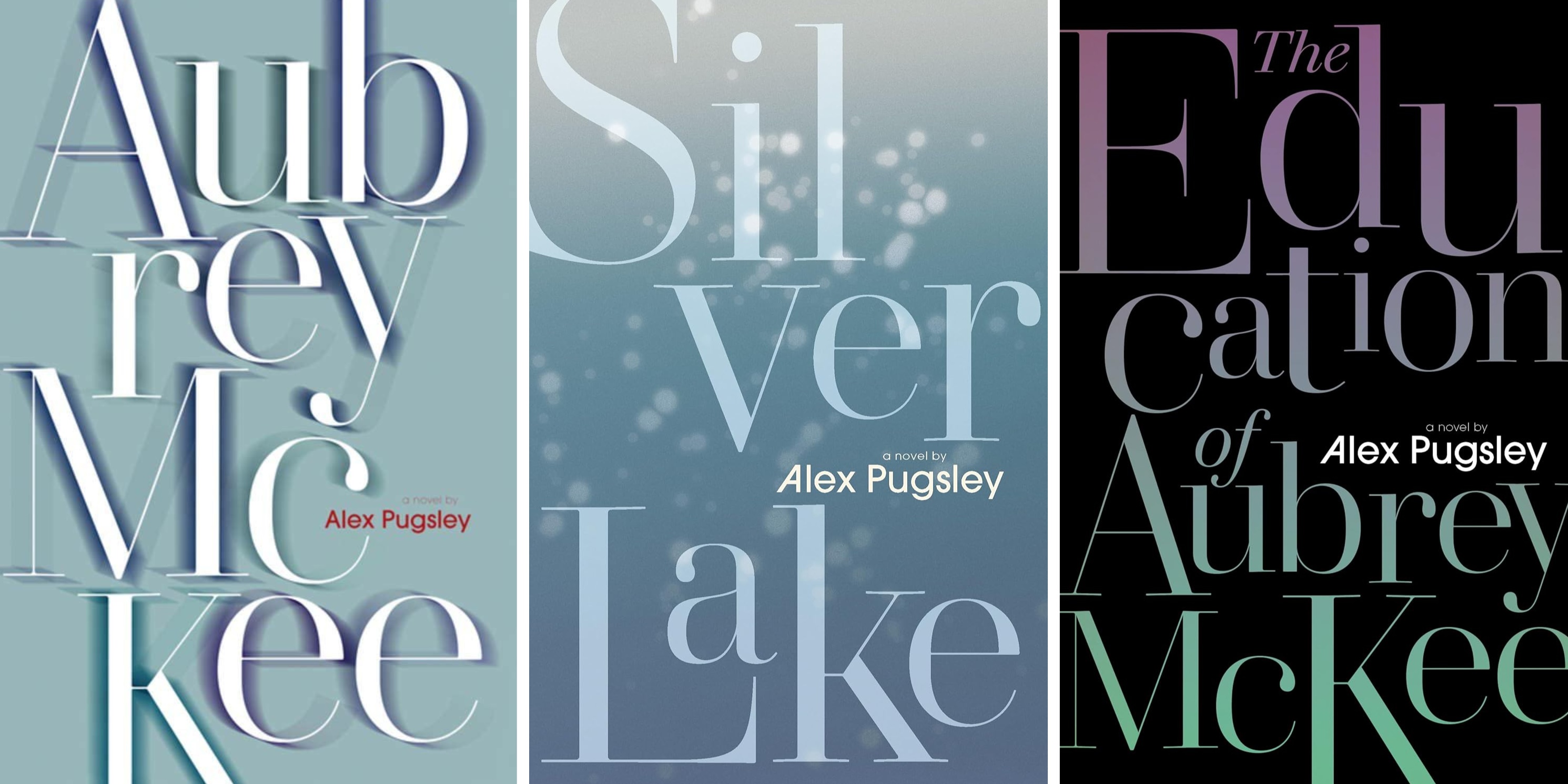
“Silver Lake” is the third Aubrey McKee novel, but I was assured they can be read out of order, an assurance that turned out to be true. I immediately ordered the first two installments — “Aubrey McKee” (2020) and “The Education of Aubrey McKee” (2024). I’m eager to see where this McKee came from.
Book recommendations from the Biblioracle
John Warner tells you what to read based on the last five books you’ve read.
1. “Remarkably Bright Creatures” by Shelby Van Pelt
2. “Isola” by Allegra Goodman
3. “Theo of Golden” by Allen Levi
4. “The Handmaid’s Tale” by Margaret Atwood
5. “The Immortalists” by Chloe Benjamin
— Amelia T., Chicago
No offense to the major celebrity book club books of the world, which are well-represented here, but let’s move Amelia somewhere else, “All This Could Be Yours” by Jami Attenberg.
1. “The Corrections” by Jonathan Franzen
2. “When We Cease to Understand the World” by Benjamin Labatut
3. “Drive Your Plow Over the Bones of the Dead” by Olga Tokarczuk
4. “On the Calculation of Volume (II)” by Solvej Balle
5. “The Director” by Daniel Kehlmann
— Rich P., Highland Park
I’m not even sure this book is still in print, but it’s a great novel about freedom and basketball in post-war Hungary: “Under the Frog” by Tibor Fischer.
1. “My Name Is Lucy Barton” by Elizabeth Strout
2. “Anything is Possible” by Elizabeth Strout
3. “Queen Esther” by John Irving
4. “Commonwealth” by Ann Patchett
5. “Demon Copperhead” by Barbara Kingsolver
— Katherine L., Racine, Wisconsin
I think Lily King’s “Euphoria” has the right mix of history and drama for Katherine.
Get a reading from the Biblioracle
Send a list of the last five books you’ve read and your hometown to biblioracle@gmail.com.
John Warner is the author of books including “More Than Words: How to Think About Writing in the Age of AI.” You can find him at biblioracle.com.