
Illinois legislators recently completed work on a nearly $56 billion spending plan for fiscal year 2027 which, to be fair, has some good, bad and ugly provisions.
The preamble to the Illinois Constitution tasks the state with some specific objectives — like eliminating poverty and inequality and ensuring legal, social and economic justice. It mandates the Illinois government to provide opportunities for the fullest development of the individual. This is not merely aspirational, it is foundational to the constitution.
It does not take into consideration which party controls the White House, Congress or Springfield. The Illinois budget and good policies are the catalyst to achieving the goals in the preamble. Does this budget do enough to close widening health and wealth disparities in underserved communities?
The budget passed by the legislature provides an additional $350 million for K-12 education meeting the minimum required under the 2017 evidence-based funding model. Also, the Local Government Distributive Fund was spared from cuts in the budget. Hopefully, this means no new property tax increases for homeowners. Residents and businesses in Illinois need relief from higher taxes and certainty around property taxes.
Legislative leaders did not address students passing from one grade to the next without meeting proficiency in reading and math. Comprehensive literacy program funding remained flat at $1.5 million, the same as 2026, despite data showing that nearly 50% of students in early elementary grades are reading below grade level proficiency.
“From start to finish, the work of the legislative session we just completed was informed by the priorities and values of Illinois families, like lowering costs, investing in and protecting our children, laying the foundation for long-term economic development and job creation, and improving our state’s overall fiscal health,” Gov. JB Pritzker said at a press conference regarding the budget.
Someone should ask Pritzker: How are you protecting children when they are graduating and many cannot read or do math at grade level? How is this improving our state’s overall fiscal health — when many of those children will likely end up in prison, or worse, a victim of violence? The preamble mandates that Illinois leaders pass policies that provide opportunities for the fullest development of the individual.
The budget does address some affordability concerns even though it raises more than $900 million in new taxes, fees and fund sweeps.
The temporary suspension of the 1.3-cent scheduled tax increase for the motor fuel tax is appreciated. However, Illinois families are facing $5 per gallon gas, a gasoline sales tax and 48-cent motor fuel tax — double taxation when they go to the pump. The legislature left that in place. They did provide a limited back-to-school sales tax holiday later this year.
Arguably, the war in Iran has dramatically increased gas tax revenues for the state. In fact, the budget calls for transferring $150 million from mass transit to subsidize the state’s operating budget. The gas tax is literally being used to help balance the books.
In addition to passing the budget, Illinois became the last state to comply with a 2023 Supreme Court decision regarding property tax sales. The law creates a six-year pilot program where Cook County could buy tax debts, and allow homeowners the right to keep their equity, if there is a surplus after auction. This is a step in the right direction.
Under the budget, legislators will receive a 3% pay increase. This will bump their salaries above $101,000. The legislators are rewarding themselves with pay increases while much of the legislative work remains unfinished.
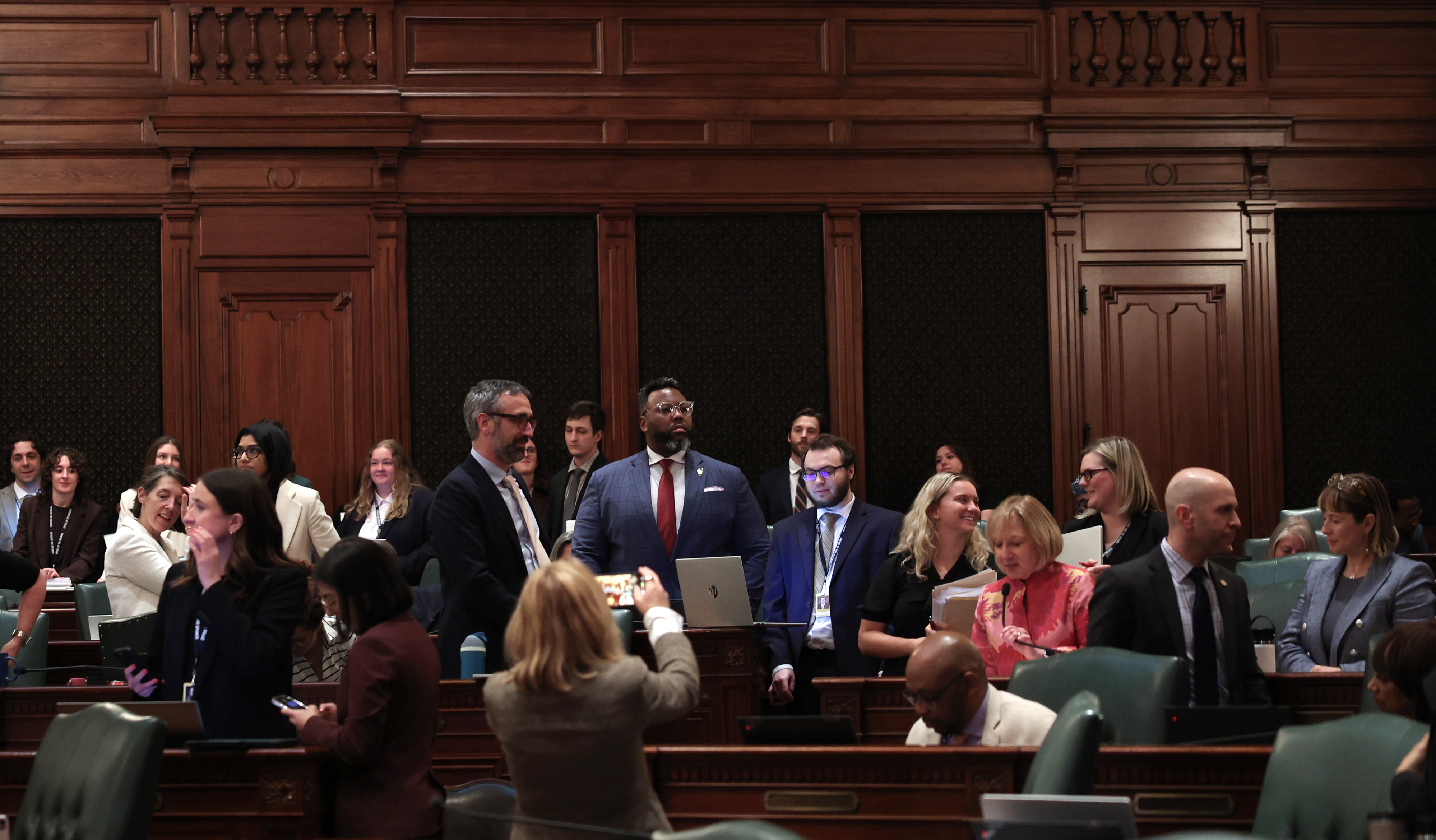
The overall budget process is broken in Illinois. “The 3,700-page spending plan and associated implementation bill were introduced late Saturday evening and about 200 additional pages were added around 2 a.m. on Monday. But other components of the budget, including the capital and revenue bills, were not filed until mid-afternoon on Saturday,” WLS-Ch. 7 noted.
This does not represent democracy. Legislators are being asked to vote on bills that they have not had time to read. Perhaps this represents the less desirable part of the end of session legislative process.
The following are suggestions to improve the budget process:
• Legislative leaders should allow lawmakers, the public and stakeholders a minimum of 48 hours to read the budget and it should be posted online with all amendments.
• Legislative leaders should not rely on fund sweeps, one-time revenue measures and questionable revenue assumptions to balance the budget.
• Legislative leaders should improve transparency and accountability around the budget process.
The budget represents the values and priorities of a state. A good budget receives bipartisan support. It should trouble Illinoisans that not one Republican in the House or Senate voted for this budget. Three Democrats in the Senate voted against the budget. There are some good things in this budget, but we can do better. Illinois is stronger when we all work together irrespective of political party, race or gender.
I write this commentary to make those comfortable with passing budgets that do not reflect equitable investment in all communities uncomfortable.
Willie Wilson is a business owner, philanthropist and former mayoral candidate.
Submit a letter, of no more than 400 words, to the editor here or email letters@chicagotribune.com.