
Have you spotted an unfamiliar fernlike plant in an unexpected place in your yard? Check it out: It might be poison hemlock.
“Poison hemlock has become fairly widespread in the Chicago area in recent years, but it’s unfamiliar enough that people might not recognize it,” said Sharon Yiesla, plant knowledge specialist in the Plant Clinic at The Morton Arboretum in Lisle. “It can be nasty, so a gardener is well advised to learn to identify it.”
All parts of the plant are toxic to ingest. The sap also is dangerous, especially if it comes into contact with scrapes or abrasions or the membranes of the eyes and nose.
Because poison hemlock (Conium maculatum) spreads easily by seed, it’s important to remove or control it before its flowers go to seed.
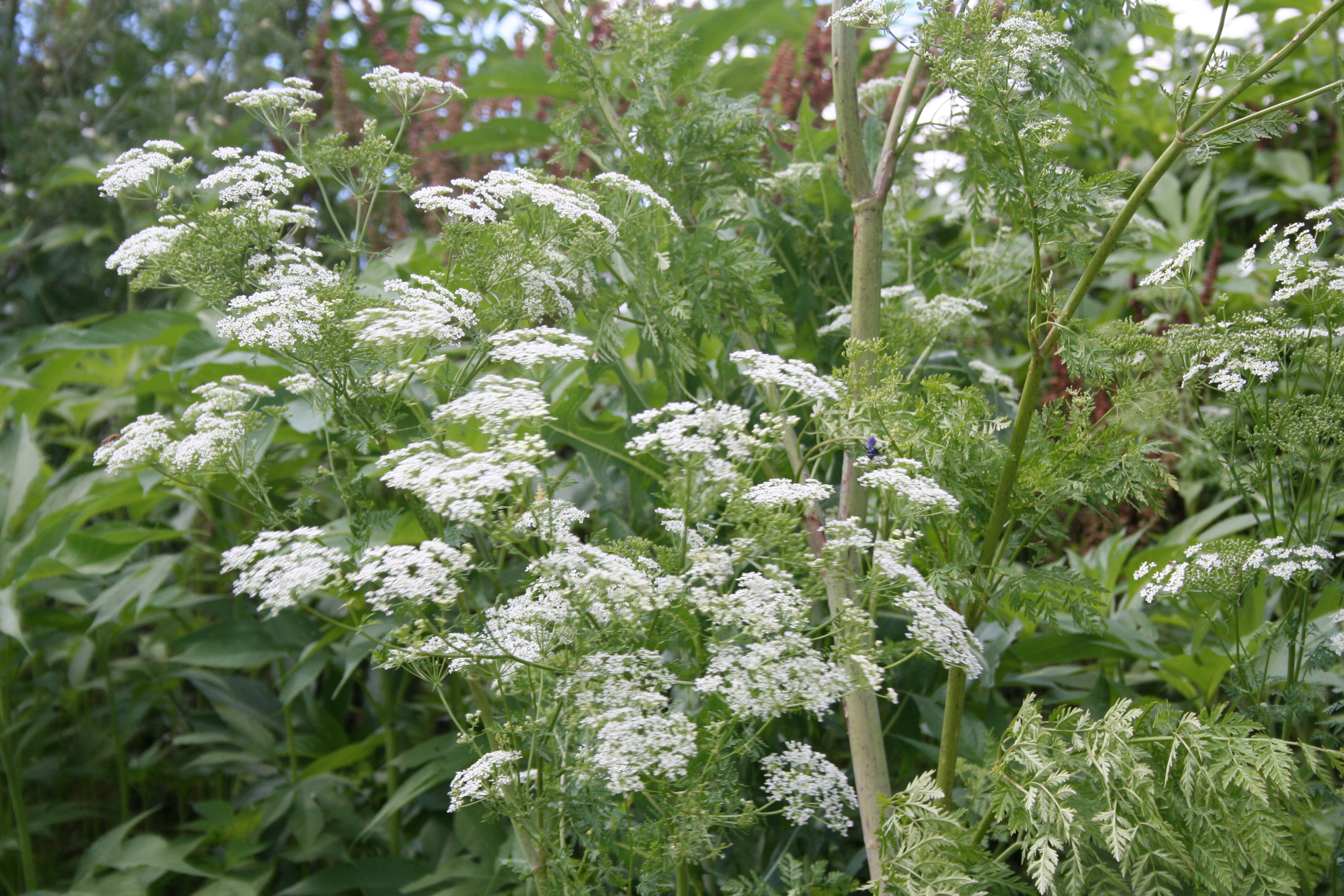
The plant is a biennial, meaning that it lives for two years and forms its flowers and seeds only in the second year. The first year it forms a low rosette of delicate, fernlike leaves. In the second year, a hollow stalk with purple spots grows 5 to 10 feet tall. When the plant blooms in late spring or early summer, it has wide, flat clusters of small flowers that resemble Queen Anne’s lace.
Like Queen Anne’s lace, poison hemlock is a member of the carrot family and has a deep taproot somewhat similar to a carrot. “There are some toxic members of the carrot family,” Yiesla said.
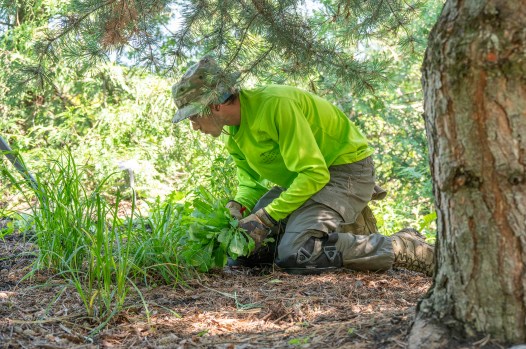
The best way to control poison hemlock is to dig it up before it goes to seed. Protect yourself from the sap by wearing long pants, long sleeves and eye protection.
You can dig up the plant in the first year when it is still a clump of ferny leaves. Be sure to remove all of the long taproot so it doesn’t resprout. For second-year plants, cut back the stalk and then dig up the roots.
To dispose of the plants safely, put them in brown landscape waste bags and set them out for pickup. Do not add them to your home compost.
The plant also can be controlled by applying a nonselective herbicide, but that will not save digging. “If you kill it with a herbicide, you still have to dig it up,” Yiesla said. “So, you might as well just dig up the living plant.”
As always, it is wise to contact the Plant Clinic for advice on choosing and applying any chemical control.
For tree and plant advice, contact the Plant Clinic at The Morton Arboretum (630-719-2424, mortonarb.org/plant-clinic, or plantclinic@mortonarb.org). Beth Botts is a staff writer at the Arboretum.