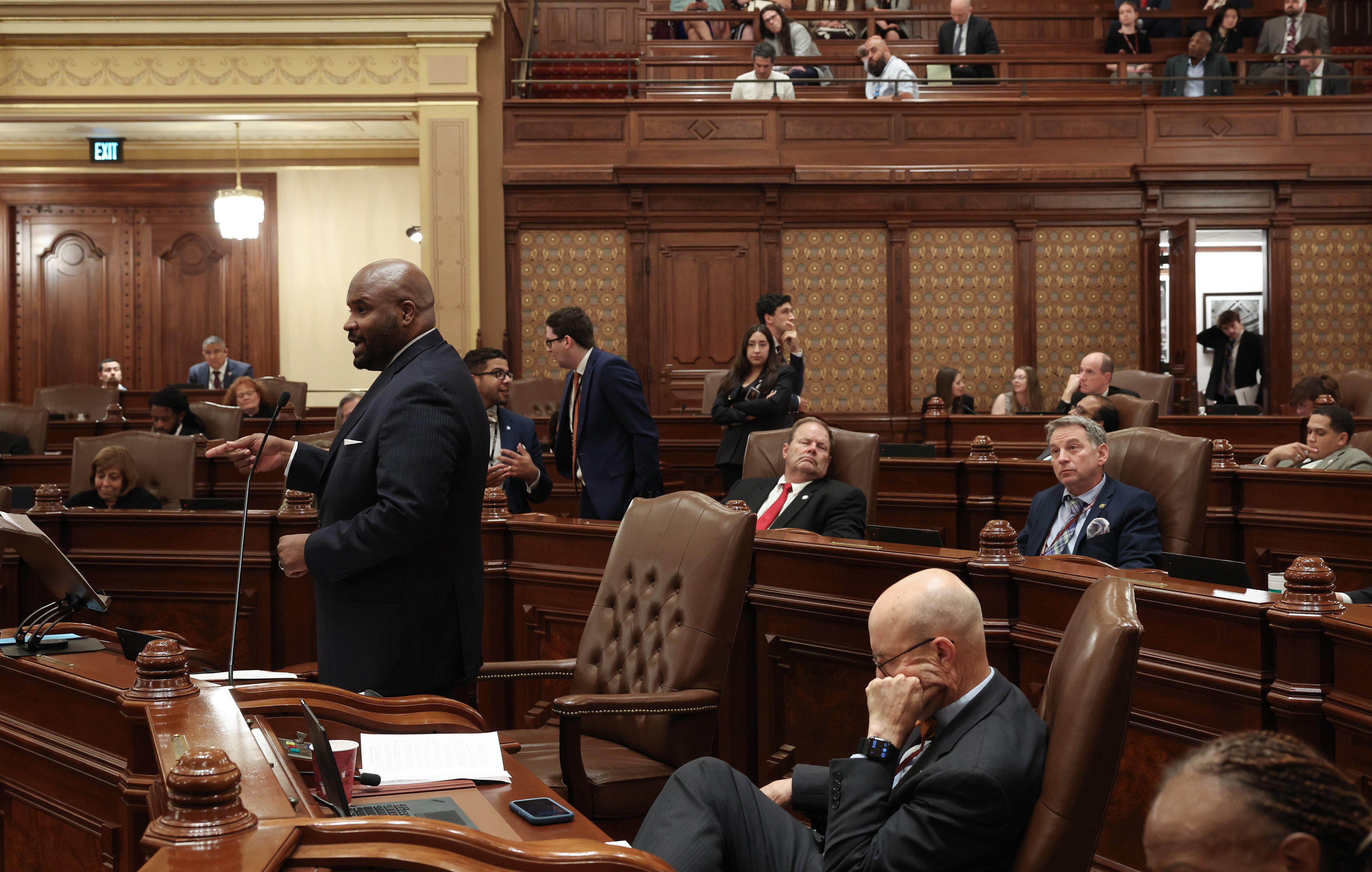

Springfield passed 395 bills this session.
That’s a lot of legislating. But is it good governance?
Lawmakers love sending out press releases boasting about the bills they passed last session. Nobody brags about getting rid of something we don’t need anymore.
Yet, if Illinois were a private company, its board wouldn’t judge management by how many initiatives it launched; it would ask whether the business was healthier than it was a year ago.
State government deserves the same discipline.
When you spend roughly 70 days in the Capitol, every minute counts. And in a state like Illinois, which faces perennial budget deficits and a long list of pressing challenges to tackle, focus matters.
In other words, state lawmakers must get down to business. The question is: Which business? And what results actually matter?
Not tinkering at the margins, but dealing with the most important challenges.
By that standard, Illinois doesn’t quite measure up. The point isn’t that lawmakers should never pass hundreds of bills, it’s that the number tells us almost nothing about whether Springfield politicians are effective stewards of our state government.
Too much remained unfinished.
Consider: Major housing legislation stalled, even as affordability remains the top issue of the day. Dysfunction also led to a Bears stadium fumble even as the team considers switching allegiances with a move to Indiana. Pension debt remains among the state’s steepest fiscal challenges, crowding out Illinois’ ability to invest in the future. As we wrote last month, Illinois spends roughly 65 cents on pensions for every dollar it spends on classrooms. While we spend well below peer states on education, we’re at the top of the list for the percentage of state spending that goes toward pensions.
That’s not the behavior of a healthy state.
Yet addressing this problem was not high on the priority list last session.
This isn’t new. Illinois has long paired flurries of legislative activity with an unwillingness to tackle the elephants in the room. If you thought this last legislative session was an outlier at 395 bills passed, think again. In 2025, state lawmakers pushed through 430 bills. In 2024, Illinois got about 425 new laws.

Springfield has become very good at measuring success by what it adds, but it should also measure success by what it has the discipline to eliminate.
Every successful organization eventually learns that saying “yes” to one priority means saying “no” to another. Legislatures should be no different. If new laws equaled a better-functioning state, Illinois would be thriving.
As a guiding principle, before figuring out what to do next, state lawmakers should be asking: What should we stop doing?
Imagine if every committee began each session by identifying five laws, mandates or reporting requirements that no longer serve a useful purpose before introducing new legislation. Under the Regulatory Sunset Act, many occupational licensing laws periodically come up for review rather than remaining on the books forever. The idea is sound. Springfield should adopt that same habit more broadly, not because fewer laws are always better, but because a simpler government is often a more cost-effective one.
Springfield also should welcome outside perspectives. Business leaders, local officials and policy experts often see inefficiencies that government itself overlooks. They should be invited to identify outdated mandates, unnecessary regulations and redundant processes that no longer serve the public.

Imagine lawmakers celebrating the obsolete mandates they repealed with the same enthusiasm they devote to announcing new legislation. Removing unnecessary costs for families and employers would make Illinois an easier place to live and do business.
But beyond cutting out the unessential, a useful state scorecard would track the state’s vital signs, not bills passed. More importantly, it would force lawmakers to organize their agendas around improving those indicators year after year.
On fiscal health, we need to be obsessively tracking things like our rainy day fund and our pension funded ratio. On economic growth, we need to be tracking population growth (which, fortunately, has recently turned positive in recent years after a long stretch of serious decline) — and not just the top-line numbers, but details on who’s leaving and who’s coming in. We can learn a lot about confidence in our state based on things like domestic migration, along with jobs created, new business formation and median household income.
What about family quality of life? Can people afford a home here, and what are homeownership rates here versus our neighbors and peers? What about access to childcare and how much it costs?
We have no doubt this information exists already. The public ought to have an easy-to-access dashboard that tracks these sorts of indicators, similar to how the Illinois comptroller makes public key fiscal data.
Public safety, education and transportation belong on the dashboard as well.
Those metrics would provide a far clearer picture of whether Illinois is becoming a healthier state than the number of bills lawmakers managed to pass. More important, they would give taxpayers a way to judge whether the policies coming out of Springfield are actually moving the state in the right direction.
Layers and layers of red tape and other obstacles add to Illinois’ reputation as a difficult place to get things done. To change that, every legislative session should leave Illinois with not just new laws, but a simpler statute book than it had the year before.
Springfield shouldn’t be in the business of handing out participation awards simply for passing a heap of new laws. The legislature will know it’s succeeding not when it passes another 395 bills, but when Illinois is measurably healthier, government is more streamlined and the state is making more than marginal progress on its biggest challenges.
Submit a letter, of no more than 400 words, to the editor here or email letters@chicagotribune.com.