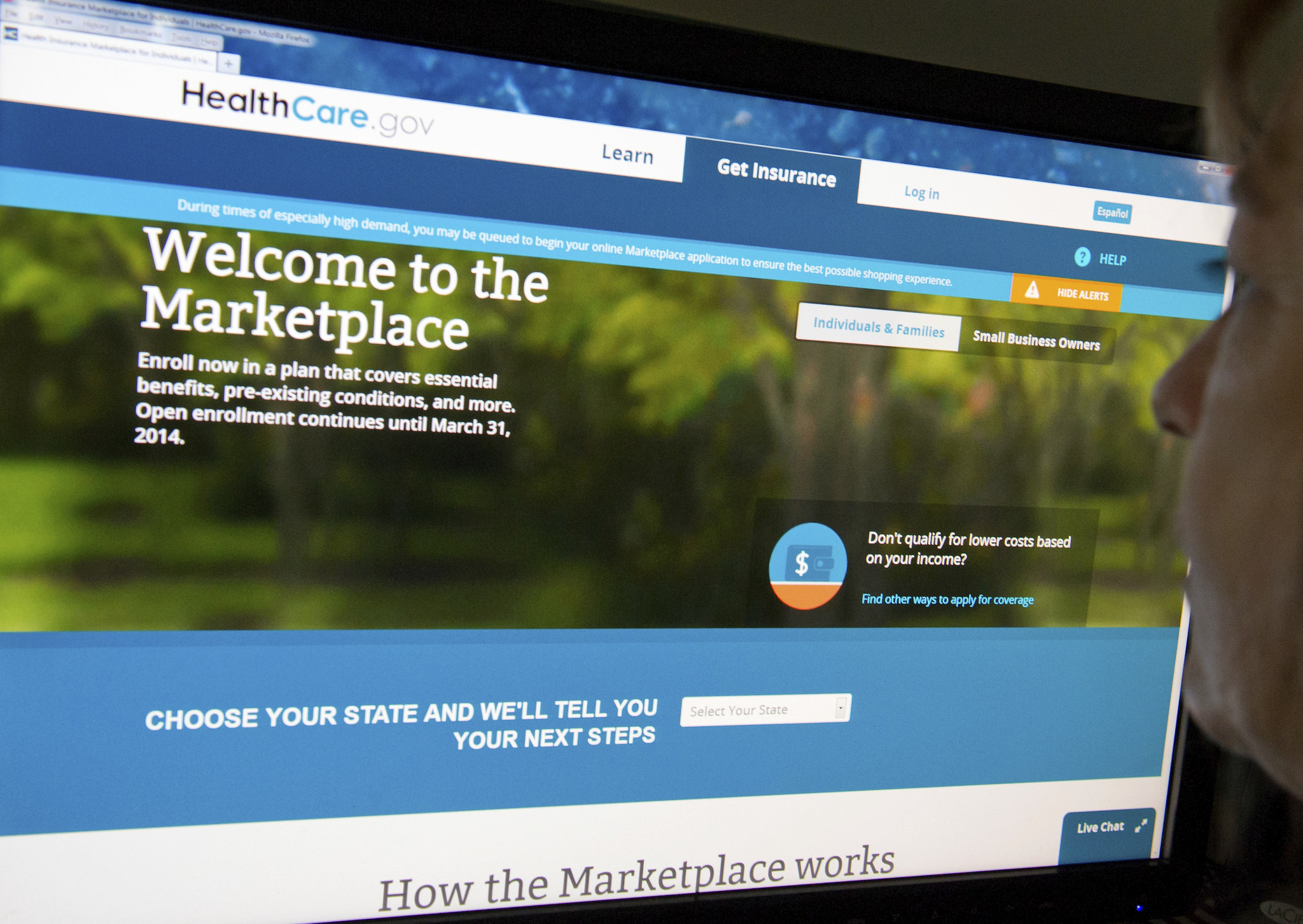

The low-key start of the Affordable Care Act’s second open enrollment period Saturday marked an improvement over last year’s disastrous launch, but consumers and officials face a new set of challenges in the coming months.
The federal website appeared to be functioning smoothly early Saturday, a sharp contrast from a year ago when technical glitches shut down the operation within minutes of its opening. But questions over potential double-billing, rising premiums and the persistent difficulty of reaching minorities and young people hang over the latest enrollment period.
Officials and enrollment counselors outnumbered people looking for insurance at a kickoff event Saturday on Chicago’s South Side, but the low turnout didn’t surprise anyone.
“This is Day 1,” said Jennifer Koehler, director of Get Covered Illinois, the state’s enrollment arm. “Our education and awareness efforts will continue to increase. And we know that traffic will as well.”
Koehler said traffic was steady, and that those who signed up through the HealthCare.gov website were able to do it more quickly than last year. Improvements to the federal website, which Illinois relies on to enroll its residents, cut the number of screens consumers must view to 16, from 76, Koehler said.
Working from lessons learned last year, the state plans to emphasize deadlines in its effort this year to enroll as many as possible of the estimated 700,000 Illinoisans who still lack insurance. Estimates were not available Saturday for how many enrolled in Illinois on the first day.
Federal officials said more than 23,000 people had applied for coverage as of 8 a.m.Saturday.
The new enrollment period runs until Feb. 15, half as long as it was a year ago. Consumers who want coverage beginning Jan. 1 have to enroll by Dec. 15. And those who signed up for a plan last year will be automatically enrolled in the same plan if they don’t take action during the first month of open enrollment.
Under the health law, commonly known as Obamacare, everyone needs to have insurance or pay a penalty. That fine will rise to $325, or 2 percent of yearly household income, whichever is higher, in 2015 from $95, or 1 percent of income. Illinois has been ramping up a $60 million effort to find and sign up residents who remain uninsured, relying on 887 full-time “navigators” trained in the law’s specifics, Koehler said.
Focus groups conducted by state officials during the summer showed that the uninsured remain unfamiliar with the federal health law, Koehler said. But even those enrolling a second time could run into pitfalls.
“The problem is they haven’t resolved all the exchange-to-insurance company issues this year,” said Don Silver, an attorney and author of “Obamacare 2015.” “It may be trickier for people who were covered in 2014 than people coming in new, and the reason is automatic enrollment. There are a bunch of twists and turns.”
It’s possible an enrollee could sign up for a new plan with a different company, be automatically enrolled in the old plan and receive two bills for January.
Insurance companies on the Illinois exchange are aware of the potential problem.
Aetna will seek out members who might have switched plans to make sure they don’t end up with two bills, spokesman Rohan Hutchings said. The company plans to identify people who might have enrolled with a different company, cancel automatic payments for those people and call them to confirm that they switched carriers.
Insurance companies are offering 410 plans on the exchange in Illinois in 2015, up from 165 this year.
Plans are categorized as bronze, silver, gold and platinum based on cost and coverage. Premiums for the cheapest silver plans are rising by an average of 2.6 percent, the state has said. Average premiums for bronze plans also are rising, while some premiums in bronze, silver and gold plans are decreasing.
With premiums shifting, experts say people can save money by shopping around rather than re-enrolling. Subsidies that lower monthly premiums again are available, based on income.
Those with household incomes up to $46,680 for one person and $95,400 for a family of four are eligible for subsidies. Individuals who make less than about $16,100 per year and families that make less than about $32,400 per year are enrolled in Medicaid.
Health insurance expert Carrie McLean with eHealth, a company that helps enroll people in health plans, including through Obamacare, said it’s important to re-enter income information so customers aren’t hit with a tax penalty for receiving a bigger subsidy than they were qualified to receive.
Consumers should also make sure their primary doctors are included in the plan they choose, because insurance companies have limited the number of the doctors in their networks to control costs, McLean said.
Illinois signed up about 217,000 people for plans last year, and 500,000 more have enrolled in Medicaid, cutting the state’s uninsured population to about half of what it was. Officials haven’t said how many of those people paid their premiums. Nationwide, 8 million people signed up and about 7.1 million paid their premiums in 2014, according to the Department of Health and Human Services.
Neither the federal government nor the state has released predictions for the state this year. The Obama administration recently estimated 9 million to 9.9 million people will enroll in 2015, adjusting down an earlier federal estimate of 13 million.
Illinois is tweaking its strategy from last year to increase the time navigators spend in communities with large uninsured populations. This year, the state also expanded a program that trains insurance agents and brokers to sell insurance plans offered on the exchange.
Latinos, African-Americans and millennials were the hardest-to-reach groups in Illinois last year, officials said. Only about 5.6 percent of eligible Latinos and 11.7 percent of eligible African-Americans signed up, according to federal data. About 27 percent of eligible whites signed up. The state has given more federal grant money to organizations with experience in minority communities to help sign people up.
Aside from the difficulties of signing up minorities, enrollment advocates said the uninsured population will in general be harder to reach this year.
People who enrolled last year were “low-hanging fruit,” said David Elin, Illinois director of Enroll America. “Now it’s people who are harder to reach, but we’ve partnered with organizations that have access to that harder-to-reach population.”
More information is available at the Get Covered Illinois website, GetCoveredIllinois.gov or by phone at 866-311-1119.
Reuters contributed.
Twitter @ellenjeanhirst
Twitter @wesventeicher