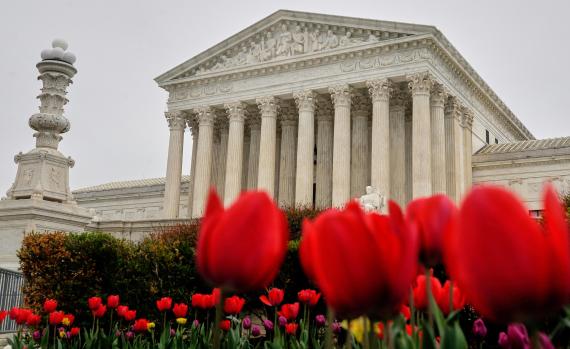
The Indiana Supreme Court unanimously upheld a Gary man’s murder conviction in a deadly gas station shooting.
The decision, issued Tuesday, reversed a lower Indiana Appeals Court decision in May that threw out Marquis Young’s case.
“We conclude that this inconsistency in the evidence did not compel a finding of reasonable doubt,” Indiana Supreme Court Justice Christopher Goff wrote in an opinion. “It was precisely the kind of dispute which the jury was responsible for deciding by weighing the evidence and resolving conflicts in it. Trials are intended for this purpose.”
The late Lake Superior Judge Diane Boswell sentenced Young, 31, in September 2021 to 115 years in the May 3, 2020, murder of Dion Clayton, 27. He was also convicted on two counts of attempted murder for wounding two other men at a gas station near 45th Avenue and Broadway.
Clayton — shot in the abdomen and arm — was found dead two blocks away.
Prosecutors built a “circumstantial” case against Young, with “conflicts and uncertainties that could have led the jury to harbor reasonable doubt”, Goff wrote.
However, the jury had the chance to hear and weigh the evidence for themselves and they “permissibly resolved” those issues, he said. The courts’ other four justices concurred.
The evidence provided included two “low quality” security videos from outside the gas station and at a nearby tavern. They appeared to show a man discarding a lit cigarette just after the shooting. Detectives only collected a cigarette butt two days later, which led to Young.
His cell phone was shut off during the shooting. His internet history appeared to show he searched for how to take a gun apart days later.
In his appeal, Young argued flimsy and contradictory evidence couldn’t prove beyond a reasonable doubt he fired the shots. The state’s evidence couldn’t prove he was even there, citing the videos’ poor quality and inconsistent timestamps between the gas station and tavern’s security cameras.
Goff dismissed these arguments, saying jurors could consider different patches of circumstantial evidence. Detectives also testified they calculated Bugsy Tavern’s camera timestamps were off over a day. Young’s lawyers had the opportunity to cross-examine them, he wrote.
A detective testified he saw no other cigarettes in the “immediate vicinity,” Goff wrote. “The jury could thus have believed that police recovered the very cigarette shown in the Broadway video.”
Previously, the Indiana Appeals Court threw out Young’s case due to the evidence, which it considered problematic.
In the 2-1 judgment, Indiana Court of Appeals Judge Nancy Vaidik wrote that the gun was not found and no motive established. Police had no independent witnesses and couldn’t identify the shooter on surveillance tape. One of the main bits of evidence came from a cigarette — that was flicked off by a man seen on one tape.
Gary detectives located and collected the cigarette evidence in a “high-traffic, public alley” on May 5, 2020 — two days later, she wrote. It was the only one found in the general area seen on tape, with other cigarettes lying elsewhere in the alley.
Police got a tip to “look at Young,” then his DNA matched when the cigarette was sent to the state crime lab, she wrote.
Prosecutors had “pieced together its theory of the shooter’s movements by relying largely on the fact that Young’s DNA was on the cigarette found in the alley two days after the shooting and the (security) footage, which the State acknowledged was of such poor quality that the shooter couldn’t be identified,” she said.
At trial, defense lawyer Mark Gruenhagen argued prosecutors were pinning the case on a “magic cigarette.”
“While we seldom reverse for insufficient evidence, we have an affirmative duty to ensure the proof at trial is sufficient to support the verdict beyond a reasonable doubt,” Vaidik wrote.
Appeals Judge Terry Crone disagreed, writing the evidence could be circumstantial and still hold on appeal.