


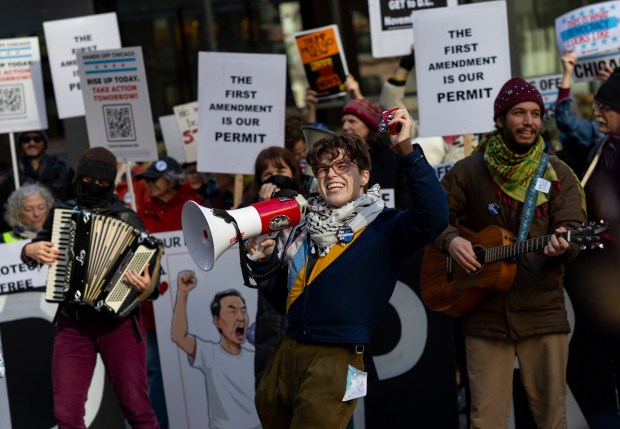
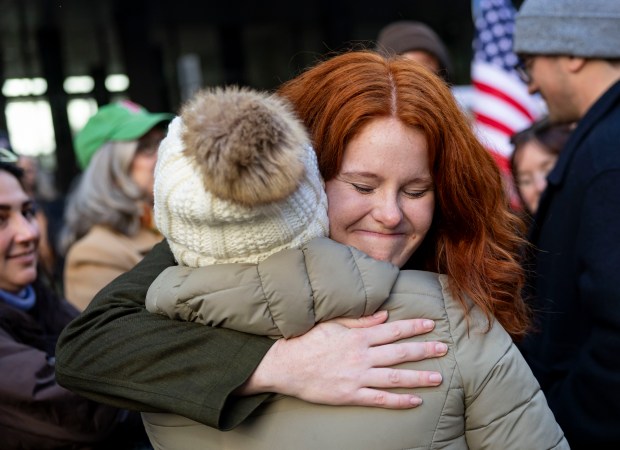

A federal judge on Tuesday rejected defense attorneys’ argument that the government was conducting a vindictive prosecution of four local political figures for their alleged misconduct outside the Broadview processing center at the height of Operation Midway Blitz last fall.
Those defendants, known as the “Broadview Six” — now four after prosecutors dismissed charges against a garden store worker and a onetime candidate for the Cook County Board — represent the final high-profile criminal case to result from the federal government’s sweeping arrest campaign against immigrants without legal status in and around Chicago, which also ensnared hundreds of U.S. citizens. So far, the U.S. attorney’s office has failed to secure a single conviction against protesters and others accused of assaulting or threatening agents.
Defense attorneys argued in court filings last week that President Donald Trump and his senior administration officials “have repeatedly and openly taken steps to improperly bend the Department of Justice toward his personal and political interests” and noted that, out of all the people who had been protesting U.S. Immigration and Customs Enforcement activities in Broadview on Oct. 3, 2025, the government had trained its focus on Democratic officeholders, candidates and political operatives.
But responding to that motion, which sought to force the government to hand over communication with the Chicago U.S. attorney’s office about the case as well as training materials for an ICE agent involved in the case, federal prosecutors derided that argument as “reckless” insinuations of undue political influence stemming from “fevered paranoia and delusional speculation.” U.S. Attorney Andrew Boutros, in an interview last week, was adamant for his part that none of the cases moving through his office involved politics.
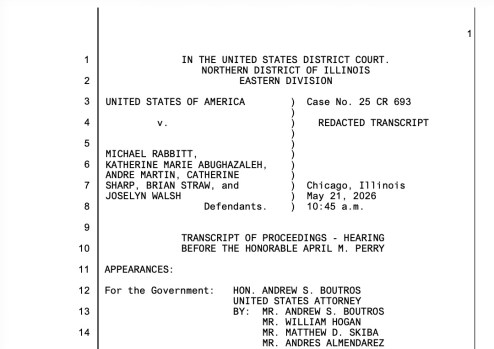
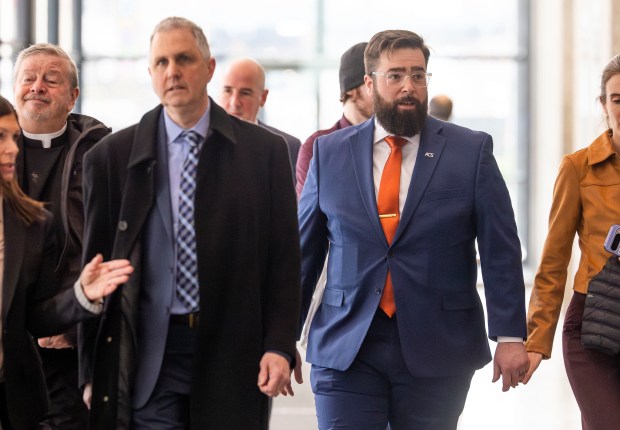
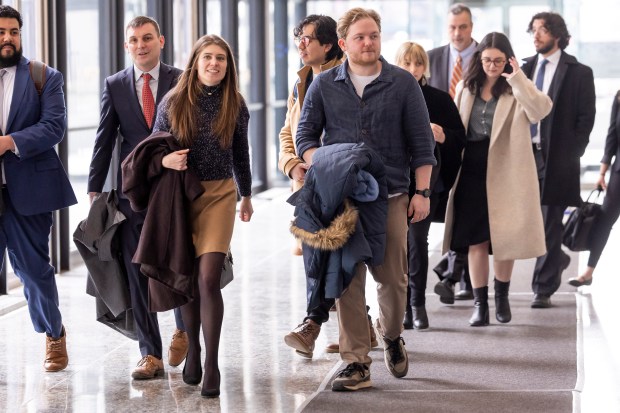
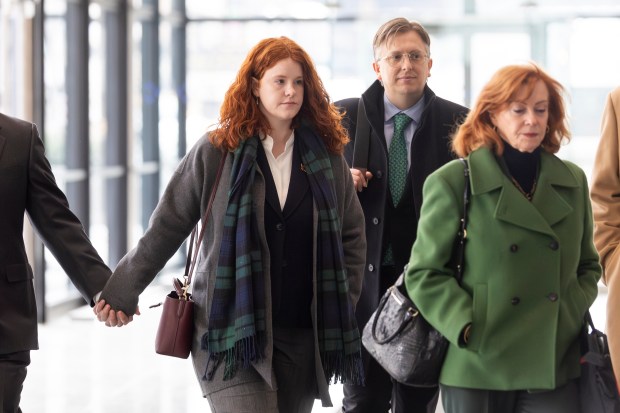
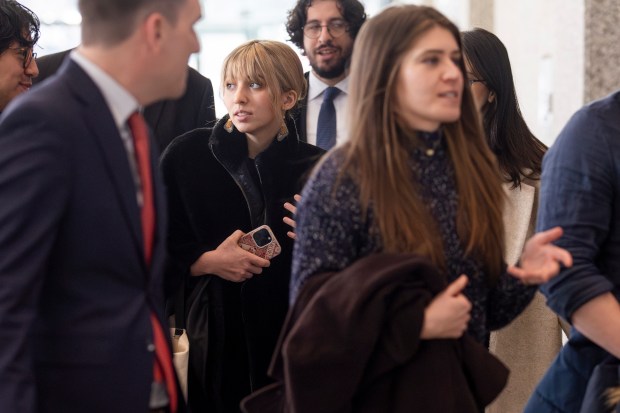
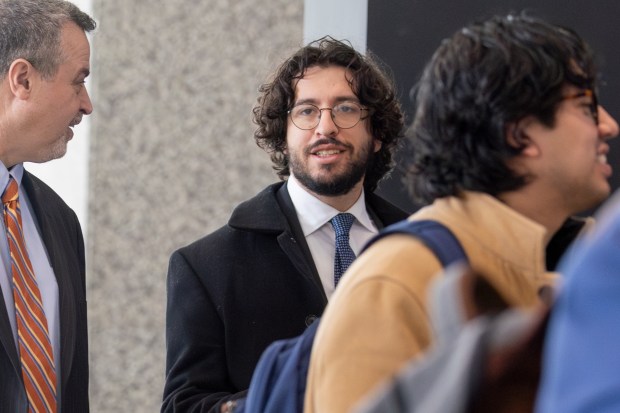
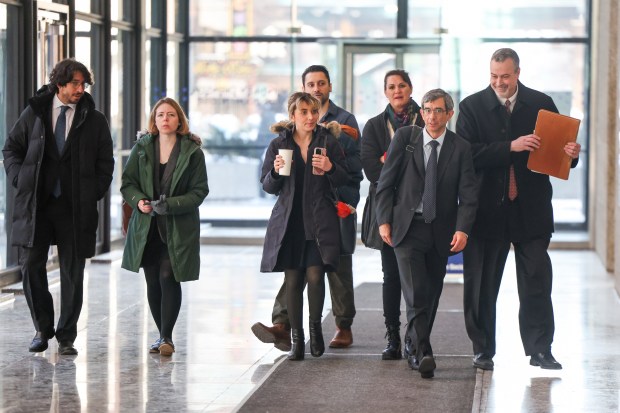
And U.S. District Judge April Perry, addressing the parties Tuesday in her 17th-floor courtroom, said she could find little evidence that prosecutors had been selective with their move to bring charges against former congressional candidate Katherine “Kat” Abughazaleh, her former campaign manager Andre Martin, 45th Ward Committeeman Michael Rabbitt and Democratic Oak Park Village Trustee Brian Straw.
“You all know public officials being charged is the bread and butter of the U.S. attorney’s office,” she said. “You can’t base a malicious or selective prosecution theory on the fact that your client is a politician.”
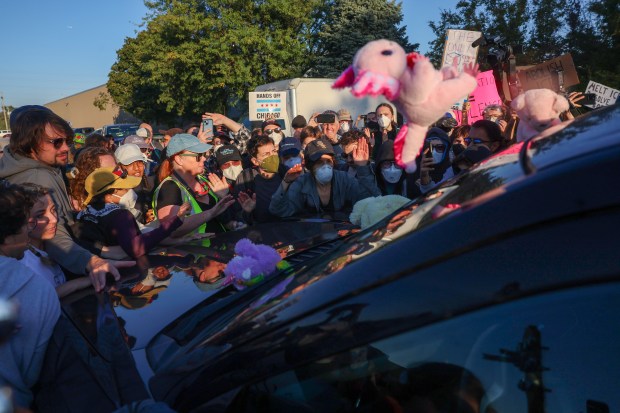
In an 11-page indictment, prosecutors alleged that the group surrounded an ICE vehicle outside the Broadview facility during a Sept. 26 protest and “banged aggressively” on the vehicle’s side and back windows, hood and doors before they “crowded together in the front and side of the Government Vehicle and pushed against the vehicle to hinder and impede its movement.”
They further alleged that the protesters scratched the vehicle’s body, broke a side mirror and a rear windshield wiper and etched the word “PIG” into the paint — though no one listed in the indictment is accused of specifically causing that damage.
Had there been counterprotesters espousing different political beliefs from the defendants present at Broadview the day the alleged illegal actions took place, Perry said, that might have been another story. But as far as she could tell, she said, everyone at Broadview that day had had largely similar politics.
Perry also declined to order prosecutors to further detail how they had gathered communications relevant to the case, saying she would not “micromanage” the discovery process and that she trusted the prosecutors on the case to do their jobs well.
However, upon hearing that prosecutors themselves had not gone through an agent’s phone to review the entirety of text messages that could be turned over to the defense team, Perry did weigh in, telling prosecutors that if it were her, she would be “very uncomfortable leaving it up to some random third party” like an ICE lawyer to set the course.
Her admonition came days after new court filings surfaced a set of text messages between the ICE agent whose car was allegedly damaged by the Broadview defendants and a group of unnamed associates, exchanged in the days after prosecutors first indicted the group.
The ICE agent texted to the group, “Well, we’ll see how long I stay unnamed…”
“You’re gonna be famous bruh,” someone texted back.
“Only among lefties,” the agent responded.
It’s the second time a federal agent’s texts following a high-profile incident during Operation Midway Blitz have become part of a federal criminal case. In October, Border Patrol Agent Charles Exum’s bragging texts sent after he shot Marimar Martinez six times following a traffic crash in Brighton Park helped derail the assault case against her.
In the motion filed last week, defense attorneys requested that the government produce communications between the White House, Trump administration officials and the Chicago U.S. attorney’s office, as well as records regarding law enforcement training and directives around protests at the Broadview facility.
The requests had led to some heated back-and-forth between prosecutors and defense attorneys. In a March 31 email to Assistant U.S. Attorney Bill Hogan, defense attorney Christopher Parente referenced prosecutors’ “vitriol” in a response to their motion.
“Nobody on the defense team is making accusations against any line AUSA regarding improper motives in their handling of this case,” Parente wrote.
“Given the outrageous way this White House and DOJ has operated recently we were compelled to request if there are any evidence of communications from them about this case,” he continued. “They clearly have infected numerous other prosecutions/investigations, so you should appreciate why we had to inquire of this one.”
A jury trial is set for May 26. The remaining defendants could face up to six years in federal prison if they are convicted of the conspiracy count. The other counts are each punishable by up to one year in federal prison.