
Many gardeners today are planting pollinator gardens to attract bees, butterflies, moths, hummingbirds and other wildlife.
“Just don’t forget to plant for nectar,” said Sharon Yiesla, plant knowledge specialist in the Plant Clinic at The Morton Arboretum in Lisle. “The wildlife needs nectar just as much as pollen.”
Nectar is a sweet, syrupy liquid produced in the blossoms, stems and leaves of many plants. It’s a food reward that entices animals to provide the service of fertilizing plants by carrying their pollen from one bloom to another. Insects such as migrating monarch butterflies and some other animals, such as hummingbirds, depend on energy-rich nectar for fuel.
“Most flowers with showy blooms produce some nectar that will attract insects,” Yiesla said. Native plants generally play an especially big role in providing pollen and nectar for native insects.
Plant your garden to have something in flower all season long. “We’re attracted to plants that are in bloom in springtime, when we’re shopping in the garden center and planting the garden,” Yiesla said. “But insects will also need plants that flower in July, August and September.”
Native plants are the natural food source for native animals, such as the more than 500 bee species of the Chicago region. But many non-native plants also can be good nectar and pollen sources. Just check that a non-native plant is not invasive before you choose it for your garden.
“Aim for variety in flower colors as well as flower shapes to attract the widest variety of insects,” Yiesla said. Some insects and other animals have evolved to take pollen or nectar from specific plant species or flowers of a particular shape or a particular range of colors.
Spring-flowering nectar sources include the native Virginia bluebells, wild columbine, wild geranium and woodland phlox. Many native and non-native shrubs that bloom in spring also are good nectar sources, such as dwarf fothergilla, chokeberry, winterberry holly, Virginia sweetspire, Carolina allspice, beautyberry and viburnums.
For summer-flowering perennials that provide plenty of nectar, consider rudbeckia, purple coneflower, bee balm, milkweed and penstemon, as well as some non-native plants such as catmint and lavender. Your shrubs might include buttonbush, lead plant, hardy hydrangeas, ninebark and bottlebrush buckeye. For a vine, the native trumpet honeysuckle is a better choice than trumpet creeper, which can be considered invasive.
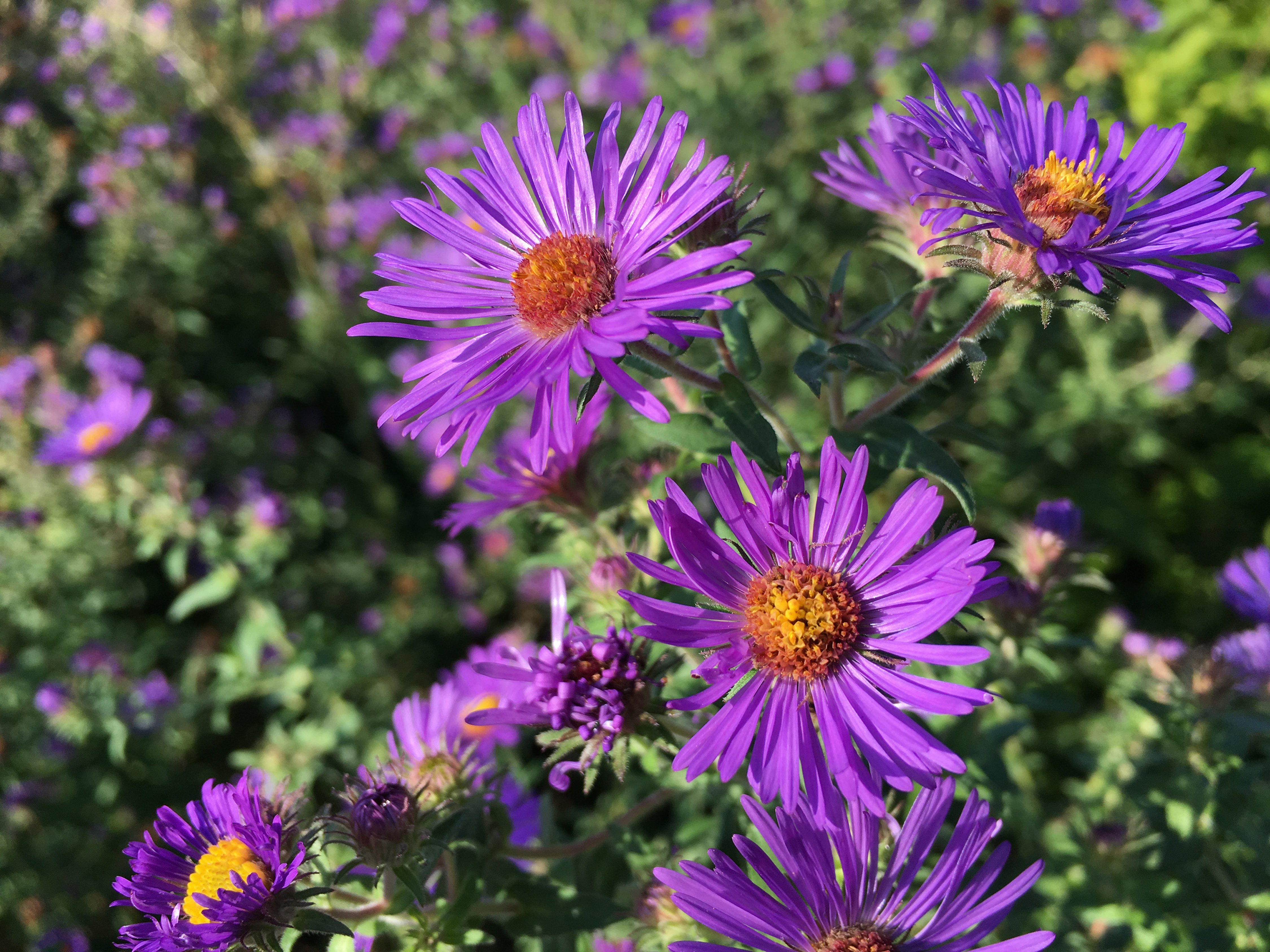
Plants that flower in late August and September will offer food when monarchs need nectar for their long migration south to Mexico, and support other animals as they are stoking up their food stores to prepare for winter. Consider late-blooming native plants such as asters, goldenrod, ironweed, Joe Pye weed, and sneezeweed, as well as some non-natives including tall sedums, dahlias, toad lilies, zinnias, Bolivian verbena, reblooming roses and anise hyssop. Shrub choices might include caryopteris and the native fall-blooming witch-hazel.
For more ideas for pollinator gardens, see mortonarb.org/pollinator-plants.
Plants aren’t all that matters in a pollinator garden. Provide a water source, such as a shallow birdbath that you clean and refill regularly. Avoid using pesticides, since anything you spray on your plants may harm the animals that are dining on them. That means tolerating a certain level of damage from leaf-eating insects.
“You’ll see some holes and ragged edges, especially as the season goes on,” Yiesla said. “But you’ll also enjoy a lot more bees, butterflies and birds in your garden.”
For tree and plant advice, contact the Plant Clinic at The Morton Arboretum (630-719-2424, mortonarb.org/plant-clinic, or plantclinic@mortonarb.org). Beth Botts is a staff writer at the Arboretum.