




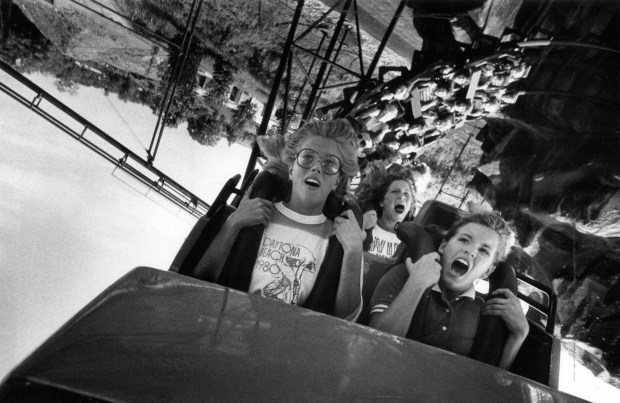



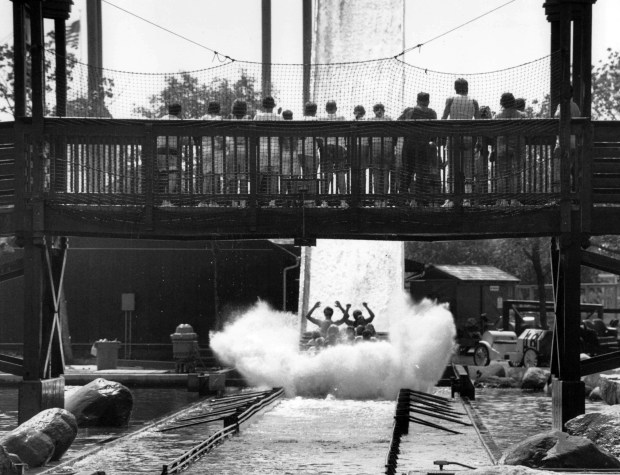

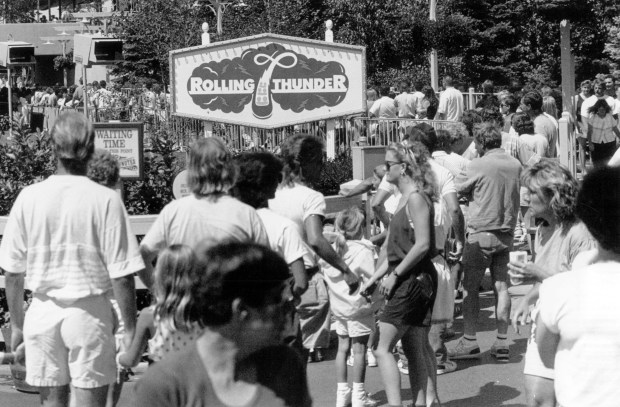


Sitting in his office, Gurnee Mayor Tom Hood can see Six Flags Great America in the distance through his window. Both his childhood home and his house today are within a mile of the park that dominates the village skyline.
Some days, he can even hear the cheerful screams of parkgoers in the air.
Six Flags Great America has endured roller coaster-like ups and downs in 50-year history
Hood grew up in Gurnee, as did his mother, and he still remembers the small, sleepy town it was before 1976. Hood was 16 when the theme park dropped into his backyard, kickstarting the transformation of the placid farming community with a population of 3,300 at the time.
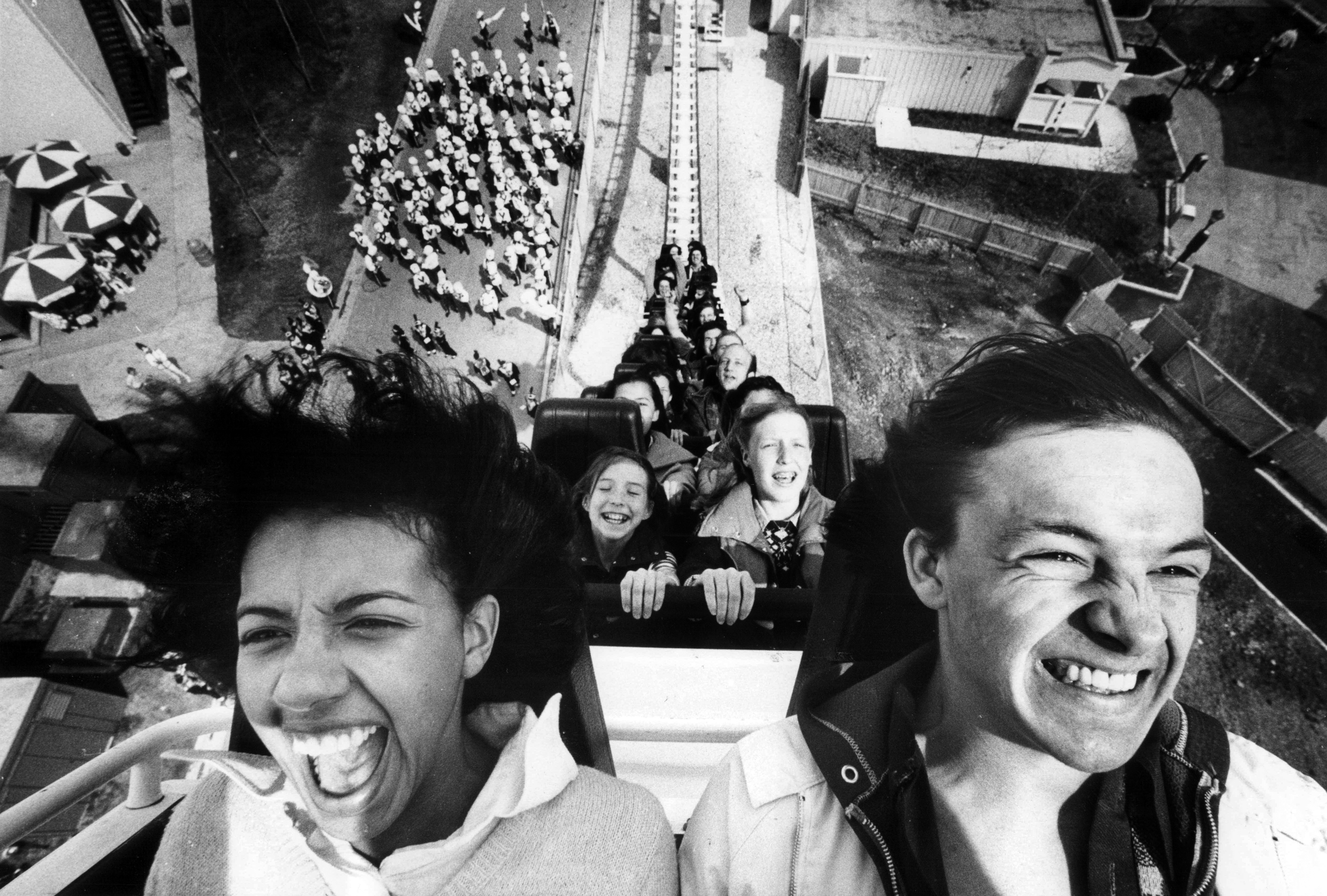
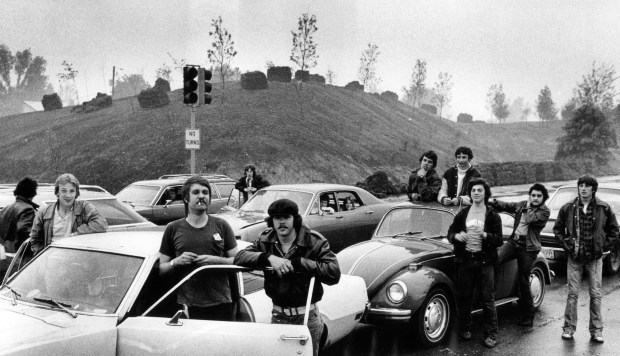
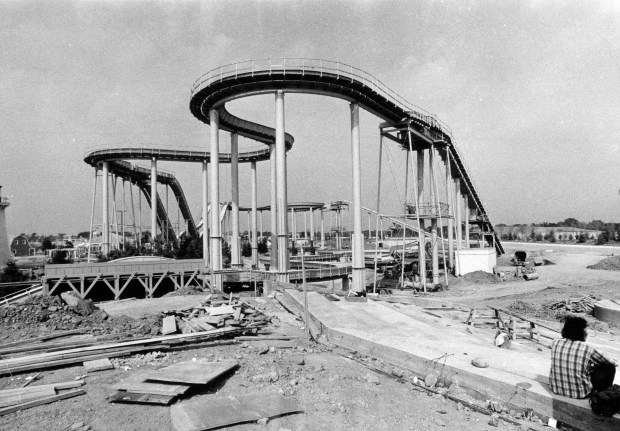
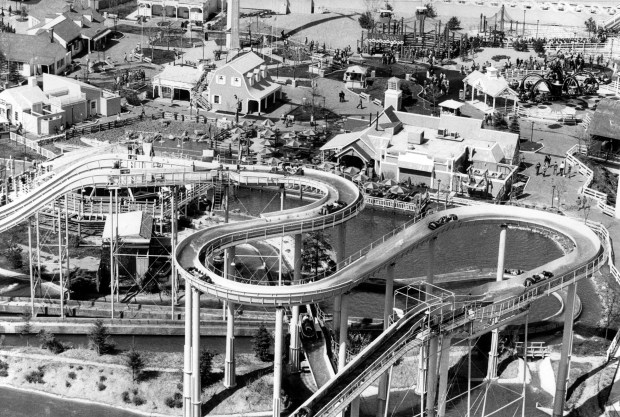
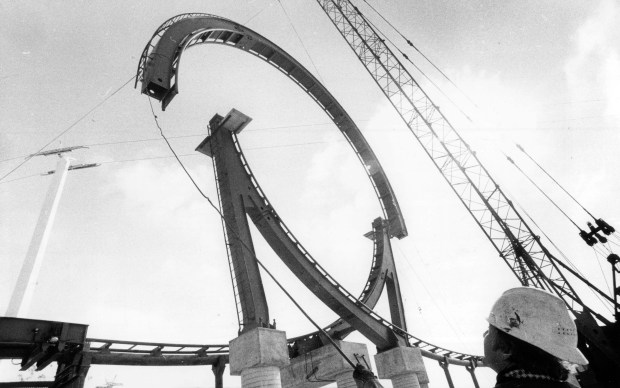
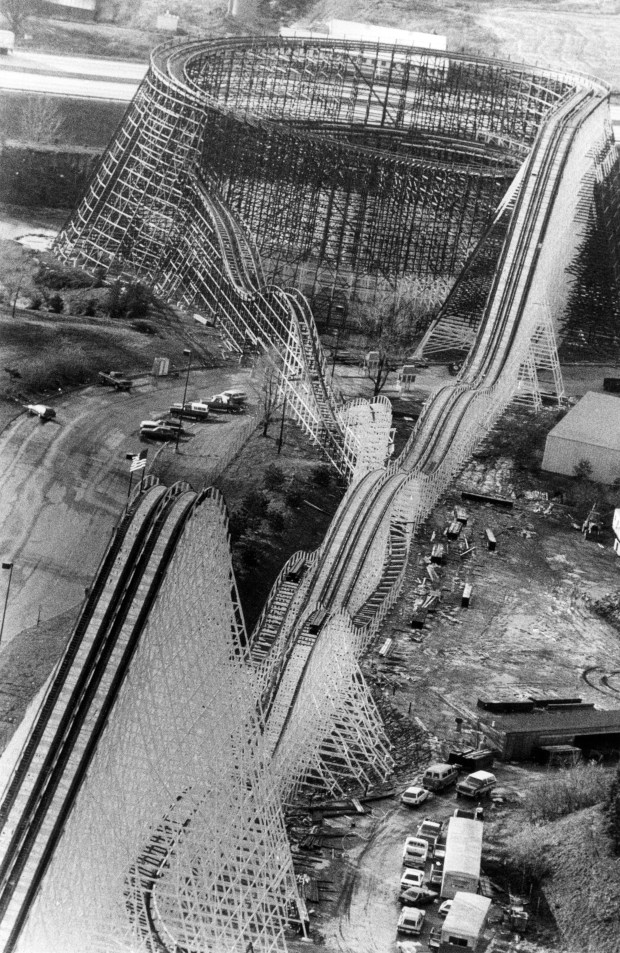
From a flurry of construction and dust rose something never before seen in the small village: steel towers holding aloft winding tracks that towered above the landscape, buildings covered in dazzling colors and lights, and a sea of asphalt that would soon provide parking for hundreds of vehicles.
It was Marriott’s Great America, and advertisements in the Chicago Tribune in the spring of 1976 promised “a whole new country of fun.” Thematically, the park was a nostalgic throwback, with a classic — if sometimes kitschy — presentation of American iconography and history.
But for Gurnee, which Tribune reporter Robert Cross described as a “semirural settlement of no particular distinction” in 1976, it was a powerful force that drove the village into the future and became a beloved regional destination.
Marriott’s Great America officially opened its gates on May 29, 1976, and today, five decades on from that spring day and under new management, Six Flags Great America is celebrating its 50th anniversary.
‘Simple and beautiful’
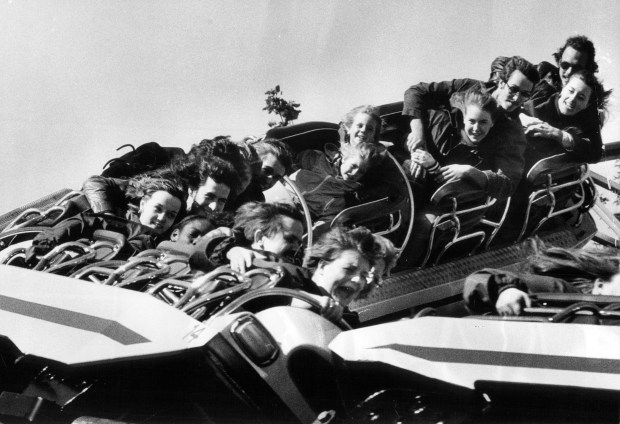
Talking with those who live by Great America or were regular park-goers growing up, there’s a clear affection for the park. People cherish friendships built on the park’s grounds, share the excitement they felt seeing the gates for the first time, and recall memories of long past summer visits.
Those include some less-than-legal tales, such as the 1994 trio who pulled off a heist of a giant inflatable spider from the side of the American Eagle.
Steven Wilson, who researched and wrote the visual history book “Six Flags Great America,” grew up loving amusement and theme parks. He fell in love with Great America on his first visit, and resolved to work at the park despite living hundreds of miles away. He said his two seasons working the park were “the greatest summers” he ever experienced.

Jim Futrell, historian for the National Amusement Park Historical Association, said Great America is one of the reasons he became an amusement park historian. In 1974, he was a child living in Northbrook. On the last day of school, when the park broke ground, a neighbor working in public relations came over and gave him leftover swag from the event: a mylar Bugs Bunny poster and the park’s first press kit, which he still has to this day.
“I would just pore over that thing for hours,” Futrell said. “I brought it to show-and-tell in the fifth grade.”
The Mother Rudd House is home to the Warren Township Historical Society, which has an extensive collection of Great America brochures, advertisements, newspaper clippings, and hundreds of family photographs from the ’80s with embedded digital text that has been charmingly misspelled as “Ggreat America.”
The historic home — the oldest building in the village of Gurnee and one of the oldest in all of Illinois — offers a peek into old Gurnee and sits less than a mile from the theme park that created the new Gurnee.
Some visitors have even gotten married or renewed their vows at the park, such as Kamryn and Jeremy Schill. From 2005 to 2012, Jeremy was stationed at the Great Lakes Naval Base, with his wife and two young children joining him.
Going to Six Flags was the family’s “big splurge,” Kamryn said. The family was a frequent attendee, so much so that the characters knew their kids by name. She said the family has “nothing but fond memories” of the park.
As part of a special contest, on July 7, 2007, at 7 a.m., seven couples — including the Schills — were brought to the park to either get married or renew their vows. They remember the day’s heat, even in the morning. Kamryn and Jeremy were supposed to have their vows renewed by Bugs Bunny in a tuxedo, but “he got sick and threw up in his head,” she said.
Lola Bunny, wearing “booty shorts,” came to the rescue.
“It was just fun,” Kamryn Schill said. “It was just so much fun.”

With Jeremy in the Navy, the family’s life had been full of rules and uncertainty, she said, and they lived far from their extended family. The park was “like home” for those early years.
“Year after year, season after season, the people who worked there would recognize our kids and our family and take notice,” Kamryn said. “It was just simple and beautiful.”
Lifelong friendships and local fans
Robin Daughtridge and Keely Reeves were both high schoolers when the park first opened. The work was enticing for many young students in the region, especially the “drama geeks” and “malcontents” who wanted to have some fun dressing up in costume, Daughtridge said.
They both worked the park during some of its first seasons as “characters,” wearing oversized mascot costumes like Daffy Duck, Sylvester the Cat, and, of course, Bugs Bunny. It was difficult work at times, with “brutal” heat during the summers necessitating brief half-hour or even 15-minute shifts outside.
It was a hot, sweaty job, they said, walking around with oversized cartoon feet and hands with a giant head. But they also remembered why they kept going — it was incredible fun.
“That feeling when you first walk out and open a service corridor, and all the kids turn and see you, it was very fun,” Daughtridge recalled. “They’d start screaming for you, and you had to watch out because you get punched and pulled and socked in the arm. But, for the most part, it was just awesome to see those kids’ faces.”

Many early employees forged lifelong friendships. There’s even a 50th get-together celebration planned for this summer.
“They are people that you may not see every day, but if we’re in town, they call and we get together, and you pick up where you left off,” Reeves said. “I truly value those friendships.”
While not everyone who wore costumes or worked the variety of entertainment and musical shows the park hosted continued in that line of work after high school, for some, it was valuable professional experience.
Dave Wolowic, who is a main organizer for the employee get-togethers, now works as a sound editor for feature films in Los Angeles, and spent years writing for Knott’s Scary Farm’s Halloween Haunt, which is touted as the premier and longest-running Halloween theme park event in the world at the park in Buena Park, California.
He’s not the only Great America kid to continue in the arts. Actress and singer Liz Callaway is one of their more well-known alums, Wolowic said.
The regional park has also sparked its own local fan groups. Bob Bendorf is a Gurnee resident and creator of the Six Flags Great America Junkies, started in 2019. Similar groups already existed online, and he expected it to be a small community. Within a few days, it exploded to 200 people, and has since kept growing.
“It’s not your tourist destination overseas,” he said. “It’s really built on that local fan base. They’ve got season passes and memberships.”
The group’s posts, discussing everything from now-defunct rides to sharing historical photos, have become spaces for people to share their own memories of past visits or reminisce about their favorite roller coasters.
“For a lot of them, they’ve been coming their whole lives,” Bendorf said. “They remember being there day one when the park first opened, bringing their kids, their grandkids to the park. It’s just that strong community, the bond of a local amusement park, that touches everybody in a different way.”


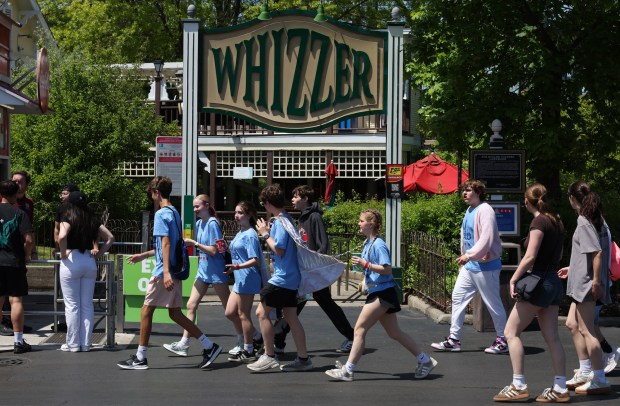
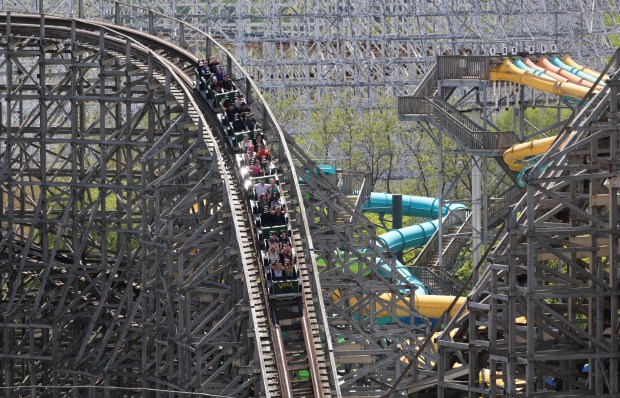





Because of the group, Bendorf has become something of a Six Flags influencer and is sometimes recognized by other guests in the park.
He’s been going to Great America for longer than he can remember, literally. His first trip was in 1976 when he was just a year old. Today, he brings his own kid to the park, adding to another generation of “Six Flags Junkies.”
Marriott to Six Flags
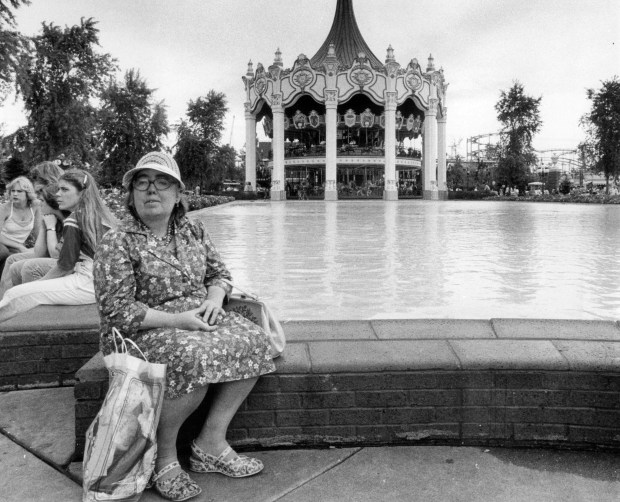
In some ways, Great America is the same park it was when it opened 50 years ago. The double-decker carousel still greets guests at the entrance, Looney Tunes characters still stroll the grounds, and there’s plenty of rides marking 50 years along with the park (excluding Little Dipper, which came from Kiddieland and is actually more than 25 years older than the rest of the park).
But in many other ways, it’s changed with the times, including with cultural attitudes. A popular video from the opening-day celebrations shows Bugs Bunny, dressed up like Uncle Sam, dancing with Foghorn Leghorn. The rooster, known for his heavy southern accent, is dressed in a gray Confederate uniform, which he rips away to reveal a Confederate flag.
On the business side, Six Flags took over the Great America parks from Marriott in 1984, which Wilson attributed to disappointing profits and Marriott shifting its focus to its core business of hotels.
A Six Flags statement said that while the park has evolved over the decades, its “core has remained the same.” New technologies and attractions are being developed, but “that sense of inclusivity has never been lost.”
“The through-line is our commitment to being a place where guests of all ages can create memories together,” the statement said. “We’re proud to be not only a beloved theme park in the region, but also a meaningful part of the community we’ve served for generations.”
A grandfather and his grandkids
Hood has fond memories of hanging out with friends and visiting the park after school or on vacation, including some light mischief. He and his high school buddies had a carnival game they especially enjoyed — a coin toss onto a crystal plate, with winners getting a stuffed animal. They were good, perhaps too good.
“Back then, the rules were you could win as many as you wanted, and we would win on some nights 20 to 30 stuffed animals,” Hood recalled. “Eventually, they put in a rule that said you could only win two.”
Hood would later leave Gurnee for law school, and if not for the park, he might not have come back. A village of 3,300 wouldn’t be able to support a legal practice, but by the time he had finished school, the village had grown substantially.
While the mid-1970s had seen much hemming and hawing in the village when plans for the park were first revealed, with residents worrying about how it would change the community, for Hood, the park allowed him to raise his sons in his hometown.
And today, they too are raising their families in Gurnee, allowing a grandfather to take his grandkids to his childhood park and see it anew through their eyes.