
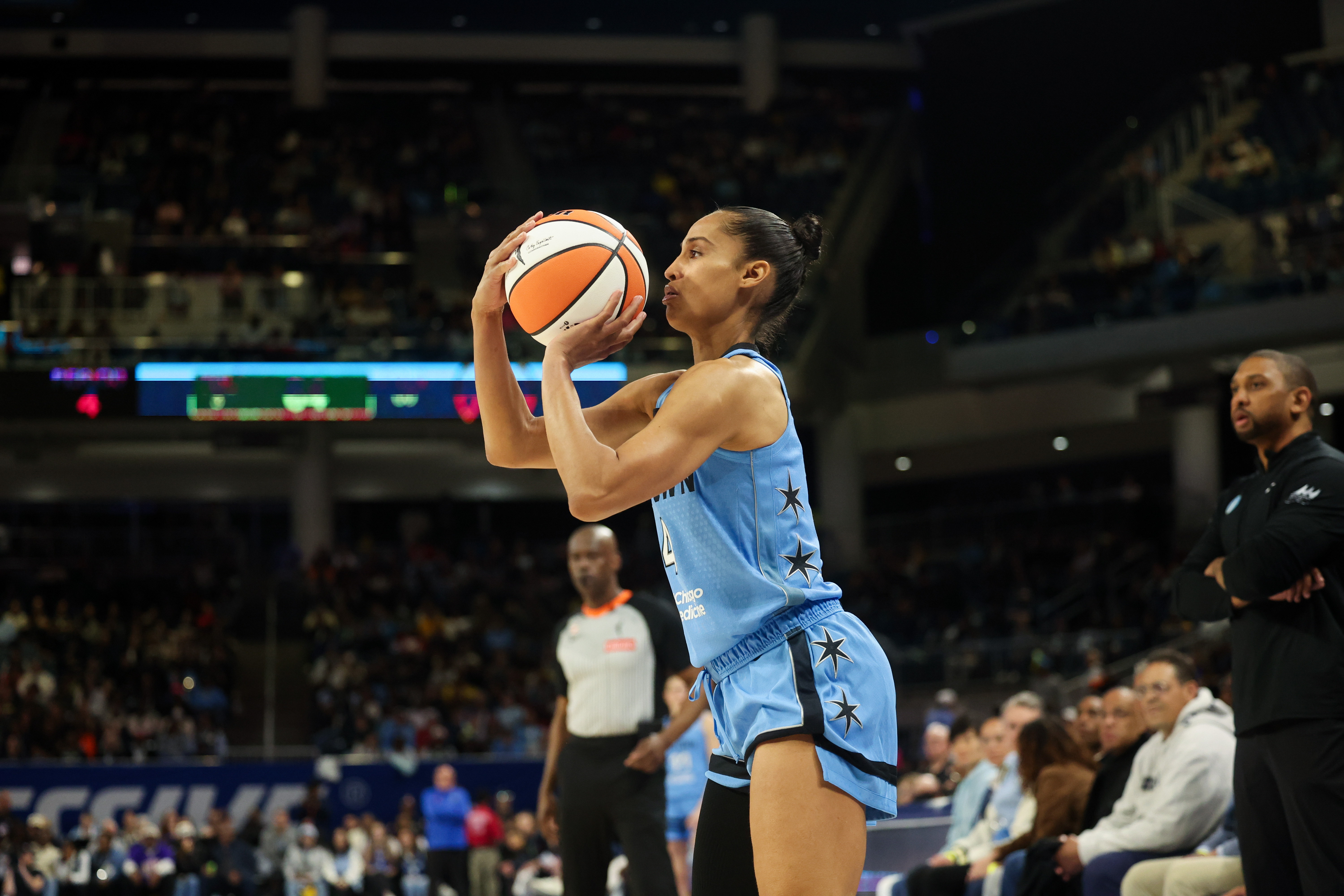

The Chicago Sky are mired in another uncomfortable midseason conundrum after guard Skylar Diggins spent a third consecutive game sidelined with a knee injury.
Last week, Diggins vocalized a litany of frustrations with the Sky — ranging from her move to the bench to recovery resources to end-of-game management by coach Tyler Marsh — before being suddenly added to the injury report. Diggins’ absence from the court and the Sky’s ongoing lack of success seemed to set the table for an early fissure midway through the first season of her two-way deal. But despite this recent discomfort between the two sides, league sources say the front office is not currently making an effort to shop Diggins for a deadline trade.
The Sky rank 13th in the league with a 7-16 record after fumbling a fourth-quarter lead Sunday in a loss to the Dallas Wings. With the trade deadline looming on Aug. 2, they clearly need to make a move.
General manager Jeff Pagliocca prefers to remain active during all trade windows, which has resulted in a flood of moves over the past three seasons that include trading away star players like Kahleah Copper, Marina Mabrey and Angel Reese. That pattern could continue this summer — but with three weeks left until that window closes, Diggins is not currently a focal point for any trade effort.
Still, the current uncertainty surrounding Diggins poses a serious concern for the Sky. The guard was one of the centerpieces of the Sky’s offseason overhaul, which included the acquisitions of Rickea Jackson, Azurá Stevens, DiJonai Carrington and Jacy Sheldon. But injuries quickly maligned lofty plans for the Sky, who gave up significant draft capital — including their first-round pick in 2028 — to piece together this roster.
Jackson went down with a torn ACL weeks into the regular season. Carrington still has not returned from a foot injury. And Diggins has also been playing through significant discomfort in her right knee, an effect of a surgery in the offseason last October. The Sky were aware of this surgery when they signed Diggins and instituted a load management policy for the veteran guard in the preseason, which included limiting her practice time.

Diggins continued to follow a load management schedule in the regular season, which lightly reduced her involvement in practices and shootarounds to preserve her longevity through the season. But the veteran guard also logged a team-high 29.1 minutes per game, a workload that took its toll as the season moved on.
When guard Courtney Vandersloot returned from a year-long torn ACL recovery, Marsh finally had the opportunity to rotate Diggins and offer a playing time reprieve. But the guard rankled at the July 6 decision to pull her out of the starting lineup, blasting the move on social media and doubling down in an ensuing media availability in Phoenix.
In that availability, Diggins voiced heavy criticism for the Sky’s lack of training resources due to significant delays in the completion of the team’s new facility in Bedford Park. The guard alluded to the fact that she was playing through an injury, adding that she wanted to “take a step back and see what’s going on to see if I need to continue to make those sacrifices.”
The Sky held Diggins out as a late scratch against the Mercury the following day. Diggins has not played since July 3, missing a total of three games. The Sky still consider her day-to-day, but her absence reflects a growing tension between her needs as a veteran guard and the team’s rapidly devolving chances of competing this season.
One aspect of the Sky’s reluctance to trade Diggins is practicality. The guard is not a particularly malleable trade asset. Her unique skill set as a dominant on-ball point guard necessitates a team to operate with a specific style and personnel to make the fit work. And as a 35-year-old on one of the final contracts of her career, her two-year, $1.86 million contract would be a difficult sell for many teams attempting to remain nimble under the newly restrictive cap. A lingering knee injury only complicates the situation.
The Sky also follow a pattern of attempting to place players in their preferred situations, which would further complicate any attempt at a trade. It’s clear that Diggins prefers not to come off the bench, even when she is playing through injury. Several teams — including the Mercury and Seattle Storm — would likely be nonstarters due to her history with both organizations.
Even if the Sky front office changes course, moving Diggins would be a massive undertaking — and unlikely to recoup the assets necessary to salvage the 2026 season or take major strides in 2027. For now, the Sky must stay the course, even if it means navigating a tumultuous relationship with a former starter.


