I have been lucky raising sons, now 23, 21 and 18. No one has targeted Weldon, Brendan or Colin with a handgun and a sense of vigilantism. My sons are healthy, thriving. And white. Still it does not spare me from envisioning the possibility of losing them, an earthquake fear that reverberates spontaneously each time I am a witness to a mother who buries her son.
“Trayvon is my son. Trayvon is your son,” Sybrina Fulton said at a rally calling for justice in the investigation of the death of her son, Trayvon Martin.
As a mother of sons, you understand what it means to love a boy.
She called her son a hero with a bright future. In the photos wearing his football jersey or sporting a capricious smile, Trayvon looks like Everywoman’s son who would play video games in the basement, throw a football in the backyard, run to the store for Skittles. Regardless of recent reports that the Sanford, Fla., teenager was on suspension from school when he was shot and killed by a neighborhood watch volunteer, the 17-year-old should not have needed his mother to bury him.
The million hoodies movement endorsed by his mother and others demands an end to racist violence against young black men and resulted in more than 1,000 marchers at New York’s Union Square last week. A protest erupted in Miami calling for justice in his death investigation. Another in his hometown attracted thousands.
I am certain there is more outrage to come. Because as the mother of sons, you understand the need to cry out loud.
You spend years traversing sacred territory: the mine-filled, glorious, chaotic chasm between mother and son. It is a space illuminated with hope, darkened by missteps. At times you fear the worst, acknowledging each son’s endearing sense of invincibility and strength. Of course it is a universal parental fear, assigned from any parent to his or her child, but as the mother of sons, you understand it is easy for a boy to die.
Earlier this month a friend buried her 28-your-old son, who died after he slipped into Lake Michigan in the early morning hours on a Saturday, following a night out with friends. I heard the news on the television of a search for the body of a young man and gasped when I saw on the screen the photo of someone I knew. An engineer engaged to be married, his literal misstep as he walked along the slick concrete path ended his life. His body was found near the wall at Belmont Harbor on Chicago’s lakefront. Philip had drowned. There was no crime, no assault.
At the wake it was impossible to ignore that in the casket surrounded by flowers, photos and scores of friends, he looked like a vibrant, healthy young man, smiling in his sleep.
Certainly the death of a young man instills empathy and sorrow in any person, regardless of gender. In earlier years, I have watched friends mourn sons — one whose son had a seizure at school, another whose son died in a car accident when all the other sons survived.
Each case is tragic. It happens every day in every spot on the map during times of war, protests, random violence and peace for a million separate reasons. It is a horrific event I cannot comprehend enduring, much less recovering from.
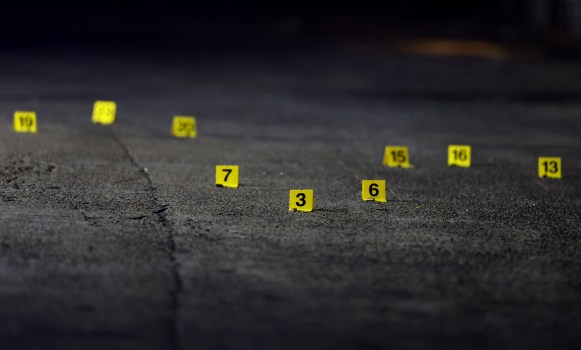
As of Thursday, the Department of Defense was reporting 4,409 U.S. military deaths during Operation Iraqi Freedom, with an additional 1,902 deaths from Operation Enduring Freedom. One weekend earlier this month was reportedly one of the most violent in Chicago in recent history with 10 dead and another 40 wounded in shootings. More sons were buried.
The iconic image of Michelangelo’s Pieta at St. Peter’s Basilica in Vatican City outside Rome is a tribute to the sorrow of a mother holding her fallen son. The marble masterpiece the artist created at the close of the 15th century of Mary cradling her son, Jesus, after the Crucifixion, has timeless appeal beyond religious brand. It captures the heartache and tenderness of a mother in her moments of suffering.
Just two days after Philip’s wake, I attended the funeral of a 23-year-old young man, a friend of my oldest son, Weldon’s, since second grade. They were in the same grade school, junior high and high school. Weldon and Scott went to the same birthday parties before adolescence bloomed and each went his own way with different groups of friends.
Scott died after a five-year battle with cancer; his funeral was graced with dozens and dozens of young men and women whose faces looked like digitally enhanced versions of their elementary school selves. The funeral was a celebration with songs, stories, remembrances, laughter, tears, joy. His mother was gracious at the reception, grateful for those who expressed their love.
That same week that both friends buried their sons, my youngest son, Colin, was in the hospital; a fluke infection of MRSA from a wrestling mat had spread into his knee and up his leg. I slept for three nights on the narrow, foam-padded bench by his bedside; the intravenous antibiotics began to reverse the severity of infection within hours.
But a short walk down the hospital hallway to the family center where the mothers — and fathers — of critically ill children gathered to talk, get coffee, ice water or even take a shower in the private bathrooms, reminded me so many other sons are not so lucky. The 16-year-old boy whose bed was separated from Colin’s by a moving curtain had no visitors or phone calls from Tuesday through Friday. He kept his wall-mounted television on nonstop.
I believe it is a different brand of connection between a mother and son than it is between a father and son or mother and daughter. The innate disparities forge pathways fraught with boisterous, at times treacherous, clashes. It is a relationship punctuated with tender rebellion and rebuttal, softened by apologetic and heroic proclamations of loyalty. I would trade it for nothing else.
Because when a mother you know buries her son, young and promising, you mourn fully. And when it happens to mothers you do not know, you mourn fully still.
Michele Weldon is an author of three nonfiction books, assistant professor of journalism at Northwestern University’s Medill School and a seminar leader at The OpEd Project.