
Next Wednesday, Chicago’s City Council should override Mayor Brandon Johnson’s veto of legislation passed last month to ensure Chicago’s restaurants, particularly those independently owned and operated, have a future in a city renowned for its eateries and bars. That measure passed with 30 votes, but now 34 will be needed to freeze the minimum wage paid to tipped employees where it is now rather than having it rise steadily over the next few years to the same level all other (untipped) workers in the city get, per current law.
In our view, assuming it makes it to the agenda, this would be the council’s most important action since late last year when it defied Johnson’s frenzied, counterproductive push for a monthly tax on each job in Chicago generated by the city’s largest private-sector employers.
Chicago has a problem because ending the tipped minimum wage is the pet project of a well-funded, out-of-state activist group called One Fair Wage that has mounted a national campaign to eliminate tipped minimum wages. That foolhardy change passed the council in 2023, early in Johnson’s mayoralty when the freshly elected former Chicago Teachers Union organizer wasn’t yet deeply underwater in polls of Chicagoans.
It didn’t take long for many of the aldermen who’d voted for ending the tipped minimum wage to have regrets.
And for good reason. The restaurant owners in their wards, just a few years after surviving the existential threat of COVID-19 and then navigating the highest inflation in the country in decades, warned that eateries couldn’t survive a sharp increase in labor costs, too. To their credit, many of those aldermen believed their restaurant owners.
But a handful of their peers representing wards with many restaurants strangely have continued to support Mayor Johnson in this folly, seemingly because they don’t have the guts to do otherwise.
Among the City Council members who voted last month with the mayor and against the proposal to freeze the tipped minimum wage: Matt Martin, whose 47th Ward includes restaurant-rich neighborhoods like Ravenswood and Lincoln Square; Daniel La Spata, whose 1st Ward includes similar neighborhoods like Wicker Park; Lamont Robinson, whose 4th Ward includes the burgeoning restaurant strip on 53rd Street in Hyde Park as well as Black-owned restaurants in Bronzeville; and Angela Clay, whose 46th Ward includes the Vietnamese and other Asian restaurants along Argyle Street as well as many other bars and eateries.
Of course, Johnson’s coterie of activist supporters implicitly have accused restaurateurs of lying both about their financial condition and about how much their tipped workers actually take home. But these alders should know that’s nonsense.
If Chicago continues down the path of raising the minimum wage for tipped workers, more neighborhood restaurants will close and those that stay open will reduce their workforces and cut their hours.
And to make this issue all the more mind-boggling, there’s no need for this change.
After tips, servers and bartenders generally make far more than the $16.60 hourly minimum that all other Chicago workers must receive, and under current law they must be made whole by their employers if for some reason they fall short on a given shift. This is a solution in search of a problem, but the loss for Chicago as a whole over time will be huge.
Independently owned neighborhood restaurants — the types of businesses brought to dramatic life in “The Bear” — will shrink or die.
This isn’t simply a story of a threat to jobs and economic vitality. This existing ordinance threatens to damage an essential part of Chicago’s soul.
Don’t believe us, aldermen? Hear your businesspeople in your wards. We spoke to many of them.
Listen to Gregg Weinstein, who owns the venerable O’Donovan’s bar in North Center (Matt Martin’s ward) and already has cut hours there. “We give less service,” he says. “We run on more of a skeleton crew.”
The owner of eight bars and restaurants throughout Chicago, Weinstein for more than two decades also has overseen beverage service at the Lollapalooza festival in Grant Park. This coming year, he says, he will hire 500 fewer people for Lolla strictly due to the higher tipped minimum wage. In the past, he’s put about 2,000 people to work serving drinks. On average, those Lolla workers made $23 an hour last year after tips, he says.
Instead, there will be 500 fewer people making that kind of money over the long Lolla weekend this coming summer, thanks to the city’s idiotic law.
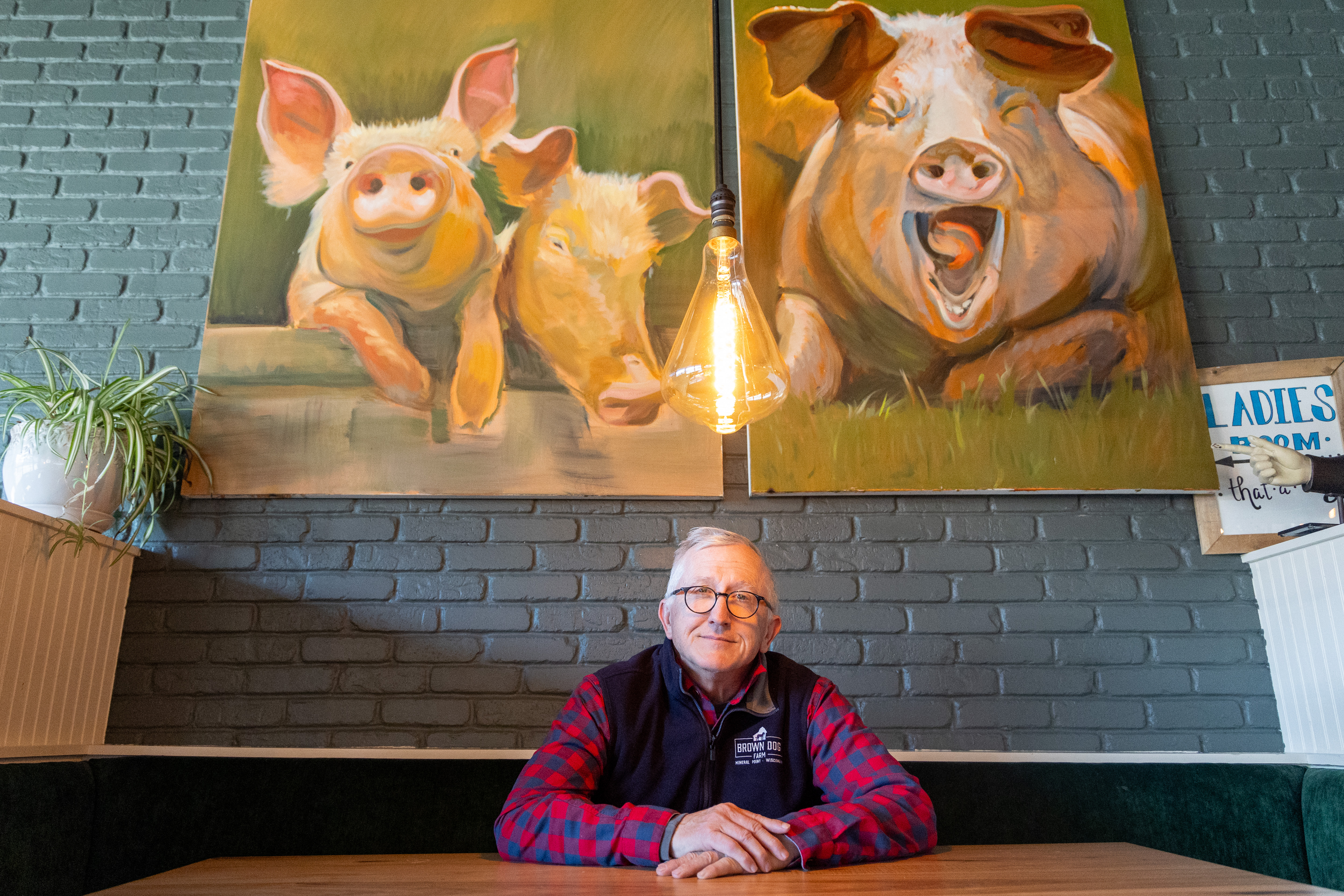
Elsewhere in Martin’s ward, TJ Callahan’s Farm Bar, a farm-to-table restaurant in Ravenswood that seats about 90, isn’t making money despite a 2% year-over-year increase in customers over the most recent 13-week period. “My partner and I, we haven’t taken a dime from that restaurant since last spring,” Callahan told us.
Callahan owns another Farm Bar in Lakeview that is profitable, and both of his restaurants clearly are a labor of love. But, he said, “I’m not writing checks to keep the door open. At some point, you start saying, what is your time worth? It’s not supposed to be a nonprofit operation.”
The $1.62-per-hour increase he’s slated to pay his tipped workers this coming July will cost the restaurant another estimated $15,000 in the coming year. This while Callahan’s average server made nearly $60 an hour after tips in 2025.
You see our issue here?
Simply put, the policy Martin continues to support is nonsensical.
Most of the people he’s seeking to aid already make far more than minimum wage, and their jobs and hours are at risk thanks to his “help.”
Of the unsupportive aldermen, Callahan says, “They pretend not to hear you when you talk about the consequences.”

Or listen to Norman Bolden, owner of Norman’s Bistro in Kenwood on the South Side. His American Creole-themed eatery has been in the neighborhood for 15 years, but he only serves dinner now, not lunch or breakfast on the weekends as he once did.
His staff is down to 10 from about 25.
Bolden told us he’s spoken to Robinson and was under the impression the 4th Ward alderman backed freezing the tipped minimum wage. So he was surprised to learn that Robinson voted against the measure last month.
“People who are hanging on are doing so out of passion,” Bolden said. His workers, Bolden said, “walk out with more than I. … There’s not much money in the restaurant/hospitality scene.”
Or listen to Gina Barge, co-owner of Wax Vinyl Bar and Ramen Shop in Wicker Park, part of Ald. La Spata’s ward. Wax spins vinyl records and serves up what Barge calls Japanese-adjacent food; it’s been open one year and nine months and won’t meet Barge’s two-year time frame to reach profitability despite solid growth in patrons.
“We should be having another server or a runner,” she tells us. “We could really run with another bartender when we’re busy.” Due to the rising minimum wage, she says, “Right now, we really can’t.”
As the minimum wage continues to climb, Barge says, she’ll have to consider imposing a service charge. If that happens, she says, “No one is going to like it. What that’s going to mean is (servers) will make less money, most likely.”
Indeed, the specter of service charges — and an end to tipping as we know it in Chicago — is a refrain we heard from most restaurateurs we spoke with. Who wants that? Not most customers. And not most servers. But ideologues from out of town think it’s important, and our mayor has opted to listen to them rather than the businesspeople in his own city who lay out the obvious truth of the matter. It’s beyond frustrating and City Council needs to call a halt.
Finally, listen to Bob Piper, owner of the popular Ten Cat Tavern in Lakeview, part of Ald. Clay’s ward. He employs six tipped bartenders, who he says make well over $30 an hour after tips. If their minimum wage keeps rising, he says, “I would definitely have to reduce hours. Instead of doing three bartenders, I’d have to do two.”
And, he adds, “I’d have to increase my beer prices.”
This issue is about as straightforward as such things get. Chicagoans love their restaurants and bars, aldermen.
Isn’t preserving them more important than pleasing a group of ideologues who either don’t care to understand how this business works or willfully ignore its challenges?
Submit a letter, of no more than 400 words, to the editor here or email letters@chicagotribune.com.