
An Aurora alderman has publicly accused Mayor John Laesch of not coordinating with him on the Orchard Road sound wall project, which is nearing the finish line after many years of work.
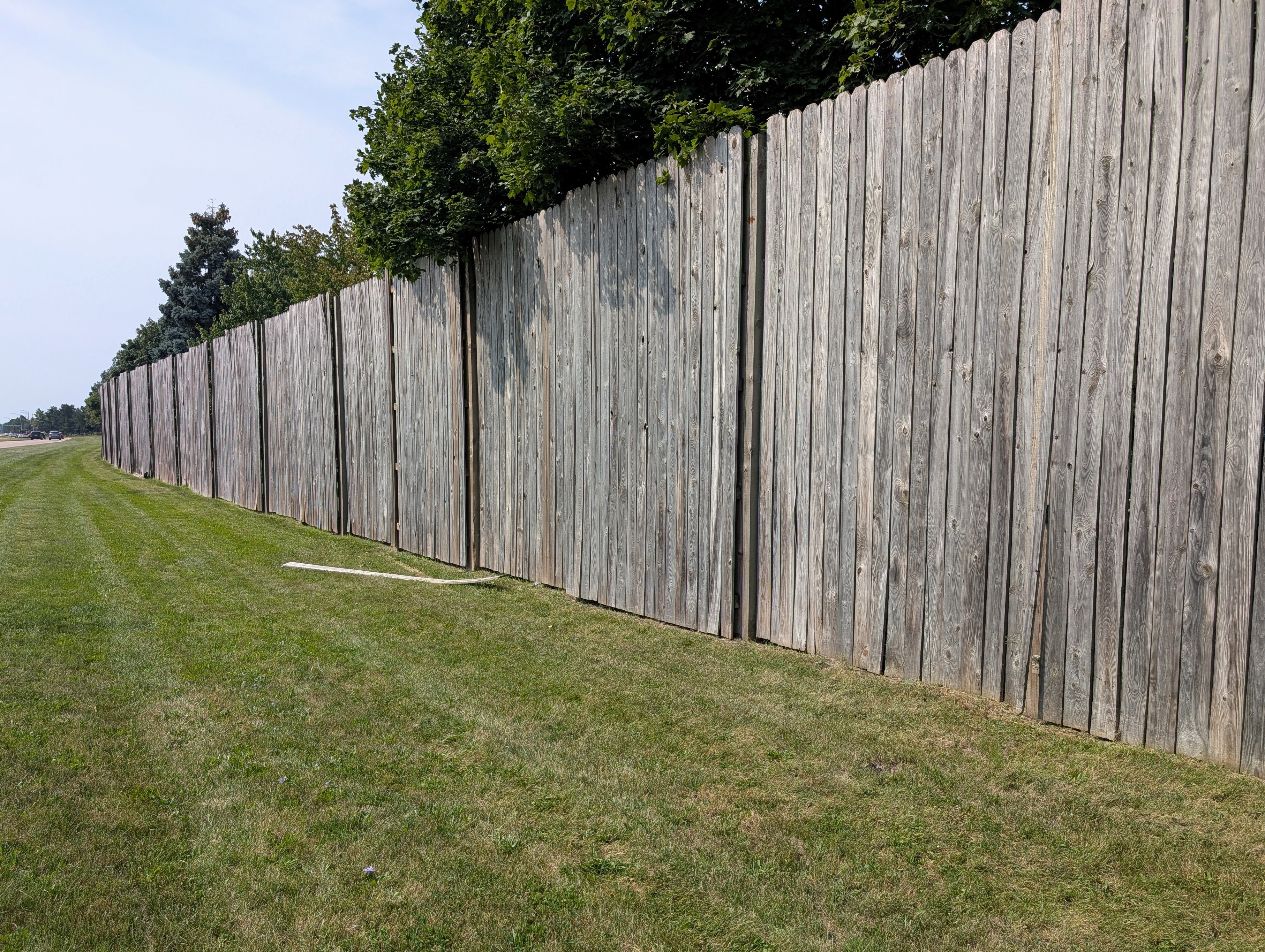
The sound wall is set to shield residents living near the busy road on the far West Side of Aurora between Prairie Street and Indian Trail from the well-documented vehicle noise. The project is currently in the design phase and is expected to cost $6 million, with some of the funds coming from Kane County and the state of Illinois.
In a Facebook post late Thursday afternoon, 5th Ward Ald. Carl Franco said that Laesch and other city officials had been going door-to-door to residents in his ward with a survey about the proposed sound wall, an effort that had not been coordinated through his office or communicated to him in advance.
Laesch told The Beacon-News that he had made Franco aware of the survey, and that he had even incorporated ideas that Franco suggested.
The survey asked residents if they were willing to help pay for the sound wall through a special taxing district, called a special service area or SSA, which has been discussed to support the project. Laesch has been against using a special service area, while Franco has been in favor of it, arguing that it is only fair since other communities are paying for improvements in the same way.
In mid-February, Laesch and Franco sent a joint letter to residents about the sound wall that did not mention using a special service area. Franco told The Beacon-News that, because of the letter, he believed the city was planning to move forward without one.
“To now have elected officials and city staff going door-to-door suggesting otherwise is deeply misleading, unnecessarily confusing and completely inappropriate,” Franco said in his Facebook post. “Frankly, this raises serious concerns about the misuse of public resources and whether taxpayer-funded time and personnel are being used for political posturing rather than public service.”
Laesch said the joint letter was needed to correct “misinformation” that Franco had put out in a January newsletter to 5th Ward residents. In that newsletter, Franco similarly said he was unaware of the project’s status — and afterwards, according to Franco, Laesch’s administration promised to not let that happen again.
Laesch also claimed Franco said in the newsletter that the sound wall project wasn’t included in the 2026 budget, but Franco actually wrote that the administration had not included the project among its priorities during budget meetings.
The project was included in final 2026 budget document. This was noted in the joint letter, which also identified the project’s funding sources: around $1 million from Kane County, around $800,000 from the state of Illinois, $600,000 from Franco’s ward funds and nearly $3.6 million from the city’s Capital Improvements Fund.
“The Orchard Sound Wall has been a longstanding priority for Alderman Franco, who has advocated for this project on behalf of the Fifth Ward constituents for 10 years,” said the joint letter, which sported the signatures of both Franco and Laesch. “The Laesch Administration has elevated these efforts making it a high priority and has taken meaningful steps to move it forward, including engaging a design contractor for the first time in the project’s history.”
While working together on the letter, in a meeting on Feb. 17, Laesch told Franco about his plans to survey impacted residents along Orchard Road to see how they’d vote on a proposed special service area, according to Laesch’s statement. He said that he even incorporated Franco’s suggestion to gauge how much each household could afford to pay in additional property taxes.
The point of the survey, Laesch said, was to hopefully save the two or three months of work that would go into creating a special service area if there was no chance it would pass a required vote by area residents.
After Tuesday’s meeting of the Aurora City Council’s Committee of the Whole, Laesch pulled Franco aside to give him an update on the early results of the survey, Laesch said. The plan was to complete the survey in the coming weeks by sending mailings to homes that didn’t answer their doors, he said, then the final step would be to analyze the data and share it with Franco.
But Franco separately told The Beacon-News that the mayor speaking to him after the Tuesday meeting was the first time he heard about the survey.
The next day, angry letters and emails from constituents started to roll in, with people saying they were confused about whether a special service area was being proposed, according to Franco.
In his Facebook post, Franco said that it was “incredibly disappointing” that the mayor would create confusion around a project that residents have waited years for. He told The Beacon-News that, if he had known about the plan, he would have tried to stop them because of the confusion it would create after the earlier joint letter.
It is “equally disappointing” that the city’s two at-large aldermen, Will White and Keith Larson, were also involved in “something that appears designed to undermine, rather than inform, the 5th Ward,” he wrote on Facebook.
Laesch said he invited the at-large aldermen, who represent the whole city and so also represent the 5th Ward, to join him in the survey so that they could better understand what residents in that area were experiencing. Hearing residents’ stories will help White and Larson share insights about the importance of the project with the rest of City Council, he said.
The Facebook post, which is “the latest round of misinformation” from Franco, is “concerning,” according to Laesch. As he’s worked with Franco and staff to move the project forward, Laesch said, Franco has been spreading “an unnecessary amount of misinformation.”
Still, Laesch’s statement acknowledged Franco’s “hard work over the years” to bring the project to life, and said that they both share a common goal in getting the wall built to provide relief to residents “who are unable to enjoy peace and quiet in their own backyards.”
“I am hopeful that Alderman Franco and I can continue working together to see this project completed in a timely manner with as little cost to the residents as possible,” he said. “I look forward to working with him, the City Council, City staff, and residents to get it done.”
In February, the city began working with an engineering company to further design the wall. When a full cost estimate for the project becomes available, Laesch said, the city will “continue including” Franco in the discussion before holding a joint public meeting with residents in the impacted area.
Franco has emerged as one of Laesch’s fiercest critics on the Aurora City Council.
For example, he’s called Laesch’s proposed ethics reform package, a key promise of the mayor’s successful campaign, an “anti-capitalist” piece of legislation that didn’t show respect for the city’s business community and was an insult to all aldermen. And, he has organized a push to change the city’s form of government to weaken the mayoral seat by mandating a professional city manager run the city’s day-today operations, calling Laesch’s administration an “extreme case of unprofessionalism.”
rsmith@chicagotribune.com