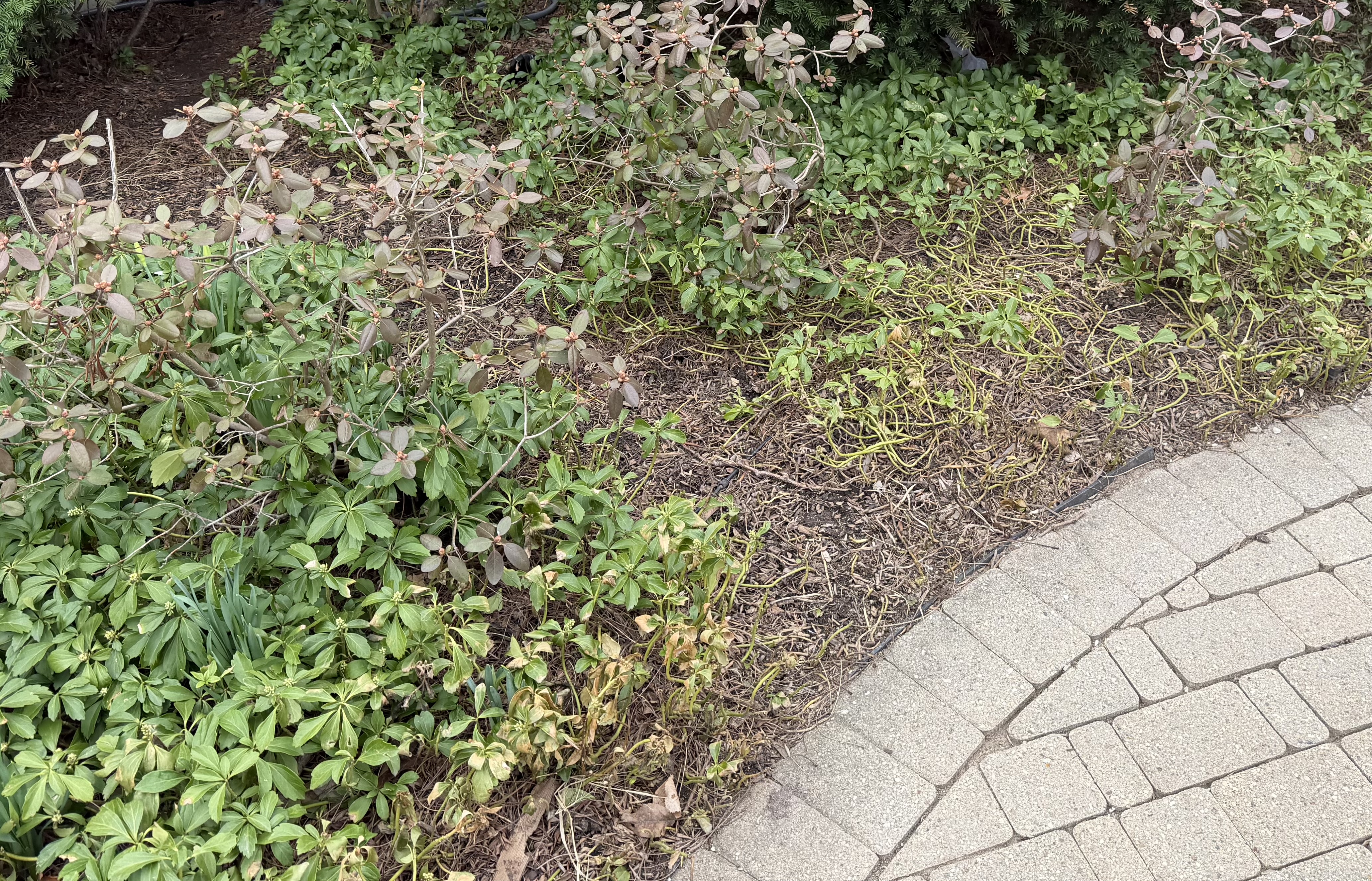

I noticed that a few areas in my bed of pachysandra have developed dark blotches on the leaves, with some sections appearing to be dead. Can you tell what is happening and if there is something I can do to improve the health and appearance of this planting?
— Jose Benitez, Highwood
I have also seen a couple of pachysandra beds with a similar appearance this spring. Your description suggests that your plants are suffering from a disease called Volutella blight, which can be very destructive. It is a disease that affects pachysandra in the Chicago region and in other areas. Volutella blight begins as small, brown to tan spots that you likely will not notice on the leaves. These grow to form blotches that have lighter and darker zones appearing as irregular concentric rings that grow throughout the season until the entire leaf turns black and dies. Infected stems become brown to black in color and die. In very wet conditions, the fungus may kill large patches of plants. A diagnostic feature to look for is pink-to-orange spore masses on the underside of leaves or on stems.
Look more closely for Volutella blight in dense plantings where heavy mulch has been used and when conditions are warm and moist. There have been unusually wet conditions along with some early warm weather this spring. Pachysandra beds that have been stressed by winter, too much sun, drought, insects, or overcrowding are more susceptible to this fungal disease. Late spring and early summer are the most common times to find active Volutella blight on pachysandra. Environmental stress caused by winter followed by lots of moisture in spring and early summer at the optimal temperature range of 64 to 80 degrees Fahrenheit create conditions favorable for this disease. These linked conditions can also happen later during the season and incite active infection. Overuse of ice melt products can severely stress and kill pachysandra growing along the side of a walk.
Stressed plants are far more susceptible to this disease, so begin to control it by removing the stressors. Be sure your beds of pachysandra get watered during extended dry periods, but be sure to water deeply and in the morning to allow the foliage time to dry before nightfall. Avoid watering frequently and shallowly as this will worsen the condition. Wet weather encourages nearly all fungal diseases, including stem and leaf blight. Do not mulch an established bed of pachysandra as the mulches hold water against the plant stems, which can promote fungal issues. On the other hand, if you are planting pachysandra in fall, it is important to mulch the bed so that the plants can establish. Remove any fallen leaves and debris from the bed of pachysandra this fall and in coming years.
You may want to treat your pachysandra bed with fungicide this spring to help mitigate the problem. Spray a fungicide once every seven to 14 days and stop treatment once temperatures reach 90 degrees. A general guideline is to spray three times depending on weather. Extended periods of warm and wet weather are conducive to this disease. Resume this spray program again next spring to protect your plants and work to get this disease under control. Prune out any badly affected areas now and discard the foliage. I use Lysol disinfectant on my pruners to help prevent the spreading the disease. Some chemical options include chlorothalonil, copper, Duosan, Fore, mancozeb and Zyban. Always follow label directions when using any chemical product.
For more plant advice, contact the Plant Information Service at the Chicago Botanic Garden at plantinfo@chicagobotanic.org. Tim Johnson is senior director of horticulture at the Chicago Botanic Garden.