
After freezing her eggs before starting chemotherapy, Ellie Nelson, 26, of Schererville, said she knows too well the fear of weighing options as a reproductive option is at risk. She doesn’t want other woman to go through that.
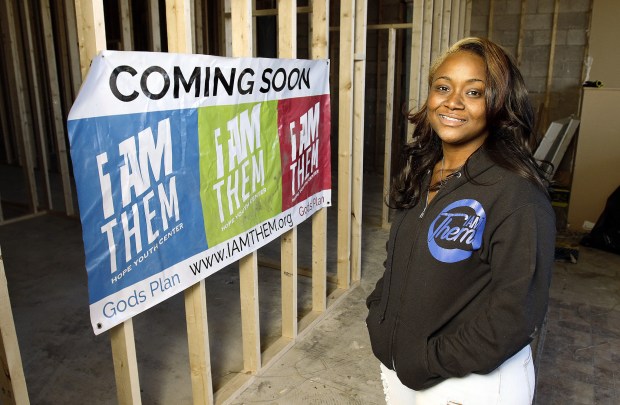
Aaliyah Stewart, 21, of Merrillville and founder of the ASW Foundation, said she is pro-choice but believes politicians should be addressing other issues.
Kathryn McGrath, 19, currently studying nursing at Ive Tech Community College, said overturning Roe v. Wade won’t stop abortions, just make them riskier as women find other ways to terminate a pregnancy.
Earlier this month, a U.S. Supreme Court draft opinion was leaked suggesting the court is poised to overturn the landmark 1973 Roe v. Wade case that legalized abortion nationwide.
“Roe was egregiously wrong from the start,” the draft opinion states. It was signed by Justice Samuel Alito, a member of the court’s 6-3 conservative majority who was appointed by former President George W. Bush.
The document was labeled a “1st Draft” of the “Opinion of the Court” in a case challenging Mississippi’s ban on abortion after 15 weeks, a case known as Dobbs v. Jackson Women’s Health Organization.
The court is expected to rule on the case before its term ends in late June or early July.
A decision to overrule Roe would lead to abortion bans in roughly half the states and could have huge ramifications for this year’s elections. But it’s unclear if the draft represents the court’s final word on the matter — opinions often change in ways big and small in the drafting process.
As the fate of Roe v. Wade hangs in the balance, young women shared their views on the likelihood of Roe v. Wade being overturned.
Ellie Nelson
When the news of the leaked draft broke the evening of May 2, Nelson said her partner told her about the news because she had decided to stay off her phone and social media for the day. She said she’s felt fearful for women’s right to choice since hearing the news.
“I was surprised, yet not surprised, and thrown off that it’s (happening) now,” Nelson said.
Nelson, a cancer survivor, said she’s heard stories from women who were diagnosed with breast cancer early on in pregnancy and being “put in an impossible situation” of deciding between terminating the pregnancy to receive chemotherapy or delay cancer treatment to carry the pregnancy to term and risk dying of cancer.
“A person’s medical autonomy gets complicated in so many ways beyond just the abortion itself. That’s what I fear,” Nelson said.

After learning she had cancer, Nelson said she was faced with a choice of either freezing her eggs or risking chemotherapy making her infertile. The worst part about the decision, Nelson said, was realizing that a reproductive option was threatened for reasons beyond her control.
“One of the things that impacted me the most was … I felt like the choice wasn’t between me and my body any more. I felt alienated from my own body in that way,” Nelson said. “Just the prospect of mine and my body’s choice being impacted by something beyond my control was so detrimental to me, and I just would never, ever want anyone to feel that same thing.”
While Nelson said she choose to freeze her eggs, the bottom line is she had a choice. Women should have a choice between being pregnant and ending a pregnancy if they want to, she said.
“I feel so connected to anybody feels like their sense of choice has been impacted by something beyond their control, no matter what that choice is. I don’t think it’s for anybody else to decide,” Nelson said. “The element of choice and bringing a new life into the world or not is so personal.”
Aaliyah Stewart
Stewart said she found out about the leaked draft while scrolling on social media and that her initial reaction was that the decision was unfair.
“In certain cases, if a woman has been molested or something to that nature, they should have the right to be able to determine ‘I’m already going to live with this trauma, but this is not the trauma I want my child to be born in,'” Stewart said.

If the draft decision becomes the final decision, Stewart said women “will be forced to live with decisions they are not ready for.”
Women won’t stop having abortions if Roe v. Wade is overturned, Stewart said, and she’s fearful of women seeking abortions in a risky manner and becoming infertile or dying.
A woman can seek out opinions about what to do with a pregnancy, Stewart said, but it should be her choice on what to do with her body.
Stewart said she has a list of things politicians should focus on instead, like gun laws because “a parent should not have to worry about taking a child to school or going to the grocery store.”
Lawmakers should also focus on equality, because Black people are still facing racism and discrimination, as well as gas prices and inflation, Stewart said.
Politicians should focus on “protecting children who are already here instead of worrying about those that haven’t happened,” Stewart said.
“There are so many other things they can worry about and do instead of worrying about somebody having an abortion,” Stewart said.
Kathryn McGrath
McGrath said she was scrolling on social media and learned the news of the leaked decision. She then looked to a news source to confirm the information, and when she confirmed it was true, she felt shock and “could barely believe it.”
“It felt like something that could be coming, but I don’t think I really thought that it would happen until I saw that,” McGrath said.
It’s scary to think about, McGrath said, that if she ever wanted to get an abortion — for whatever reason — that option will likely be taken away.
“It’s really disheartening growing up during this time,” McGrath said. “It’s taking away a fundamental right of women. It feels like we have to keep fighting this fight and we can never push through the glass ceiling.”
As a student at Ivy Tech Community College studying nursing, McGrath said she has learned that an abortion is not a risky procedure but pregnancy and delivery can be high risk. Beyond that, McGrath said that overturning Roe v. Wade won’t stop abortions but will lead women to seek unsafe options to terminate a pregnancy.
“We know from the past, before Roe v. Wade, women still got abortions they just weren’t as safe,” McGrath said. “We know they will take other measures to get (an abortion) they just won’t be as safe of ways.”
When it comes to the argument that ending a pregnancy ends a life, McGrath said that is a religious-based argument and people “need to focus on lives that are on Earth not just unborn lives.”
“It just seems like there’s no focus on the woman’s life or these other kids who are in adoption or foster care and are in really bad places because these systems aren’t where they need to be,” McGrath said.
McGrath said she feels that the draft decision will be the final decision.
In the back of her mind, McGrath said she has felt that one day she’d like kids – after she finishes college and establishes her career. But, with the possibility of Roe v. Wade being overturned, McGrath said she isn’t sure wants kids anymore because she doesn’t want to potentially raise a daughter in a country where her right to choose is gone.
“It definitely has changed how I feel about having my own children and maybe not wanting that anymore,” she said.