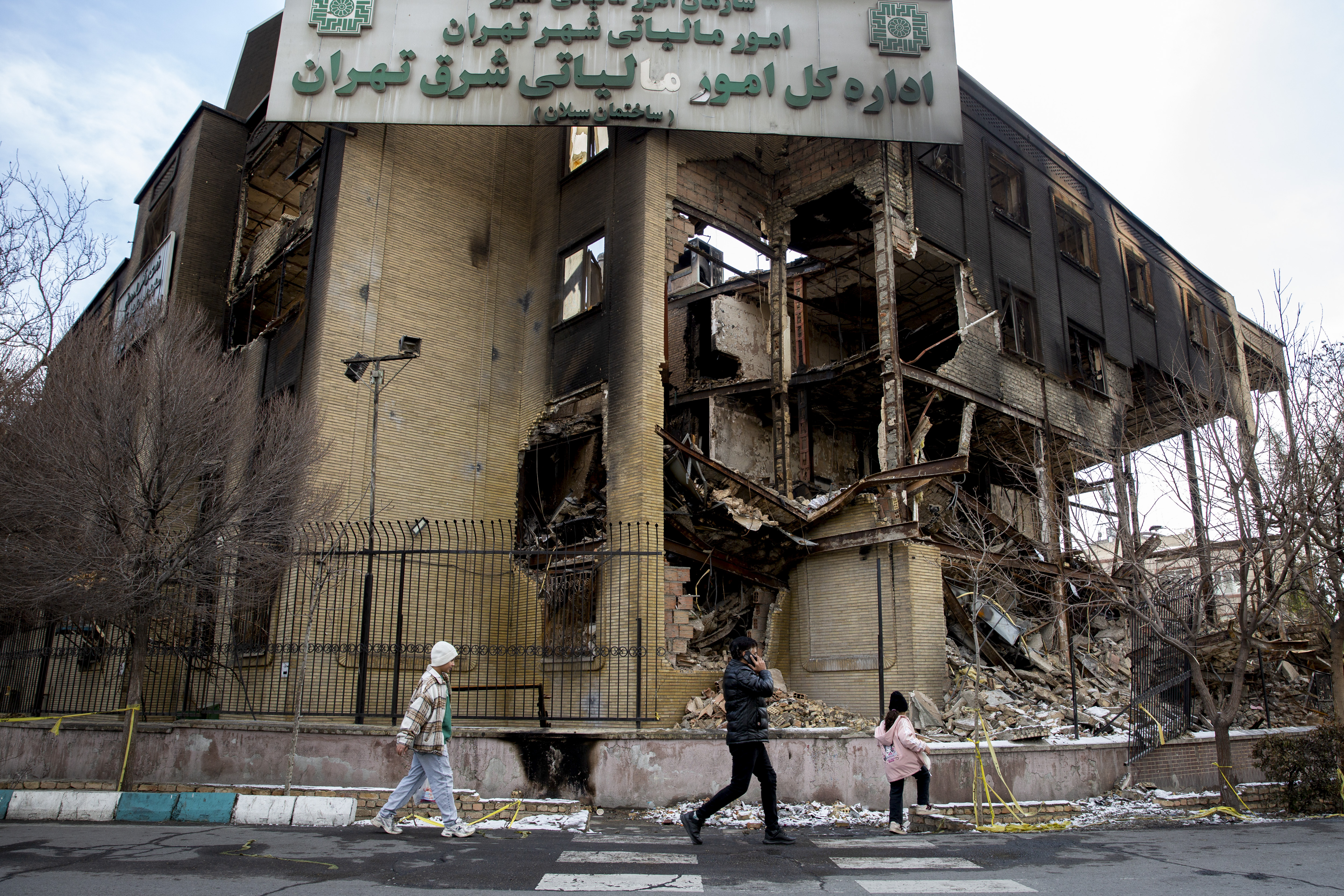

As Iran’s internet and communications blackout enters its third week, reports from inside the country point to a catastrophe far larger than many initially feared. Thousands of protesters have been shot, and more than 25,000 people are being held in detention centers run by the Islamic Republic. According to The Sunday Times, over 700 protesters across Iran have been blinded as a result of gunfire and crowd-control weapons.
The Iran Human Rights organization has reported that prison doctors have been barred from treating injured detainees, allowing some to die from their wounds. Other accounts describe protesters who, after being shot, lay motionless among corpses for days out of fear that any sign of life would result in a final, fatal bullet. For Iranians living abroad, every day begins with the same dread: If the internet were suddenly restored, what scenes would come to light? The scale of the tragedy, many fear, will be far worse than imagined.
One relative from the religious city of Mashhad described how, during the height of the protests, municipal water trucks arrived daily to wash blood from the streets. But while the streets may be cleaned, the lives lost and the parents left grieving cannot be washed away.
Iranian law, on paper, tells a very different story. The country’s criminal code explicitly guarantees detainees access to legal counsel, and the Islamic Republic’s constitution recognizes peaceful, unarmed protest as a basic citizen right. These provisions are routinely invoked by the regime to reassure the international community that Iran possesses an independent judiciary operating under the principle of separation of powers, comparable to legal systems elsewhere.
In practice, however, the law is consistently interpreted in favor of the system. Judiciary Chief Gholamhossein Mohseni-Ejei recently declared that “our real work has only just begun,” as courts barred lawyers from representing detainees and emphasized severe punishments for protesters labeled “rioters” and “agitators.”
Days before the protests escalated, several figures close to the regime wrote on X that Iran was “approaching the God of the 1980s” — a chilling reference for Iranians. The phrase evokes memories of the mass executions of political prisoners during that decade, culminating in the 1988 prison massacres, for which no official has ever been held accountable.
President Donald Trump has claimed that Iran has revoked the death sentences of 800 prisoners. Yet families have contacted the BBC stating that their children have been explicitly informed they have received death sentences. Elaheh Mohammadi, a journalist previously imprisoned during the “Woman, Life, Freedom” movement, described the atmosphere succinctly: “The city smells of death. I have never seen people this stunned. The country is in mourning. People only have the strength to cry.”
Against this backdrop, Trump has emphasized the need to deliver assistance to the Iranian people — a message many Iranians say they heard clearly during the peak of the protests. Meanwhile, U.S. naval forces and military equipment are being positioned closer to Iran. At the same time, the Iranian regime has warned that any attack on Supreme Leader Ayatollah Ali Khamenei would be met with the harshest retaliation, prompting Gulf states to quietly urge restraint and warn against setting the entire region ablaze.
No one can yet say with certainty whether the Middle East is approaching a full-scale war or whether a diplomatic solution is being pursued behind closed doors between Iranian and Western officials. What is clear is that, despite decades of activity by exile groups — ranging from the People’s Mojahedin Organization to various ethnic movements — none command broad legitimacy or popularity inside Iran.
One figure, however, stands apart: Reza Pahlavi. During the current protests, demonstrators repeatedly chanted his name, along with that of his late father, Mohammad Reza Shah, and openly called for the return of the Pahlavi monarchy. Pahlavi, who left Iran as a teenager, has long been regarded as a prominent opposition figure. In recent months, many Iranians have increasingly looked to him in practice, not merely symbolically.
Pahlavi has stated that he seeks to act as a transitional leader — returning to Iran to facilitate a national referendum and oversee a democratic transition. He is supported by advisers who function as political “kingmakers,” shaping strategy and messaging. While these figures are not universally popular among other opposition groups — leading some to question whether Pahlavi can be fully trusted — others argue that, in the absence of any functioning parties or organizations inside Iran, he represents the only viable figure capable of guiding the country through a transitional phase.
Through decades of maximum pressure, repression and systematic delegitimization of domestic political activists, Khamenei has effectively erased most internal opposition figures from public life. Apart from individuals such as Nobel Peace Prize laureate Narges Mohammadi and reformist politician Mostafa Tajzadeh — both currently imprisoned — few recognizable domestic leaders remain. Neither commands broad popular support, though it remains impossible to accurately measure internal opposition strength until genuine political space exists.
Nevertheless, if Khamenei were to exit the political stage, the most difficult phase would only then begin. A society that has lived for decades under dictatorship, with little opportunity to practice democratic governance, and that has been severely weakened by economic hardship resulting from sanctions and systemic corruption, would suddenly be required to embrace dialogue, tolerance and mutual recognition. This transition will not be easy.
Yet there remains a source of cautious hope: Iran’s rich cultural heritage, the ethical capital of its society and a long-standing tradition of solidarity and empathy that has repeatedly surfaced in moments of national crisis. It may ultimately be this cultural and moral reservoir that enables Iranians to navigate this historic passage and lay the foundations for a more just and humane political order.
Pegah Banihashemi, a native of Iran, is a legal scholar and journalist in Chicago whose work focuses on human rights, constitutional and international law, and Middle East politics.
Submit a letter, of no more than 400 words, to the editor here or email letters@chicagotribune.com.