
Wrigley Field is the only major-league ballpark with four different looks from the beginning of the season to the end.
It begins with a bare brick outfield wall in March and early April, a cold and foreboding look that lets everyone know it’s a summer game that kicks off with a decidedly winterlike feel. Then come the sporadic blossoms of the ivy over the next few weeks, and every new homestand is a harbinger for what lies ahead.
By the start of May, the ivy covers almost the entire outfield wall, as it did Monday in a 5-4 walk-off win over the Cincinnati Reds, their 12th straight home win, bringing a summerish feeling before the warm temperatures settle in for keeps in June.
Wrigley saves its best look for the fall, when the ivy turns various shades of dark green, purple and red, showing off its beauty with almost no one around to see it turn. The Cubs’ season is usually over by then, so except for the occasional Big Ten football game, the only ones who get to see the ballpark in all its fall glory are the groundskeepers and security employees who work in the offseason.
The only real opportunity for Cubs fans to experience Wrigley’s last look of elegance occurs if the Cubs play in late October or early November in the World Series.
That’s something that happened only once in most of our lives, and it has been 10 years since the 2016 season that was supposed to herald a new era in Cubs baseball.

But this year, the Cubs believe things will be different. And thanks to a home-field advantage that could be lasting, they could be right.
It was a Wrigleyesque ending on Monday that made believers of Cubs fans.
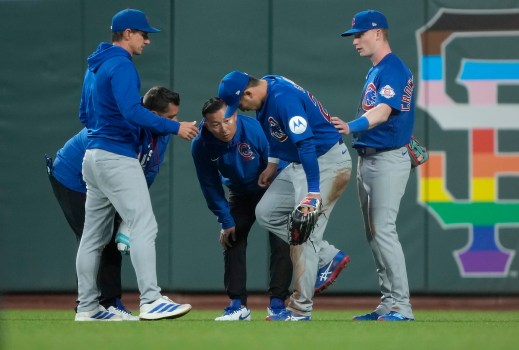
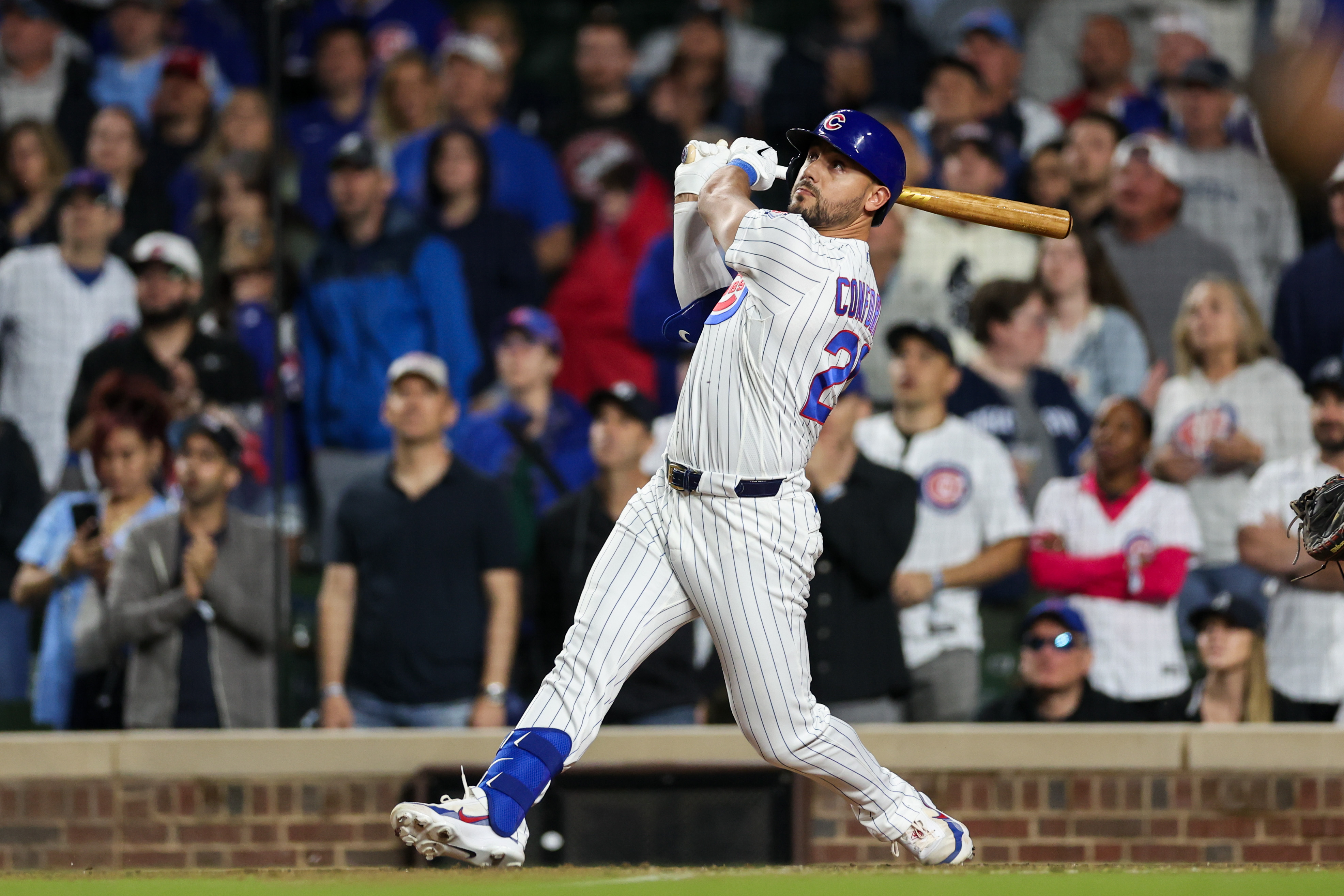
With the Cubs trailing 4-3 in the ninth, Pete Crow-Armstrong lofted a long fly to center that Dane Myers missed while crashing into the vines. Crow-Armstong came home with the tying run on a one-out sacrifice fly by Nico Hoerner, before Michael Conforto followed with a pinch-hit, opposite-field home run to end it before a raucous crowd of 32,997.
The last time the Cubs had a home win streak as long as 12 games was in 2008, when they won 14 straight from May 8-June 22, which is tied for second-longest with five other seasons. That was the hot start when manager Lou Piniella said, “Let’s not get too giggly,” pointing to the team having some ugly wins along the way. They wound up taking the division title with 97 wins, going 55-26 at home and cruising into the playoffs on a high note before losing three straight to the Los Angeles Dodgers in the National League Division Series.
If Craig Counsell feels the same way about Cubs fans getting “too giggly,” he’s not saying it for public consumption. The Cubs seem fine with fans getting excited about this year’s start, including the 16-3 overall stretch they’re currently on.
The Cubs are fifth in the majors with a .783 OPS without some of their best hitters getting heated up, while the pitching ranks 11th with a 3.89 ERA despite the losses of starter Cade Horton and several relievers at various points. It’s an imperfect team that’s been playing near-perfect baseball for the last month, and should be improved when Alex Bregman, Michael Busch and Pete Crow-Armstrong get into a groove.
Wrigley has been especially kind to the Cubs, who now have an 8-1 record with the wind blowing out, and 3-0 with a crosswind. The warmer it gets, the more the wind will be in their favor. Meanwhile, the pitchers have held their own in any condition, with a 2.98 home ERA, fourth-lowest in the majors, entering the night.
The Cubs’ all-time, modern-day record for consecutive wins at home is 18 straight in 1935, a mark that would be difficult to top no matter how well the team played. Almost everyone played day games back then, so teams were on the same schedule. The first major-league night game was played in Cincinnati’s Crosley Field on May 24, 1935.

The Cubs, of course, didn’t get lights until 1988, but they still play more day games than most teams, which Counsell feels is an advantage in one aspect.
“Playing a lot of day games here teaches you how to have a better pregame routine,” Counsell said Monday. “It forces efficiency and quality of work, because you don’t have as much time unless you want to get here (early) and not sleep as much.
“It’s good for players. It makes you better at your (preparation) and organically teaches you to be efficient with it.”
Monday’s wild win after a late start due to a 1-hour, 40-minute rain delay won’t be anything to calm down Cubs fans.
But, as Piniella said, you can’t get too giggly in May.
“One thing I’ve learned about Chicago is that you’re really up or you’re really down,” he said. “You have to stay a little more even, especially earlier in the year when you’re sorting things out.”
Wrigley Field changes, and so do Cubs managers.
But some things never change.