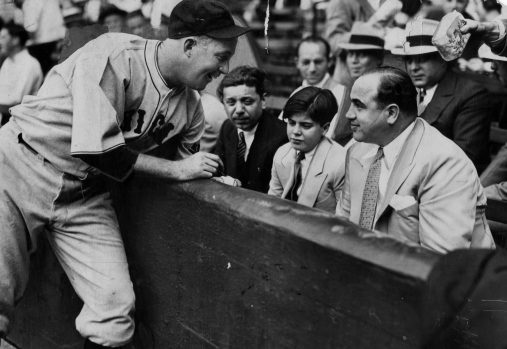

Of the many people who have found fame and flirted with immortality in Chicago, not all have been deserving, and most of even the best of them wind up fading away. Not so with a certain native New Yorker who spent a dozen undeniably high-profile and bloody years here.
Gone for good by 1932, off to prison, into dementia caused by untreated neurosyphilis, and death at 48 in 1947 in Miami Beach, Florida — I refer, of course, to Al Capone.
Why our ongoing interest, which occasionally drifts into obsession? There are all sorts of theories, perhaps most succinctly put by historian and author Richard Lindberg, who told me, “There has always been an innate fascination with crime and criminality, and an appetite for it since the days of Charles Dickens.”
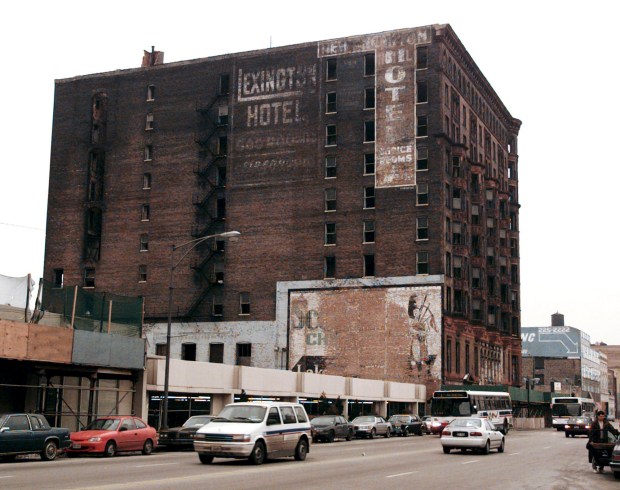
Capone has been back in the news recently because April 21 was the 40th anniversary of a live TV special in which Geraldo Rivera stood inside what had once been the Lexington Hotel on 22nd Street and Michigan Avenue and hosted a live two-hour syndicated program titled “The Mystery of Al Capone’s Vaults.”
Most of these recent television features and a couple of radio spots relied heavily, and understandably, on William Elliott Hazelgrove, a prolific author of a couple of dozen books, the most recent of which is the lively “Capone’s Vault: The Real Story of the Biggest Disaster in Television History” (Bloomsbury Academic).
Chicago-based Hazelgrove knows Capone well, having written about him in 2017 in “Al Capone and the 1933 World’s Fair,” a fine book that explores how a group of businessmen — known as “The Secret Six,” which included the great philanthropist and businessman Julius Rosenwald — were able to orchestrate the tax evasion trial that would break Capone’s power and get him sent to prison, thus making the way for the fair and start the very slow rehabilitation of the city’s unsavory reputation.
Hazelgrove writes in a compellingly breezy style. But make no mistake, he backs that up with deep research. In many of his previous books, that entailed digging through libraries and handling brittle documents to provide stories on such historical figures as Teddy Roosevelt, Edith Wilson, the Wright brothers and Orson Welles in 2024’s “Dead Air,” the last of which detailed the famous radio broadcast of H. G. Wells’ “War of the Worlds,” which scared the country on Oct. 30, 1938.
Here, Hazelgrove has the advantage of living firsthand sources, including some of those at Tribune Entertainment, which financed and distributed the Capone show. It was at the time a fledgling outfit, its products barely more than “The Farm Report” and “At the Movies.” But, in the wake of the broadcast, as Hazelgrove writes, “Al Capone had done it again. He had stolen the viewers from the big networks. … It was a brilliant move by Tribune Entertainment. … In the weeks following (the show) … producers were dusting off syndicated proposals … all over Hollywood.”
His best source is Rivera, who reminds us that at the time of the special, he had just left ABC after 15 years with the network. As Hazelgrove writes, the ABC spin consisted of “Geraldo Rivera was not the talking head America was used to… a gonzo journalist who went where his heart took him.” But the reason he was compelled to tackle the Capone vault show had nothing to do with his heart but with his wallet.
He was out of work, and in need of serious money and plenty of it. As he tells Hazelgrove, “I had $300,000 a year in alimony and child support payments. I had lost my house in Malibu, my apartment on Central Park West and a large portion of my other assets in an expensive and bitter divorce a year earlier.”
Offered $25,000 to host the job, he negotiated his fee up to $50,000.
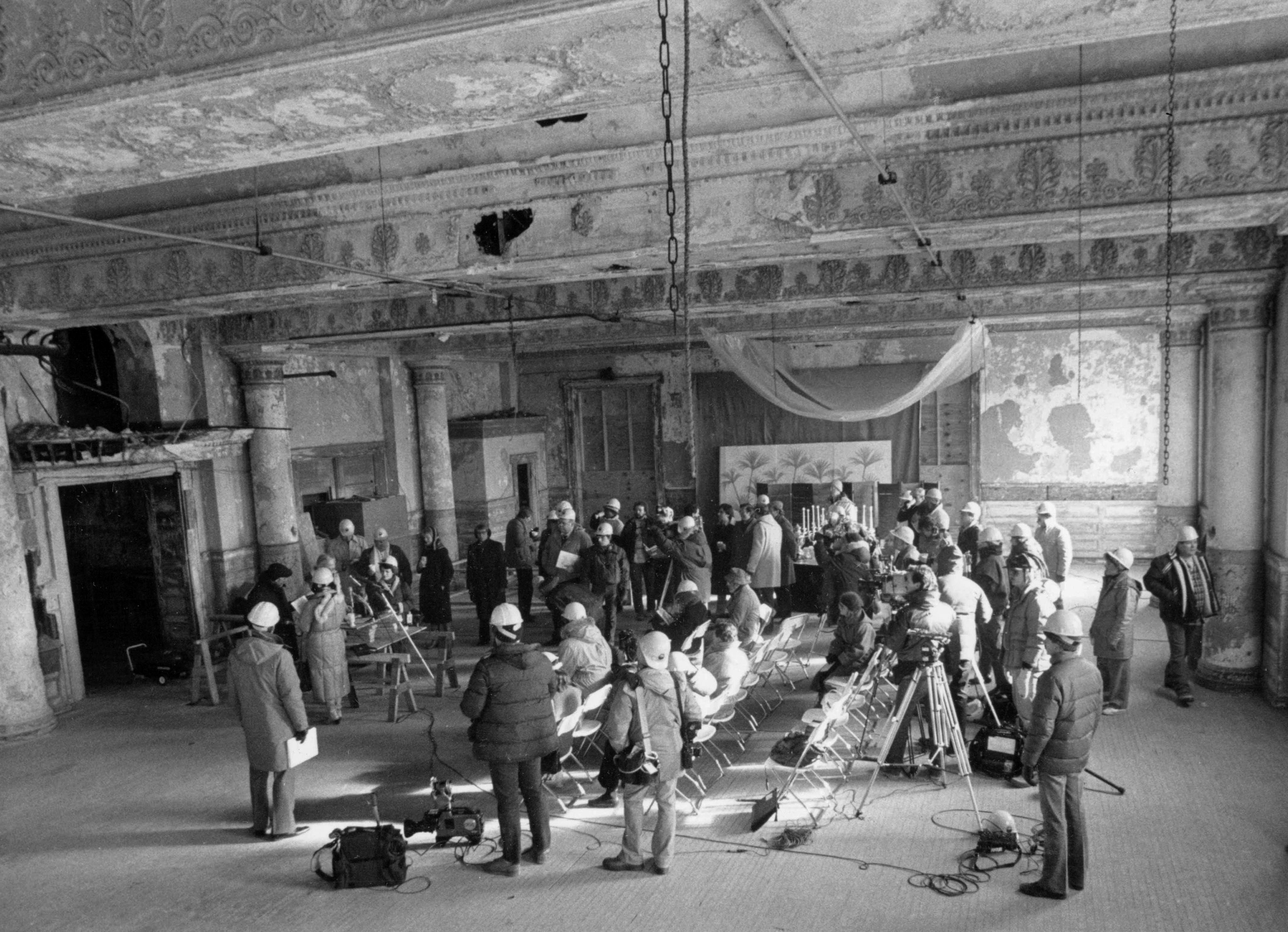
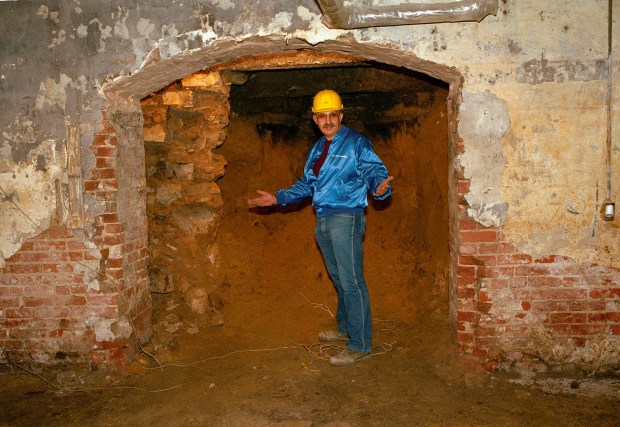
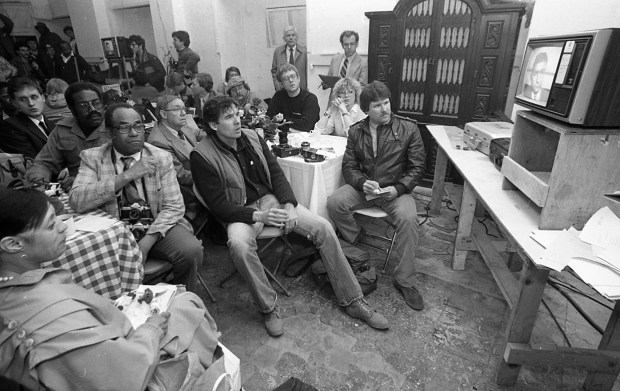
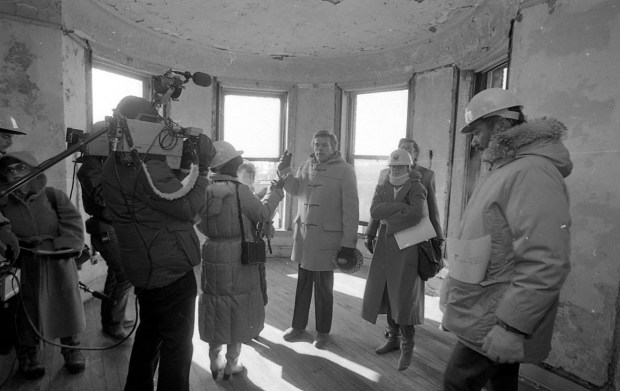
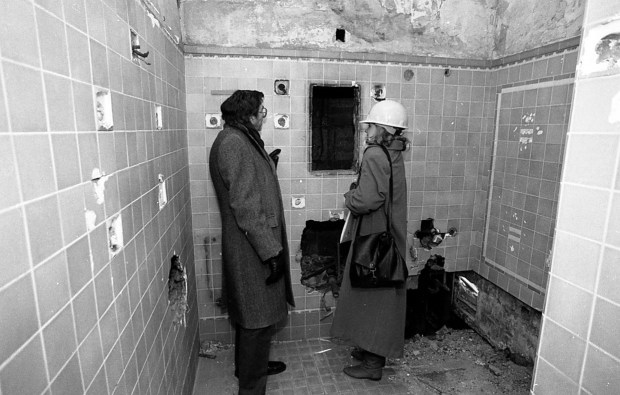
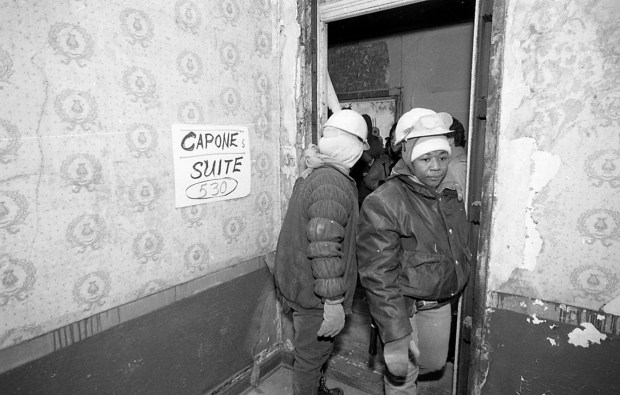
And so, with the nation’s newspapers blaring headlines such as this from the Salt Lake Tribune, “Capone’s Vault to Share Secrets On Live Television,” or this from the Detroit Free Press, “Assault on Big Al’s Vault,” the show aired.
In two hours, neatly detailed by Hazelgrove, it was over. What was found? Money? Long dead bodies? If you don’t know (or remember), I won’t be the one to tell you. I did watch the show, but I certainly did not know that Rivera was so dispirited after the broadcast that he walked to a nearby tavern and “ordered a bottle of Cuervo and tried to forget.”
The next morning — “I slept like a dead man,” Rivera said — he awoke to some of the best news he would ever get. As Hazelgrove writes, “The show … had set a new bar as the highest rated syndicated show in the history of television.”
That was 30 million viewers and, as this book persuasively argues, it was the night on which reality TV was born, spawning all sorts of variations that have peppered the airwaves ever since.
Time has passed. Rivera had a dozen job offers, went back on TV with his talk show “Geraldo,” and continues to work as a correspondent-at-large with NewsNation.
When their last book-related conversation took place, Hazelgrove spoke to Rivera on the phone as the TV star was walking in the backyard of his home in Cincinnati. Wistfully, he said, “I think the success of ‘Capone’s Vaults’ came from several things. It wasn’t copying anything. It was a live show.”

He also said, “My life is a lot smaller now. I go to New York for a week and I have a home studio where I can broadcast from. … You know they will probably put on my tombstone, ‘He opened Capone’s vault and nothing was there.”
If you are curious, Capone is buried in Mount Carmel Catholic Cemetery in suburban Hillside, alongside his mother, father and brother.
rkogan@chicagotribune.com