
After years of infighting, ideological warfare and organizational atrophy, Illinois Republicans appear to be betting on a different model: coalition building over purity tests, precinct organizing over political theatrics and suburban recovery over grievance politics.
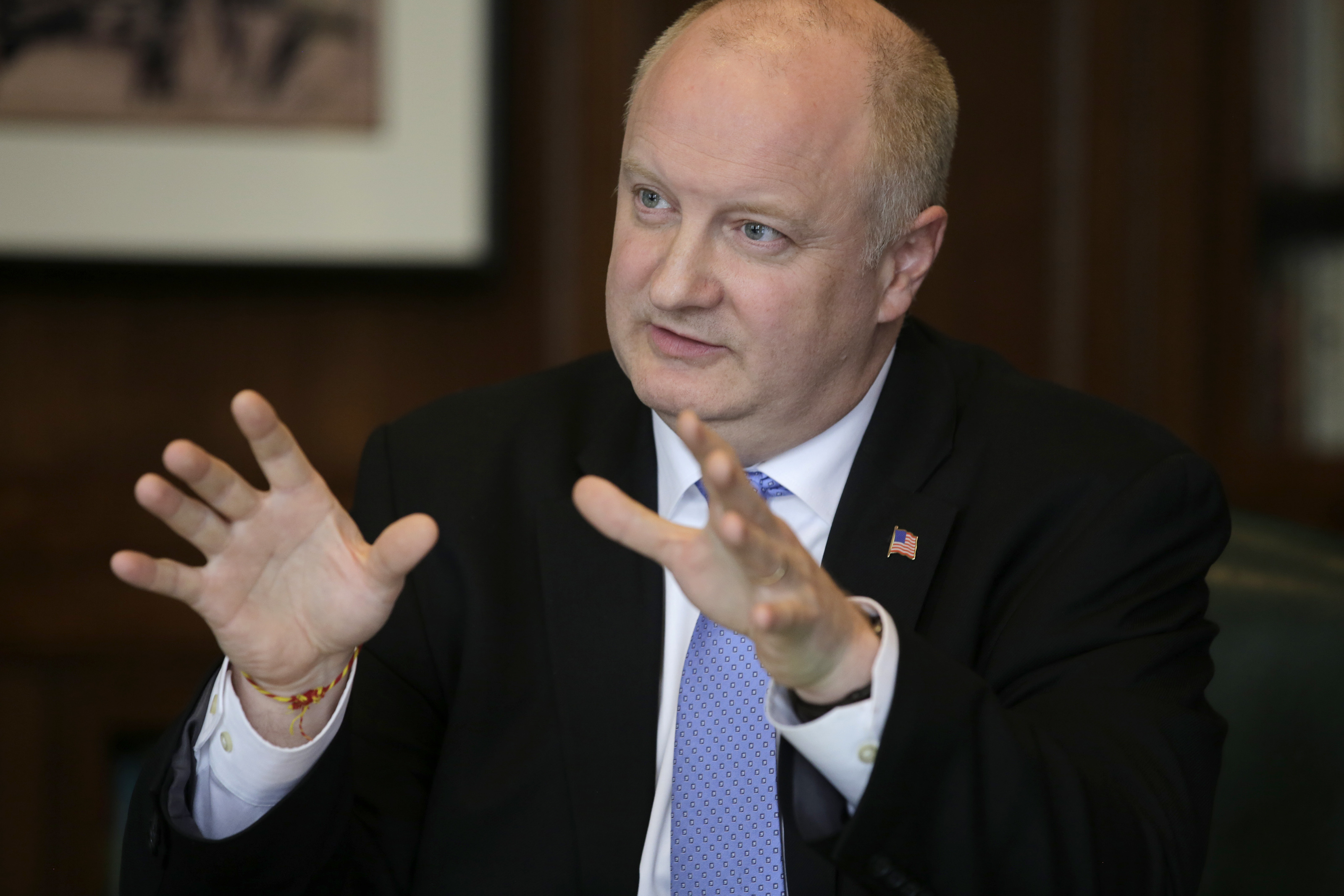
“You can’t purge your way to 51%,” new Illinois Republican Chairman Bob Grogan told us over the phone Thursday.
He went on: “Fratricide isn’t a good campaign strategy.”
Republican State Central Committee members on May 18 voted out Kathy Salvi after roughly two years at the party’s helm in favor of Grogan, an accountant, former DuPage County auditor and a lifelong resident of the collar counties Republicans once dominated politically.
Grogan, who served as DuPage County auditor from 2008 to 2020, is no stranger to rooting out waste, fraud and abuse, almost a prerequisite for anyone who wants to take on Springfield’s many challenges. Some may remember Grogan from his 2014 primary campaign for state treasurer against longtime Illinois Republican politician Tom Cross, a race Grogan lost before Cross himself lost the general election to Democrat Michael Frerichs.
Yet Grogan comes off today as more of a tempering force than one might expect to meet in today’s GOP. First and foremost, he told us, he wants to present a positive message. Among his many catchphrases, Grogan shared a vision that’s at odds with what’s playing in Washington.
“You can’t grow the church by excommunicating all the sinners,” he said.
Something must be in the water, because that’s the tone GOP gubernatorial candidate Darren Bailey of downstate Xenia is taking this time around, too.
Bailey, a Republican who had trouble ginning up support here in Chicagoland when he last ran for governor in 2022, is doing his level best to right past wrongs. He even came before the City Council on May 20 to apologize formally for calling our city a “hellhole” in his previous gubernatorial campaign.
Can a kinder, friendlier GOP work? Not on its own, and adjusting the party’s tone and tent are not the only things Grogan aims to change about the tired party structure.
He also pointed out the obvious: Illinois Republicans need to focus on getting out the vote.
“We haven’t failed in a very short period of time, we’ve had failures over a long period of time,” he said.
He’s not wrong there. After former Gov. Bruce Rauner — temporarily the GOP’s largest benefactor and anchor — picked up his ball and went home, the party became rudderless.
The Rauner void led to competing factions, overlapping power centers and deep internal discord. While we respect Republicans like state Rep. Ryan Spain of Peoria and House Republican Leader Tony McCombie of Savanna, others within the party have gone to the fringes alongside many of their national counterparts.
While outgoing Chair Kathy Salvi has been praised for her fundraising abilities, the party remains disorganized and has been unable to assemble and execute adequate GOTV strategies.
Republican turnout tells the story. The four GOP gubernatorial candidates this year combined had about 560,000 primary votes — nearly 230,000 fewer than Republicans cast in the 2022 gubernatorial primary, and far below even the low-turnout 2014 contest won by Rauner.
While many tend to view the ticket top-down, Grogan said he sees things in a more bottom-up way.
If Republicans think Salvi’s best skill set was fundraising, Grogan says his is his ground game. For Grogan, “ground game” means rebuilding the Republican Party as a neighborhood-level organization again — training volunteers, strengthening precinct operations, coordinating county groups and creating a durable turnout machine instead of relying on personalities and TV ads.
It also helps that he’s from DuPage, formerly a Republican stronghold where the GOP has atrophied and needs to build back up. That means running candidates in all races, no excuses. While Republicans this primary season had a crowded gubernatorial race, down the ticket Republicans have done a spottier job of making sure Democrats face a challenger.
That’s part of what frustrates would-be Republican voters here, especially because Illinois is a land of political opportunity for anyone with a solid plan to make a go of it.
First, there’s money here. Ahead of the 2024 election, President Donald Trump and affiliated super PACs raised over $30 million out of Illinois.
Second, it’s not as if Democrats are wildly popular. Illinois Democrats control the Statehouse and the governor’s mansion, and preside over years of fiscal mismanagement and an unwillingness to face up to our state’s biggest problems, though they aren’t as shy about turning to taxpayers for more revenue. And while it’s likely Gov. JB Pritzker will win reelection in November, his most recent victory wasn’t exactly a sweeping mandate — he didn’t even crack 55% of the vote. All that to say, Illinois is ripe for a commonsense voice to come in and challenge our state’s one-party rule.
“If it takes a long time to screw things up, it’ll take a long time to make things right,” Grogan said. He has less than six months until the November general election to make his mark, but the new Republican chairman’s legacy will extend far beyond this fall.
Moderate voters and Republican donors need a reason to invest in the state party. Grogan’s task is to give them one.
Submit a letter, of no more than 400 words, to the editor here or email letters@chicagotribune.com.