
You have probably seen the television ad in which Gov. JB Pritzker touts how he is cutting taxes, working to lower costs and make Illinois more affordable. Earlier this year, during his budget address, the governor said: “Everything is just too damned expensive.”
Affordability has emerged as one of the most important issues for the 2026 midterms. Pritzker is running for a third term with an eye on the 2028 presidential contest. He might consider spending more time solving key cost-of-living issues in Illinois before seeking the next rung on the political ladder.
Pritzker’s affordability commercial mentions that he eliminated the state’s 1% grocery tax. However, it fails to mention the bill he signed allows municipalities and counties to keep taxing groceries at 1%. The governor celebrated this law as a measure to relieve residents of a regressive tax. However, over 650 Illinois municipalities passed legislation to enact their own 1% tax. Surely, Pritzker and the Democrat-controlled legislature could have prohibited local municipalities from re-imposing the 1% grocery tax. How has this made life more affordable for Illinois families? Isn’t it just a tax shift?
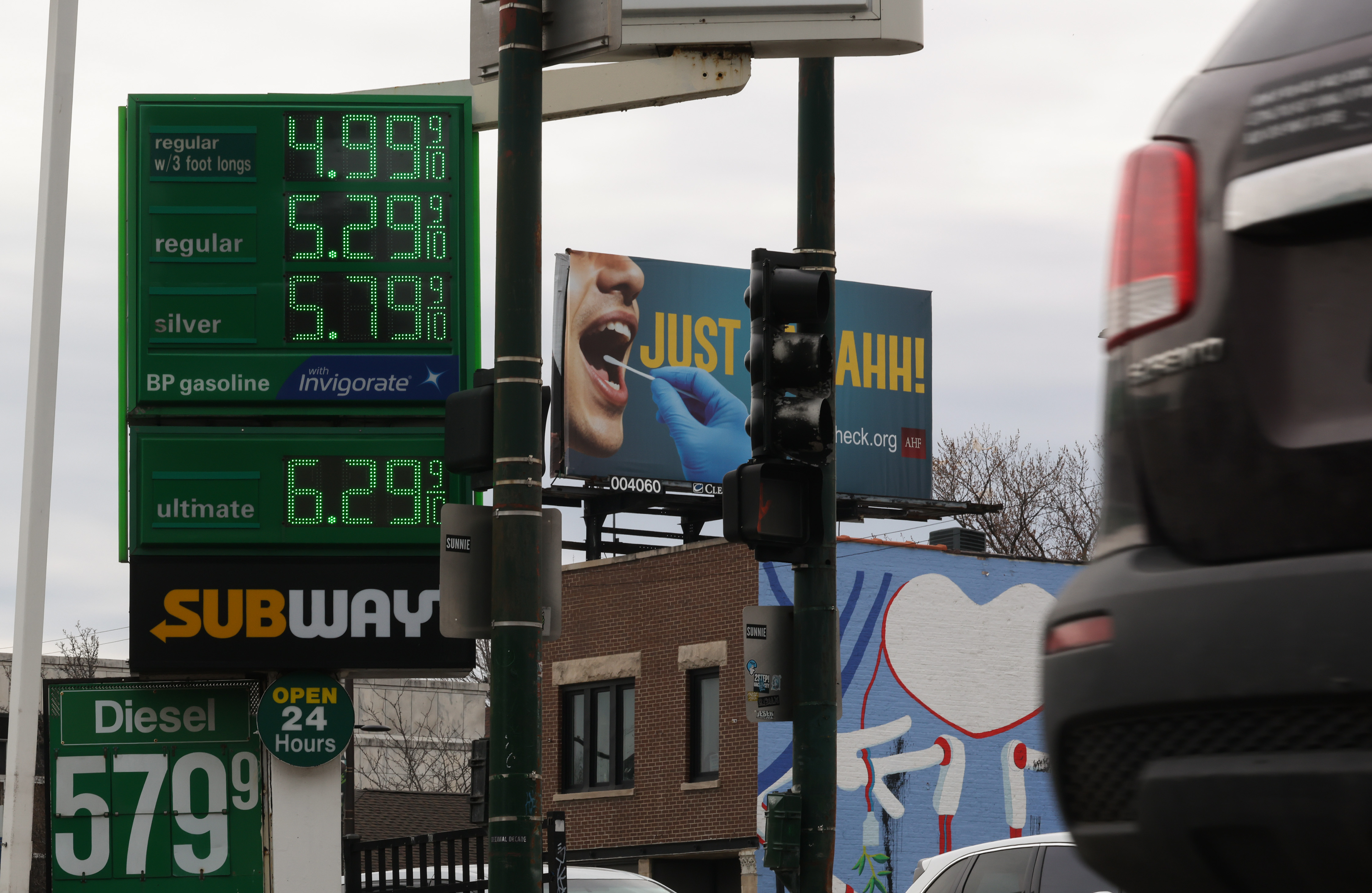
High gas prices are also squeezing Illinois families. The cost partly is the fault of Pritzker and state lawmakers. Pritzker signed a law that doubled the state’s gasoline excise tax, from 19 cents to 38 cents, in 2019 and also built in an annual inflation adjustment. That mechanism means the rate increases every year without legislators having to vote. The current rate is 48 cents per gallon. Illinois is one of the few states with a sales tax on motor fuel, and its combined tax burden often exceeds 85 cents per gallon in certain counties.
As geopolitical events play out in the Middle East, Illinois families are being harmed by high gas prices. Diesel is costlier than regular gasoline. Diesel-fueled trucks move cargo across Illinois and the country. Several companies have implemented or increased fuel surcharges. That cost will be passed to consumers.
Pritzker should allow for a tax holiday in the way the state of Georgia has done. Alternatively, he could cut the current gas tax in half. The state of Utah recently reduced its fuel tax by 6 cents per gallon. This will provide automatic relief and lower costs for struggling families without jeopardizing infrastructure projects.
Pritzker recently sent a letter to Congress urging lawmakers to authorize year-round E15 gasoline sales, a cheaper but lower-quality fuel. This gambit seems disingenuous, given that Pritzker has pointed out that Congress is dysfunctional. It appears to be more messaging to Illinoisans that he is asking Congress to help lower gas prices and help corn farmers at the same time.
Also, Pritzker and the legislature have failed to fix the regressive property tax system in Illinois. Injustice Watch reported last year that the majority of the foreclosures since 2019 occurred in predominantly Black communities. The report noted that more than half of all homes were taken following an initial property tax debt of $1,600 or less.
Last year, Pritzker signed an unfunded mandate — a pension sweetener bill that will cost city taxpayers $11 billion. That will undoubtedly cause city officials to raise property taxes to cover those payments. The city of Chicago is already swimming in debt.
Illinois ranks first in the nation for the highest number of taxing bodies, with more than 7,000 local governmental units and more than 800 school districts. The number of governmental units is a waste of taxpayers’ money when they duplicate services. Pritzker has said the right words about government consolidation — even proposing legislation — but he has not used his influence and Democratic supermajority to achieve this important goal.
As legislators shape Pritzker’s proposed $56 billion budget, the following are suggestions to make life more affordable for Illinois residents:
• Illinois House Speaker Emanuel “Chris” Welch and Senate President Don Harmon should establish a low-interest loan fund to help homeowners struggling to pay property taxes.
• They should fix the regressive property tax system in Illinois.
• They should shepherd legislation to consolidate units of government and school districts.
• They should require that state procurement dollars reflect the population of the state of Illinois.
• They should require out-of-state firms receiving Illinois state contracts to hire from local communities with the highest levels of unemployment.
• They should expand funding for Illinois Works Pre-Apprenticeship Program.
• They should expand education funding to close achievement gaps and increase number of trade schools.
• They should expand health care funding to include free prescription drug coverage for Illinois senior citizens.
• They should increase funding to assist those returning from correctional institutions with job and trade opportunities.
• They should increase funding for inspectors general, and they should root out corruption in government.
The people of Illinois deserve leaders who will lead with compassion and a commitment to lower costs. The Illinois bureaucracy has become too bloated, and something must give. If not, the weight of bloat will take us all under.
I write this commentary to make those comfortable with pretending to lower costs uncomfortable.
Willie Wilson is a business owner, philanthropist and former mayoral candidate.
Submit a letter, of no more than 400 words, to the editor here or email letters@chicagotribune.com.